
Arts and Crafts Fair POS: The Complete Australian Guide
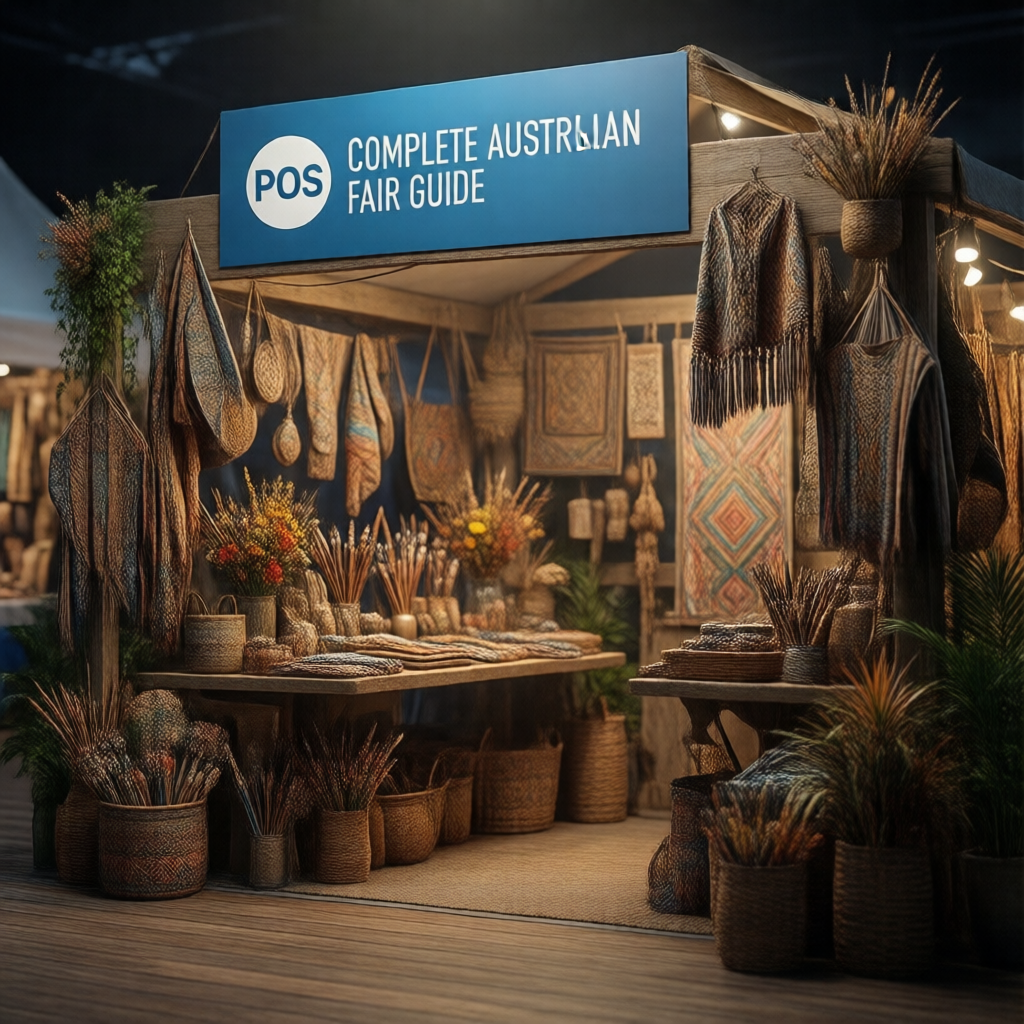
An arts and crafts fair POS is the point-of-sale system that lets stallholders take card and cash payments, track stock, and keep queues moving on busy event days. For Australian craft fair organisers and makers, the right POS combines fast tap-and-go payments, offline mode for patchy mobile coverage, multi-device selling across stalls, and live sales visibility. Evntle POS delivers all of this, with Zeller EFTPOS, Bluetooth receipt printing, and real-time reporting built for markets and fairs.
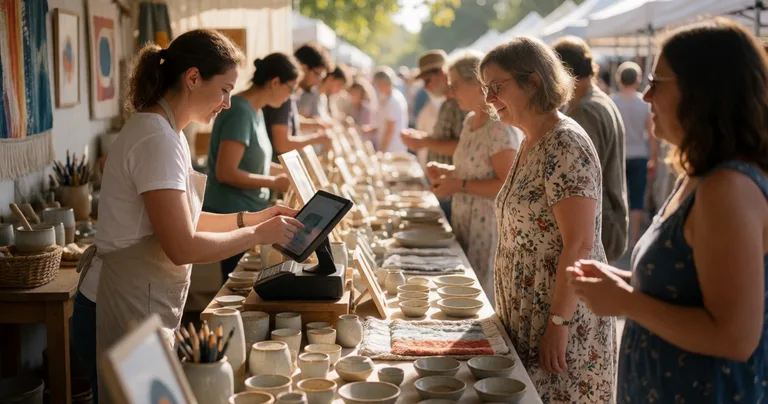
Running a craft fair is equal parts creativity and logistics. You have makers arriving at 6am, gazebos going up, extension cords everywhere, and a queue forming before you have finished your first coffee. In the middle of all that, your arts and crafts fair POS is the one piece of tech that has to work every single time.
This guide covers how to choose a POS for craft fairs in Australia, what features matter most, how cashless payments fit into a market day, and how organisers can connect payments with vendor management and event discovery. If you want a deeper comparison of payment options, see our Craft Fair Payments Comparison for Australian Stalls.
Why Your Arts and Crafts Fair POS Matters More Than You Think
Most craft fair vendors lose sales not because their products are wrong, but because the checkout is slow. A customer who has to wait two minutes while you find the EFTPOS terminal, enter an amount, and hope the signal holds will often walk away. That is a lost sale you never see in your reporting.
A purpose-built arts and crafts fair POS fixes three problems at once:
- Speed: Tap-and-go card payments clear in seconds, so queues stay short.
- Accuracy: Items, prices, and stock are pre-loaded, so you are not doing mental maths on a busy Saturday.
- Visibility: Every sale is logged, so you know what actually sold and what to bring next time.
Set up your POS the night before. Load your top 20 items, check your terminal is charged, and test a $1 transaction. Five minutes of prep saves twenty minutes of chaos on event morning.
For craft fairs specifically, the mix of low-value items (a $12 candle) and high-value pieces (a $450 ceramic bowl) means your POS needs to handle quick taps and considered purchases with equal ease. Split payments, deposits, and layby options are not luxuries at a craft fair — they are how makers close bigger sales.
What to Look For in a Craft Fair POS System in Australia
Not every POS is built for outdoor events. A system designed for a cafe with fixed power and reliable wifi will struggle at a park with no signal and a generator. Here is what actually matters for Australian craft fairs.
Offline mode and connectivity
Mobile coverage at regional showgrounds, coastal parks, and community halls is unreliable. Your arts and crafts fair POS must keep taking payments when the signal drops, then sync when you are back online. If your POS cannot do this, you are effectively running a cash-only stall during peak trading.
Multi-device selling
One stall might have two or three people serving. A POS that runs on phones, tablets, and desktops — and syncs in real time — means everyone can sell from the same catalogue and stock count. This is where Multi-Device POS for Markets earns its keep.
Card, cash, and split payments
Australians are among the world's fastest adopters of contactless payments, but cash still matters at craft fairs, especially for smaller purchases. Your POS needs to handle both, plus split payments when a customer wants to pay part cash and part card.
Stock control that survives a market day
When you sell the last of a popular item, your POS should update everywhere instantly. No oversells, no awkward conversations, no refunds after the fact.
| Feature | Why It Matters at a Craft Fair | Evntle POS |
|---|---|---|
| Offline mode | Keeps sales flowing when mobile signal drops | Yes — full offline trading |
| Multi-device sync | Multiple staff selling from one catalogue | Yes — phone, tablet, desktop |
| Split payments | Lets customers pay part cash, part card | Yes |
| Bluetooth receipt printing | Professional receipts without cables | Yes — thermal printer pairing |
| Live sales dashboard | See what is selling while the fair is running | Yes — real-time analytics |
How Cashless Payments Are Changing Australian Craft Fairs
Cashless payments are no longer a nice-to-have at Australian markets. They are the default. According to AusPayNet, debit and credit card transactions now account for the overwhelming majority of retail payments in Australia, and contactless makes up most of those. For craft fair vendors, that shift has real consequences.
The upside is obvious: faster checkout, less cash handling, automatic records for tax time, and fewer trips to the bank. The downside is that a POS failure now means you cannot sell at all. That is why offline mode and a backup payment method matter so much.
"The vendors who sell the most at craft fairs are rarely the ones with the best products. They are the ones whose checkout never slows down."
— Evntle, Australian event commerce team
For a full breakdown of the options, our guide to Cashless Terminals Versus Mobile POS walks through when a standalone terminal is enough and when you need a full mobile POS.
What about QR payments and bank transfers?
QR code payments are growing, particularly for higher-value craft pieces where a customer wants to pay from their banking app. They are useful as a backup, but they are slower than tap-and-go and do not automatically update your stock or sales records. Treat them as a fallback, not your primary checkout.
Never rely on a single payment method. If your terminal fails, a QR code or a small cash float keeps you trading. Carry both.
Connecting POS with Vendor Management and Market Operations
For organisers, the arts and crafts fair POS is only one piece of the puzzle. A well-run fair connects payments with vendor applications, site allocation, bump-in, and event-day communication. When these systems talk to each other, everyone saves time.
Here is how the pieces fit together:
- Vendor applications: Makers apply through a structured form, with documents, insurance, and product details collected upfront.
- Site allocation: Organisers map stalls, assign sites, and communicate locations digitally.
- Bump-in: Vendors check in on arrival, with real-time tracking of who is on site.
- Trading: POS handles payments, stock, and sales reporting across every stall.
- Bump-out: Pack-down is tracked, incidents are logged, and end-of-event reports are generated automatically.
Evntle's Event Management Platform ties these steps together, so organisers are not juggling five different tools. Vendor applications, site plans, POS, and reporting all live in one place.
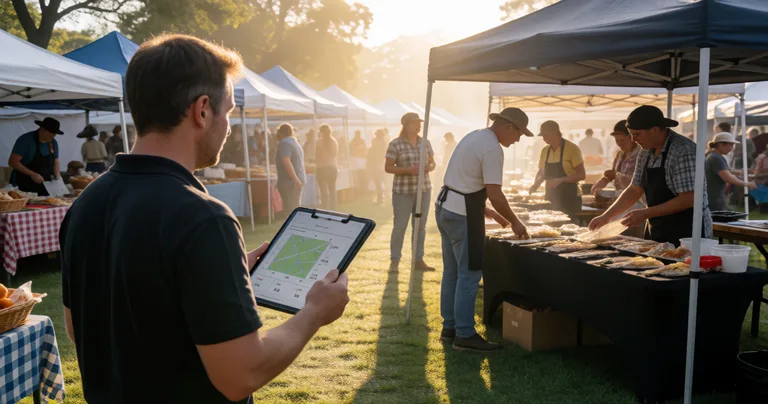
Why integrated tools beat spreadsheets
Spreadsheets work fine until they don't. The moment you have 40 vendors, three payment types, and a last-minute site change, manual systems break down. Integrated tools give you a single source of truth — and that matters most on event day when decisions have to be made in seconds.
| Task | Spreadsheet Approach | Integrated Platform (Evntle) |
|---|---|---|
| Vendor applications | Email + manual entry | Online forms with approval workflow |
| Site allocation | Hand-drawn map | Digital site plan with live updates |
| Payments | Cash tin + manual EFTPOS | Integrated POS with live reporting |
| Bump-in tracking | Paper checklist | Digital check-in with timestamps |
| End-of-event reporting | Manual tallying | Automatic sales and attendance reports |
Event Discovery and Why It Matters for Craft Fair Sales
A craft fair with 5,000 attendees sells more than one with 500. Event discovery is how you get those numbers. When your fair is listed on a discovery platform, attendees can browse vendors before the day, plan their visit, and follow their favourite makers.
For vendors, this is a game-changer. A customer who has already seen your work online is far more likely to buy on the day. Evntle's Event Discovery Platform lets attendees preview stalls, save favourites, and return for every market day — turning a one-off visit into a repeat customer.
Event discovery works best when vendors have complete profiles with photos, product categories, and stall numbers. Encourage your makers to fill these out before the fair.
For organisers running recurring fairs, discovery also drives loyalty. Attendees who follow a market get notified when the next one is on, which builds a reliable audience over time.
Food and Beverage Vendors at Craft Fairs
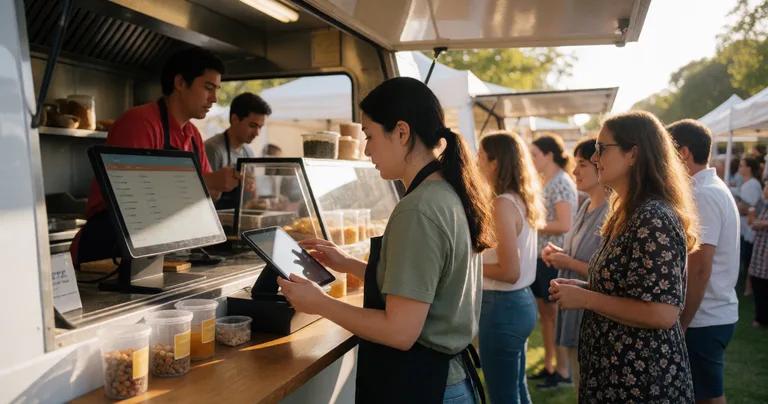
Craft fairs are not just about crafts. Food trucks, coffee carts, and baked goods stalls are often the busiest vendors on site — and they have the most demanding POS requirements.
Food and beverage vendors need:
- Menu management: Items, modifiers, and combos set up in advance.
- Allergen tracking: Clear allergen information on every item, with badges on the POS.
- Queue management: Fast payment and order flow, especially during lunch rushes.
- Kitchen display: Orders routed to a screen so the kitchen can keep up.
Evntle's Food Stall Point of Sale and KDS and POS tools are built for exactly this. Orders flow from the POS to the kitchen display, allergens are flagged automatically, and queues keep moving even at peak times.
For organisers, food vendors also need to be managed differently. They have food safety requirements, council permits, and waste responsibilities. Evntle's vendor management tools let you collect and track these documents as part of the application process, so nothing slips through.
Frequently Asked Questions
Q: What is the best POS for an arts and crafts fair in Australia?
A: The best arts and crafts fair POS handles card and cash payments, works offline when mobile signal drops, supports multiple devices, and gives you live sales reporting. Evntle POS is built specifically for Australian markets and fairs, with Zeller EFTPOS, Bluetooth receipt printing, and multi-device sync across phones, tablets, and desktops.
Q: How do I take card payments at a craft fair with no internet?
A: You need a POS with offline mode. Evntle POS keeps taking card payments when the signal drops and syncs transactions automatically when you are back online. Always carry a small cash float as a backup, and test your offline mode before event day.
Q: How much does a craft fair POS cost in Australia?
A: Costs vary. Standalone EFTPOS terminals typically charge a monthly fee plus transaction fees. Full POS platforms like Evntle offer tiered pricing based on features and event size. For a detailed comparison, see our Craft Fair Payments Comparison for Australian Stalls.
Q: Can I run multiple stalls from one POS system?
A: Yes. Evntle's multi-device POS lets multiple staff sell from the same catalogue and stock count in real time. This is ideal for craft fairs where a single maker has two or three people serving, or where an organiser wants live sales visibility across all stalls.
Q: How do I manage food vendors at a craft fair?
A: Use vendor management software to collect food safety documents, permits, and insurance as part of the application process. Evntle's vendor management tools let you track all of this in one place, and its food stall POS and kitchen display system keep food vendors trading efficiently on the day.
Q: What is the best way to boost sales at a craft fair?
A: Three things make the biggest difference: fast checkout (so queues never slow you down), event discovery (so attendees find you before the day), and a vendor storefront (so customers can buy from you after the fair). Evntle brings all three together in one platform.
Getting Started with Evntle for Your Next Craft Fair
Whether you are a maker selling at your first fair or an organiser running a monthly market, the right arts and crafts fair POS makes the day smoother and the takings better. Evntle is built for Australian conditions — offline mode, multi-device selling, integrated vendor management, and event discovery in one platform.
You can explore the full platform at Evntle, or dive into our guides on Best Software for Craft Fairs in Australia and Choosing a Market Stall POS System. If you want to see it in action, book a live demo or create a free account and set up your first event today.
A craft fair is a chance to showcase your work and connect with customers. Do not let a slow checkout or a failed terminal get in the way. Choose a POS that works as hard as you do — one that handles cashless payments, offline trading, stock control, and reporting without drama. That is what Evntle delivers for Australian makers and market organisers, every event day.
📖 Related
See the KDS and POS in action — try the live demo or create a free account.