
Australian Craft Fair Logistics and Compliance Tips
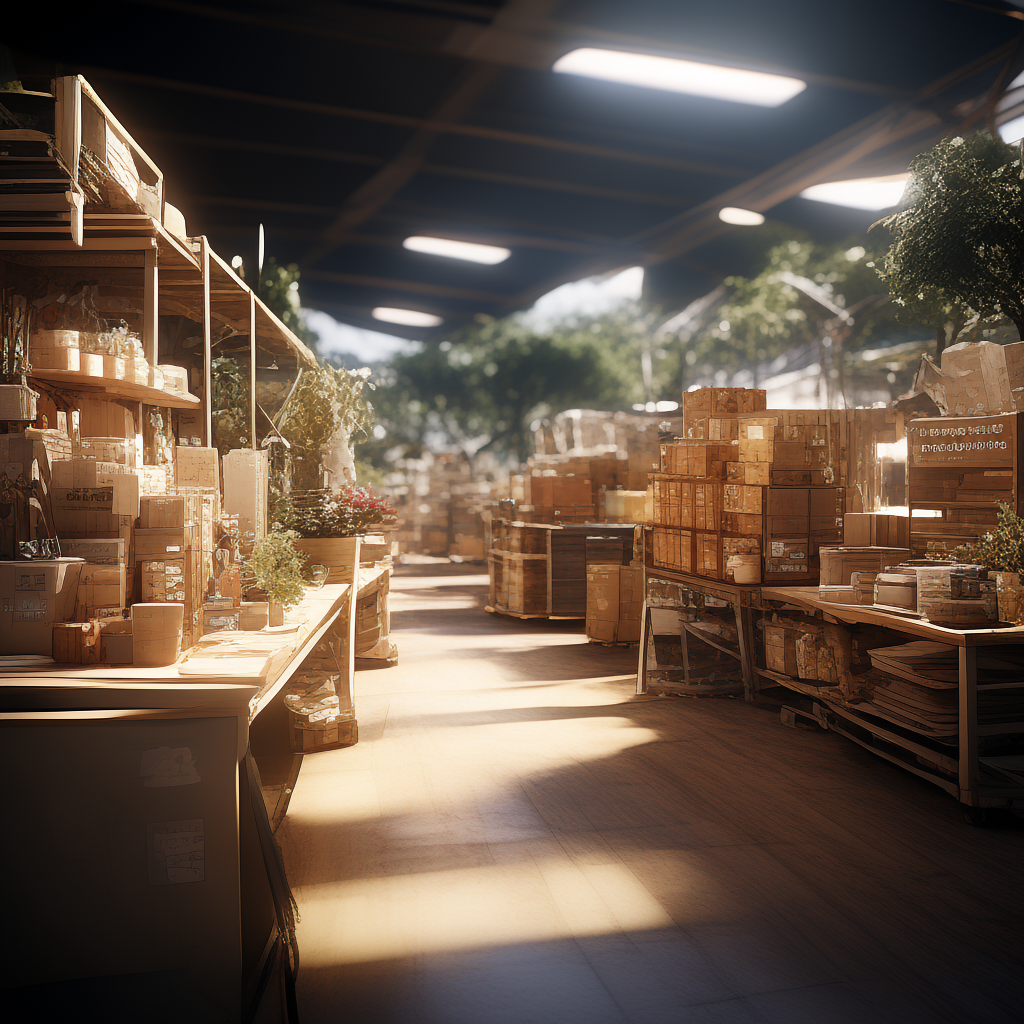
Running a craft fair in Australia comes down to three things: getting vendors in and out without chaos, keeping every stall compliant with local rules, and making sure the money moves as fast as the crowd. The best craft fair logistics start with a clear site plan, a documented bump-in schedule, and a single system for applications, insurance, payments and incident records. Get those right and your fair runs on rails — from the first stallholder email to the final reconciliation.
This guide walks through the practical, unglamorous side of Australian craft fair logistics and compliance Tips. No fluff. Just the checklists, the numbers, and the tools that actually keep a market moving on a Saturday morning when 40 makers are all trying to find their site at once.
Why Craft Fair Logistics in Australia Need a System, Not a Spreadsheet
Most craft fairs start life in a spreadsheet. That works for 10 stalls. It falls apart at 40. The moment you're juggling vendor applications, public liability certificates, site allocations, power requests, and food permits across three tabs and an inbox, something gets missed. Usually it's the thing that costs you money or a council fine.
The Australian craft fair scene is bigger than most organisers realise. According to the Australian Craft and Hobby Association, there are more than 3,000 regular craft markets and fairs operating nationally, and the Australian Retailers Association notes that markets and events contribute over $2 billion annually to local economies. That's a lot of marquees, a lot of makers, and a lot of compliance paperwork.
The fix isn't more admin. It's fewer places to look. A single platform that handles stallholder bookings, document collection, site planning, and event-day payments removes the double-handling that eats your prep time. Evntle was built for exactly this — a market organiser software setup that keeps applications, sites, and sales in one place.
Run a post-event debrief within 48 hours while it's fresh. Note every bottleneck — the queue at the coffee van, the vendor who arrived late, the extension lead that went missing. That list becomes next event's checklist.
Bump-In and Bump-Out: The Logistics That Make or Break Your Craft Fair
Bump-in is where craft fairs live or die. If vendors can't find their site, unload, and set up in a predictable window, you get gridlock at the gate and a late start. Bump-out is worse — tired vendors, dark car parks, and equipment going missing.
Build a Bump-In Schedule That Actually Works
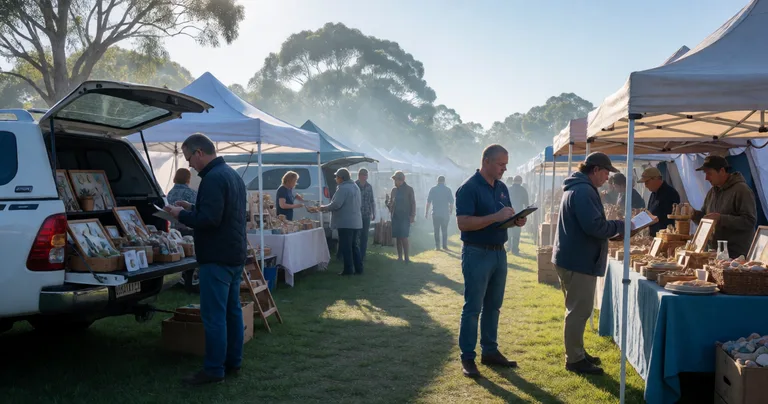
Stagger arrivals by vendor type. Food vendors need early access for gas and power checks. Makers with heavy display racks need the closest bays. Give each vendor a 15-minute arrival window and a site number, not a vague "between 6 and 8am."
- Publish arrival windows at least 7 days out, grouped by zone.
- Send digital site maps with parking, drop-off, and toilet locations marked.
- Set up a check-in point with a tablet — scan vendors in as they arrive.
- Track who's on site and who's late in real time.
- Run a 15-minute safety briefing before the gates open.
Evntle's bump-in and bump-out tools let you assign arrival windows, track check-ins live, and flag no-shows before they become a hole in your layout.
Bump-Out Without the Chaos
Bump-out is a compliance issue as much as a logistics one. Vendors must leave the site in the same condition they found it — no grease stains, no cable ties on the grass, no abandoned cardboard. Build a sign-off step into your process: vendor returns their site card, you confirm the site is clean, they go home.
Compliance for Australian Craft Fairs: What You Actually Need to Check
Compliance is the part nobody enjoys but everyone has to nail. Councils, insurers, and food authorities all want their piece of paper. Miss one and you're either fined or shut down mid-event.
The Documents Every Stallholder Should Provide
- Public liability insurance — minimum $10M cover is standard for Australian markets; $20M for larger events.
- Food handling certificates — required for anyone preparing or selling food.
- Council permits — temporary food premises permits vary by local government area.
- Electrical test-and-tag — mandatory for any vendor using powered equipment.
- Product-specific certifications — cosmetics, candles, and children's toys have extra requirements.
Collect these digitally at application stage. Don't chase them the week of the event. Evntle's vendor application management software collects insurance certificates, permits, and signatures up front, so your approval pipeline is clean and your compliance file is complete before bump-in.
Food Vendor Compliance Is Its Own Beast
Food stalls carry the heaviest compliance load. Allergen declarations, temperature logs, handwashing stations, and correct waste disposal are all non-negotiable. If you run food vendors at your fair, read our full guide to food safety compliance for market vendors — it covers the specifics that trip up first-timers.
Don't accept a photographed insurance certificate as proof. Ask for the PDF from the insurer, check the expiry date, and verify the business name matches the applicant. Fake or expired certificates are the number one reason organisers get caught out.
Payments and POS: Keeping Craft Fair Money Moving
Cash is fading fast at Australian markets. A 2024 report from the Reserve Bank of Australia found that cash accounted for just 13% of in-person transactions, down from 32% in 2019. If your vendors are still cash-only, they're leaving sales on the table.
The right setup depends on the stall. Here's a quick comparison of the main options craft fair vendors weigh up:
| Payment Method | Typical Fees | Best For | Connectivity Needs |
|---|---|---|---|
| Mobile POS (Evntle POS) | 1.4%–1.9% per tap | Multi-stall markets, live sales visibility | Works offline, syncs when reconnected |
| Standalone card reader | 1.6%–2.2% per tap | Solo makers, low volume | Requires mobile signal |
| Cash | 0% (but banking + float costs) | Small-ticket items under $20 | None |
| QR / online checkout | 1.5%–2.5% per transaction | Pre-orders, click-and-collect | Requires internet |
For a deeper breakdown of card readers, QR, and web tools by fees and checkout speed, see our craft fair payments comparison for Australian stalls.
Why Offline Mode Matters at Regional Fairs
Regional craft fairs often have patchy mobile coverage. A POS that stops working when the signal drops is worse than no POS at all. Evntle POS runs in offline mode and syncs transactions the moment connectivity returns — so a dropped bar of signal doesn't cost you a sale or a reconciliation headache.
Queue Management for Food Stalls
Food vendors are the queue bottleneck at any fair. The fix is twofold: speed up ordering and spread demand. A kitchen display system (KDS) sends orders straight to the back of the stall so the front can keep taking orders, and an order board shows customers where their food is up to. Evntle's food stall point of sale and KDS combo is built for exactly this — one person takes orders, one person cooks, nobody's shouting over the fryer.
"The stalls that make the most money at a craft fair aren't the ones with the best products. They're the ones with the shortest queue and the fastest tap."
— Evntle, on event-day commerce
Site Planning and Crowd Flow: Getting the Layout Right
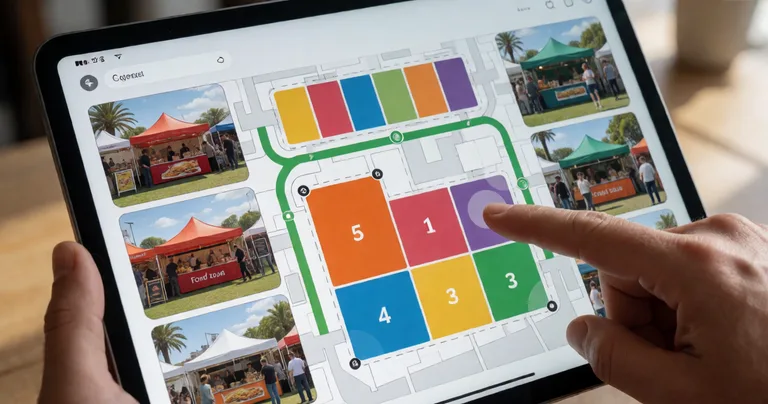
A craft fair layout does three jobs: it moves people safely, it puts the right stalls in the right spots, and it makes money. Get the flow wrong and you get dead zones where nobody walks, and bottlenecks where nobody can.
Rules of Thumb for Craft Fair Layouts
- Aim for 3–4 metres between stall rows to allow two-way foot traffic plus prams.
- Put food and drink stalls at the edges or in a dedicated zone — they attract queues that block aisles.
- Place anchor stalls (popular makers, coffee) at the far end to pull crowds through the whole site.
- Keep emergency exits clear and marked — councils will check.
- Leave a dedicated accessible route that doesn't pass through gravel or grass.
Evntle's event site planning software lets you drag stalls onto a digital map, assign sites, and push updates to vendors instantly when something changes. No more reprinting site maps on the morning of the event.
Crowd Flow at Peak Times
Most craft fairs peak between 10am and 1pm. Plan your staffing, toilet servicing, and bin emptying around that window. If you're running a food festival alongside your craft fair, read our event logistics guide for the operational detail that keeps crowds moving.
Attendee Discovery and Turning One-Time Visitors Into Regulars
The best craft fair in Australia is invisible if nobody knows it's on. Discovery is half the battle — the other half is getting visitors to come back.
List your event where people actually search. An event discovery platform puts your fair in front of locals browsing for weekend plans, and a vendor storefront lets makers keep selling between events. Evntle's event discovery platform handles both — attendees find the fair, and vendors keep the relationship going after the marquees come down.
Simple Ways to Build Repeat Attendance
- Capture emails at the gate with a QR sign-up — one scan, no clipboard.
- Run a loyalty card or digital stamp for repeat buyers across stalls.
- Announce the next fair date before people leave the current one.
- Feature different makers each month so there's always something new.
- Send a post-event email with vendor links and a thank-you offer.
Markets that capture attendee emails see repeat visitation rates up to 30% higher than those that don't. It's the cheapest growth lever you've got.
Event Analytics: What to Measure After Every Craft Fair
You can't improve what you don't measure. The data from one fair tells you how to run the next one better — which stalls performed, where the bottlenecks were, and which days or times pulled the biggest crowds.
| Metric | Why It Matters | Target Benchmark |
|---|---|---|
| Average transaction value | Shows if bundling and pricing are working | $35–$60 for craft stalls |
| Peak trading hour | Informs staffing and vendor placement | 10am–1pm for weekend fairs |
| Vendor no-show rate | Reveals application pipeline problems | Under 5% |
| Repeat attendee rate | Measures loyalty and marketing effectiveness | 25%+ for monthly fairs |
| Bump-in on-time rate | Predicts event-day smoothness | 90%+ |
Evntle's event analytics pulls live sales, vendor performance, and attendance into one dashboard. No more chasing spreadsheets from twelve different stalls. If you're comparing tools, our best software for craft fairs in Australia roundup covers what to look for.
"If you're not measuring stall-level sales, you're guessing at your site plan. Data turns a good fair into a repeatable one."
— Evntle, on event reporting
Incident Management and Event-Day Safety
Something always goes wrong at a craft fair. A vendor trips over a guy rope. A child gets separated from a parent. A stall's gas bottle leaks. What matters is how fast you log it, who owns the response, and whether you have a record for insurance and council purposes.
Evntle's event incident management software gives you custom form templates, severity tracking, assigned owners, and timestamped records — so every incident is documented and every follow-up is closed out. It's the difference between a five-minute fix and a two-week insurance dispute.
Public liability insurers increasingly ask for incident logs after a claim. If you can't produce a timestamped record of what happened and when, you're exposed. Log everything, even the near-misses.
Bringing It All Together
Australian craft fair logistics aren't complicated — they're just detailed. Nail the bump-in schedule, collect compliance documents at application stage, give vendors fast payment tools, plan your layout around crowd flow, and measure what happened so you can do it better next time. Do those five things and your fair runs smoother, your vendors make more money, and your attendees come back. Evntle ties the whole lot together — applications, site plans, POS, KDS, discovery, and reporting — so you're running one system instead of ten. Start with a free account and set up your next event in an afternoon.
Frequently Asked Questions
Q: How do I run a compliant craft fair in Australia?
A: Collect public liability insurance (minimum $10M), food handling certificates, council permits, and electrical test-and-tag certificates from every vendor at application stage. Keep digital copies, verify expiry dates, and store everything in one system so it's ready for council or insurer inspection at any time.
Q: What's the best way to manage bump-in at a craft fair?
A: Stagger vendor arrival windows by zone, send digital site maps a week in advance, and check vendors in with a tablet at a single entry point. Food vendors get early access for gas and power checks. Track arrivals live so you can spot no-shows before the gates open.
Q: Should craft fair vendors accept cashless payments?
A: Yes. Cash now accounts for only around 13% of in-person transactions in Australia. A mobile POS with offline mode keeps sales flowing even when mobile coverage drops, and gives you live visibility across every stall for end-of-day reconciliation.
Q: How do I stop food stall queues from blocking my craft fair aisles?
A: Put food and drink stalls at the edges or in a dedicated zone, use a kitchen display system to send orders straight to the back of the stall, and add an order board so customers can see where their food is up to. This keeps the front counter free for new orders.
Q: What should I measure after a craft fair?
A: Track average transaction value, peak trading hour, vendor no-show rate, repeat attendee rate, and bump-in on-time rate. These five metrics tell you whether your layout, marketing, and vendor pipeline are working — and what to change for the next event.
Q: How do I turn craft fair visitors into repeat customers?
A: Capture emails at the gate with a QR sign-up, run a loyalty program across stalls, announce the next fair date before people leave, and send a post-event email with vendor links. Markets that capture attendee emails see repeat visitation up to 30% higher.