
How to Start a Food Truck Business in Australia (2026 Guide)
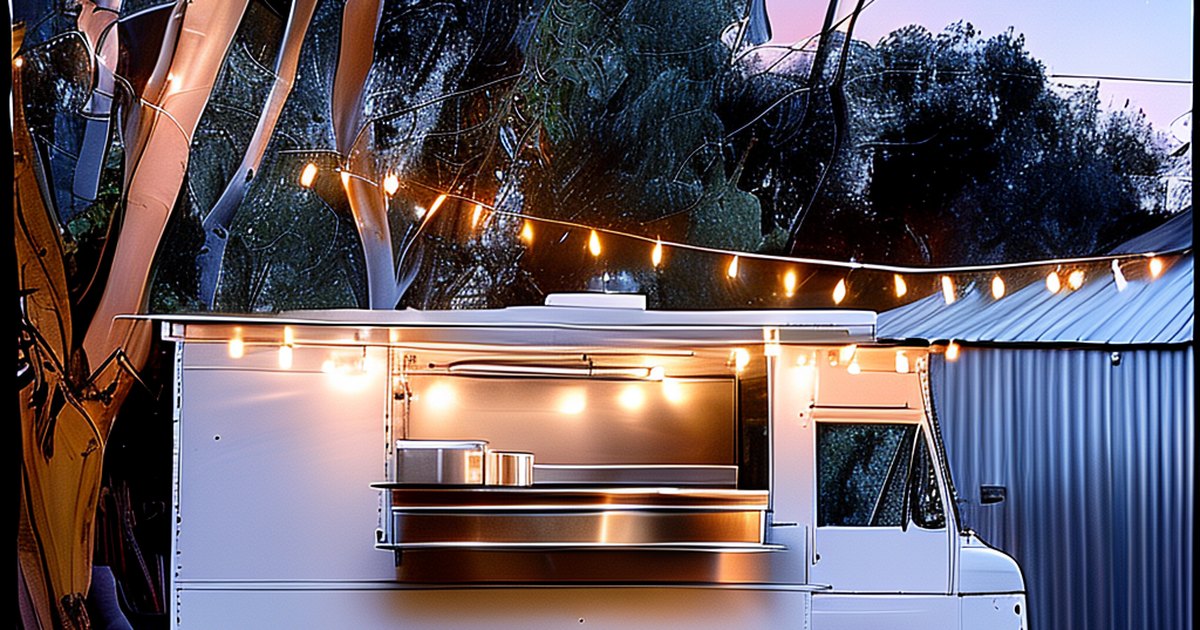
A food truck is the most capital-efficient way to sell food in Australia — no lease, no fit-out of a shop you can't fill, no staffing a dining room that sits empty on a Tuesday. It is also the food business most likely to be shut down at 11am on a Saturday because a permit was never issued, a hand-wash basin was plumbed into the wrong tank, or the council officer who inspects vehicles has never seen your truck before.
The difference between the operators who trade profitably within six months and those who burn $60,000 and quit is almost never the food. It is sequencing. This guide walks the sequence: what must be registered before you trade, what the setup realistically costs, how a mobile kitchen actually gets power and water on site, and which systems decide whether a three-hour service window makes money or just makes queues.
Is a Food Truck Business Still Viable in Australia in 2026?
Yes — with one qualification that matters more than any marketing claim: food trucks are a fixed-cost business with variable revenue, and the fixed costs start before you sell a single item. Registration, insurance, gas compliance, vehicle maintenance, site fees and stock all bill monthly whether you trade or not. That structure rewards operators who book predictable site days and punishes operators who rely on one-off gigs.
The category has also matured. Councils now run structured mobile food vending programs rather than tolerating vans that appear on a footpath. Event organisers curate food line-ups and expect vendors to hold insurance certificates, food safety documentation and their own EFTPOS. Private bookings — birthdays, corporate lunches, school events, construction sites — have become a bigger share of revenue than the "park on a busy street and hope" model that the industry was built on.
What that means practically: plan a food truck as a booked-site business, not a wander-and-trade business. Every successful operator we see has at least one recurring weekly anchor (a market, a business park, a school, a hospital precinct) that covers base costs, with event work layered on top for margin.
Food Truck Licences and Registrations in Australia
There is no single national food truck licence. You assemble a stack of approvals, and the order matters because some depend on others. Work through these four before you commit to a vehicle.
1. Register the food business with your local council
Under the Food Act in each state, a mobile food business must be registered as a food business with the council where the vehicle is normally garaged — not where you intend to trade. Registration generally requires a completed application, a site plan of the vehicle layout, and an inspection of the vehicle before you are allowed to sell food from it.
Two things catch new operators here. First, the inspection is of the vehicle, so registering before the fit-out is finished just means a failed inspection and a rebooking. Second, if you later move where the vehicle is garaged, your registration generally moves with you — notify both councils rather than assuming the old one still covers you.
2. Get a mobile food vending permit for each trading location
Registration makes you a legitimate food business. It does not give you the right to trade anywhere. Trading on public land — a footpath, park, foreshore, street or council-managed reserve — needs a mobile food vending permit or a trading approval from that council. Many metro councils publish designated trading spots and the days or hours each is allowed; some run ballot or tender processes for premium positions; a few prohibit mobile trading in the CBD outright.
Private land is a different path and often a faster one: a car park, a Bunnings-adjacent site, a business park forecourt or a winery needs the landowner's written permission, and in some zones a planning permit for the use. Confirm zoning before you sign a site agreement, because "the landlord said yes" is not a planning approval.
3. Build the food safety documentation
Australia's Food Standards Code includes Standard 3.2.2A — Food Safety Management Tools, which became mandatory for food service businesses in December 2023. In practice, for a food truck that handles unpackaged, potentially hazardous food, that means:
- A designated Food Safety Supervisor who has completed an approved course for your state and food sector (usually a one or two day certificate, valid for around five years).
- Food handler training or demonstrated skills for everyone else who touches food — evidence you can produce on request, not just a claim.
- Documented management of the high-risk activities in your kitchen: temperature control of cook-chill-reheat items, allergen declaration, cleaning and sanitising schedules.
Standard 3.2.3 (Food Premises and Equipment) is the one that governs the vehicle itself: a hand-wash basin with potable water, separate sinks for food preparation and utensil washing, smooth cleanable surfaces, adequate ventilation, waste containment and protection from contamination. Design the fit-out against those clauses first and the inspection becomes a formality.
4. Sort vehicle, gas and power compliance
The vehicle needs its own registration category and, if the fit-out added significant weight, an engineer's certification and a modified registration. Any LPG installation should carry a gas compliance certificate from a licensed gasfitter — councils and event organisers increasingly ask for it, and an insurer will ask after a fire.
What It Actually Costs to Start a Food Truck in Australia
The figures below are planning ranges from the Australian mobile food market, not quotes. Get three written quotes for your own fit-out, and treat the low end as "used, already compliant, minor work" rather than "new".
- Vehicle: a used trailer or caravan shell suitable for conversion typically lands between $12,000 and $35,000. A purpose-built new food truck generally starts around $75,000 and climbs past $180,000 for a full custom build with a commercial kitchen line.
- Fit-out and equipment: $20,000 to $60,000 for a compliant working kitchen — commercial fridge and freezer, cooking line, extraction, hand-wash basin, sinks, water tanks, generator or battery system, and the stainless benching that makes cleaning possible.
- Registrations and approvals: a few hundred to a few thousand dollars depending on council, plus the Food Safety Supervisor course (roughly $150–$400 per person).
- Insurance: public liability at the $10M–$20M level most councils and organisers demand, plus product liability and cover for the vehicle and equipment. Budget $1,500–$4,000 for the first year depending on turnover and menu.
- Working capital: the number most people underestimate. Stock, fuel, gas, site fees and your own living costs for the first 8–12 weeks of trading while bookings build. Budget a minimum of $8,000–$15,000.
- Systems: POS, card terminal, kitchen display, and a booking and invoicing setup. Realistically $0–$2,000 up front depending on whether you use an integrated platform or bolt together a bank terminal and spreadsheets.
A realistic all-in entry for a used, already-compliant trailer plus equipment and three months of runway is $55,000–$90,000. A new purpose-built truck with a full kitchen and a branded wrap is a $150,000+ decision. If those numbers are a stretch, the honest intermediate step is a market stall or a shared-kitchen catering business — you learn menu economics and service speed without a vehicle payment.
Buying or Building: Truck, Trailer or Caravan?
The three formats suit different operators, and the choice is mostly about how you will move and where you will park.
Trailer
Cheapest to buy and to register, and it can be towed by a vehicle you already own — but towing limits your site options. Tight market layouts, steep ramps and reverse parking onto a busy street all become real problems, and you need a tow vehicle rated for the loaded weight. Trailers are the right answer for market and event work where the site is booked and the approach is straightforward.
Caravan conversion
Good middle ground: built-in structure, often already registered, and a service window that can be cut into an existing wall. Watch the weight and the roof height, and be realistic about how much of a caravan interior has to be gutted to meet food premises standards.
Purpose-built truck
Best service ergonomics and the fastest setup and pack-down — the biggest hidden advantage in a business where you may have a 90-minute window between arriving and the first customer. You pay for it in purchase price, in registration and maintenance, and in the fact that a breakdown takes the whole business off the road.
Whichever you choose, physically stand in the service window and pretend to hand someone a coffee while taking a payment. Then walk the line from the grill to the window. Operators who skip this discover on their first busy day that their till is behind the cook and every transaction costs four steps.
Designing a Menu for a 3-Hour Service Window
Restaurant menus are built for a two-hour dinner service with a full brigade. Food truck menus are built for volume in a 90-minute peak with two or three people, in a space the size of a hallway.
- Six to nine items, maximum. Every additional item adds prep, stock, wastage and decision time at the window. A tight menu served fast outsells a broad menu served slowly.
- One hero, two variations, one crowd-pleaser. Give people a clear reason to choose you, then let them adjust heat, protein or size rather than choose from twelve things.
- Nothing that needs last-minute assembly by one pair of hands. If it can't be finished in under 90 seconds during peak, it doesn't belong on the board.
- Pre-portioned prep, done off-site. Batch sauces, marinate, portion and label before you leave. The service window is for finishing and handing over.
- Price for the queue you want. A $22 item needs fewer transactions than a $12 item to hit the same revenue, but it needs a longer dwell at the window and a stronger reason to buy. Know which model your site supports.
Price from cost, not from competitors. Build each item's cost from ingredients plus packaging plus a share of gas, power, site fees and labour, then apply your target margin. Packaging is the line vendors forget: a $0.90 compostable container on a $12 item is 7.5% of revenue before you have paid for anything else.
Power, Water and Site Logistics Nobody Warns You About
This is where most first-year operators lose money quietly — not in a dramatic failure, but in a generator that can't run the espresso machine and the fryer at once, or a site that promised power and delivered a single 10-amp outlet shared with a lighting rig.
- Calculate peak load, not average load. Add the startup draw of every appliance that can run simultaneously. Then check the site's supply against that number before you book it, in writing.
- Assume you'll need your own power. A generator sized for your peak, or a battery system if noise and fumes rule out a generator at your sites. Ask each venue which they allow.
- Water is a two-tank problem. Potable water in, waste water out, in separate tanks with a hand-wash basin that drains to waste — never plumbed back into potable. Know your tank capacity in serves, and know where you will refill and dump.
- Grease and waste leave with you. No site will let you use their bins for commercial waste, and dumping waste water into a stormwater drain is an environmental offence.
- Wind, slope and surface. A trailer on a slope has hot oil at an angle. An unweighted marquee beside you becomes a projectile. Site risk assessment is your job, not the organiser's.
The Systems That Decide Whether You Make Money
Service speed is a systems problem before it is a staffing problem. Three things decide it: how fast an order is captured, how clearly the kitchen sees it, and how quickly payment clears.
Order capture. A queue that moves at one order every 40 seconds clears 90 people in an hour. At 65 seconds it clears 55. The difference is usually whether the operator is typing into a terminal, writing on a pad, or tapping three items on a screen built for a menu that never changes mid-service.
Kitchen visibility. Paper dockets work until you have four orders in flight and the docket rail is behind the cook. A kitchen display system — the same screen logic a cafe uses — puts each order in sequence in front of the person cooking, timestamps it, and removes the "which one is this?" conversation that costs you a minute per order at peak.
Payment. Tap-and-go is table stakes, but the details matter in the field: offline mode for a site with no signal, a terminal that survives heat and grease, and surcharges configured correctly so card costs don't quietly eat two points of margin.
That is exactly the problem Evntle's POS and kitchen display demo was built around — a POS view, a KDS view and a customer-facing order board that share one order state, so an order taken at the window appears in the kitchen instantly and a customer can see where their order sits in the queue. You can try the sandbox without signing up, and see the pricing structure on the pricing page.
Getting Your First 20 Bookings
Bookings are a sales pipeline, and a pipeline needs a list, an offer and a follow-up. Most new operators have none of the three and wonder why week four is empty.
- Build a target list of 60 sites. Business parks, industrial estates, hospitals, universities, schools, council reserves, markets, wineries, breweries, car dealerships, construction sites with 50+ workers. Name a contact for each.
- Lead with the organiser's problem, not your menu. An event organiser is short of reliable food vendors who arrive on time, hold insurance and don't create a queue that blocks a walkway. Your pitch is reliability plus paperwork.
- Have a one-page vendor pack ready. Public liability certificate, food business registration, Food Safety Supervisor certificate, gas compliance certificate, menu and price point, power and space requirements, and a photo. Organisers who receive this in one email book you faster than ones who have to chase it.
- Lock one recurring weekly anchor. A single guaranteed day per week converts a hobby into a business and gives you a base to forecast against.
- Register on vendor marketplaces and directory listings so organisers find you when they are short a vendor — Evntle's vendor directory and events calendar are where Australian organisers look for food vendors for markets and festivals.
- Follow up once, properly. A short message two weeks after a quote ("still holding the date if you need it") recovers a surprising share of dead enquiries.
Insurance, Contracts and Risk
Expect to be asked for a certificate of currency before you trade almost anywhere. Public liability at $10M is the common floor for council permits, with many larger events requiring $20M. Beyond that, the risks specific to mobile food are:
- Product liability — someone becomes ill after eating your food. Your food safety documentation is your defence, which is why the training records matter commercially, not just legally.
- Vehicle and equipment cover — including cover for the fit-out, which standard vehicle policies usually exclude.
- Stock spoilage from a power failure — usually an optional extension, and cheap relative to losing a weekend's prep.
- Contracts with event organisers — read the cancellation, exclusivity, site-fee and refund clauses. Force majeure clauses that let the organiser cancel 48 hours out without refunding your site fee are common and worth negotiating.
Your First 90 Days: A Practical Sequence
Weeks 1–4 — validate before you buy. Pick your menu and cook it at a market stall, a friend's cafe or a community event. Learn your per-item cost, your prep time and your service speed with real customers. Talk to your council about vehicle requirements before you buy a vehicle.
Weeks 5–10 — vehicle and compliance. Buy the vehicle, complete the fit-out against Standard 3.2.3, get gas compliance, register the food business, complete Food Safety Supervisor training, bind insurance. Do not book any paid site until registration is issued.
Weeks 11–13 — systems and soft launch. Set up POS, card terminal and kitchen display. Run two or three unpaid or low-cost services for friends, family and a friendly site to find your bottlenecks. Then open your recurring anchor site and start the booking pipeline in parallel.
Track four numbers from day one: revenue per service hour, average transaction value, items per transaction and food cost percentage. Everything else — social media, wraps, new menu items — is decoration until those four are stable.
Frequently Asked Questions
Do I need a licence to run a food truck in Australia?
There is no single national food truck licence. You need food business registration with the council where the vehicle is garaged, a mobile food vending permit for each council area where you trade on public land, food safety documentation including a designated Food Safety Supervisor, and vehicle and gas compliance. Requirements vary by state and council, so confirm with your local council before buying a vehicle.
How much does it cost to start a food truck in Australia?
A used, already-compliant trailer with equipment, registrations, insurance and three months of working capital typically lands between $55,000 and $90,000. A new purpose-built truck with a commercial kitchen line and branding is usually $150,000 or more. The two biggest underestimates are working capital and the cost of making a second-hand vehicle compliant.
Can I trade anywhere with a registered mobile food business?
No. Registration makes you a legitimate food business but does not grant trading rights. Trading on public land requires a permit from the council that manages that land, and many councils restrict locations, days and hours or exclude the CBD entirely. Trading on private land requires the landowner's permission and, in some zones, a planning permit.
What food safety training do I need for a food truck?
Under Standard 3.2.2A of the Food Standards Code, food service businesses that handle unpackaged, potentially hazardous food must have a designated Food Safety Supervisor who has completed an approved course, and other food handlers must have completed food handler training or be able to demonstrate equivalent skills. You should be able to produce that evidence during a council inspection.
Do I need a POS system for a food truck?
You can legally trade with a card terminal and a notepad, but a POS with a kitchen display pays for itself in service speed once you are doing more than about 40 transactions an hour. The measurable gains are faster order capture, fewer mis-fired orders and clean end-of-day reconciliation. Offline card mode matters more for food trucks than for shops, because sites often have poor mobile coverage.
Ready to see the service setup? Try the Evntle POS and kitchen display demo, browse events and markets looking for food vendors, or create a free vendor account to start collecting bookings and enquiries in one place.
📖 Related
See the KDS and POS in action — try the live demo or create a free account.