
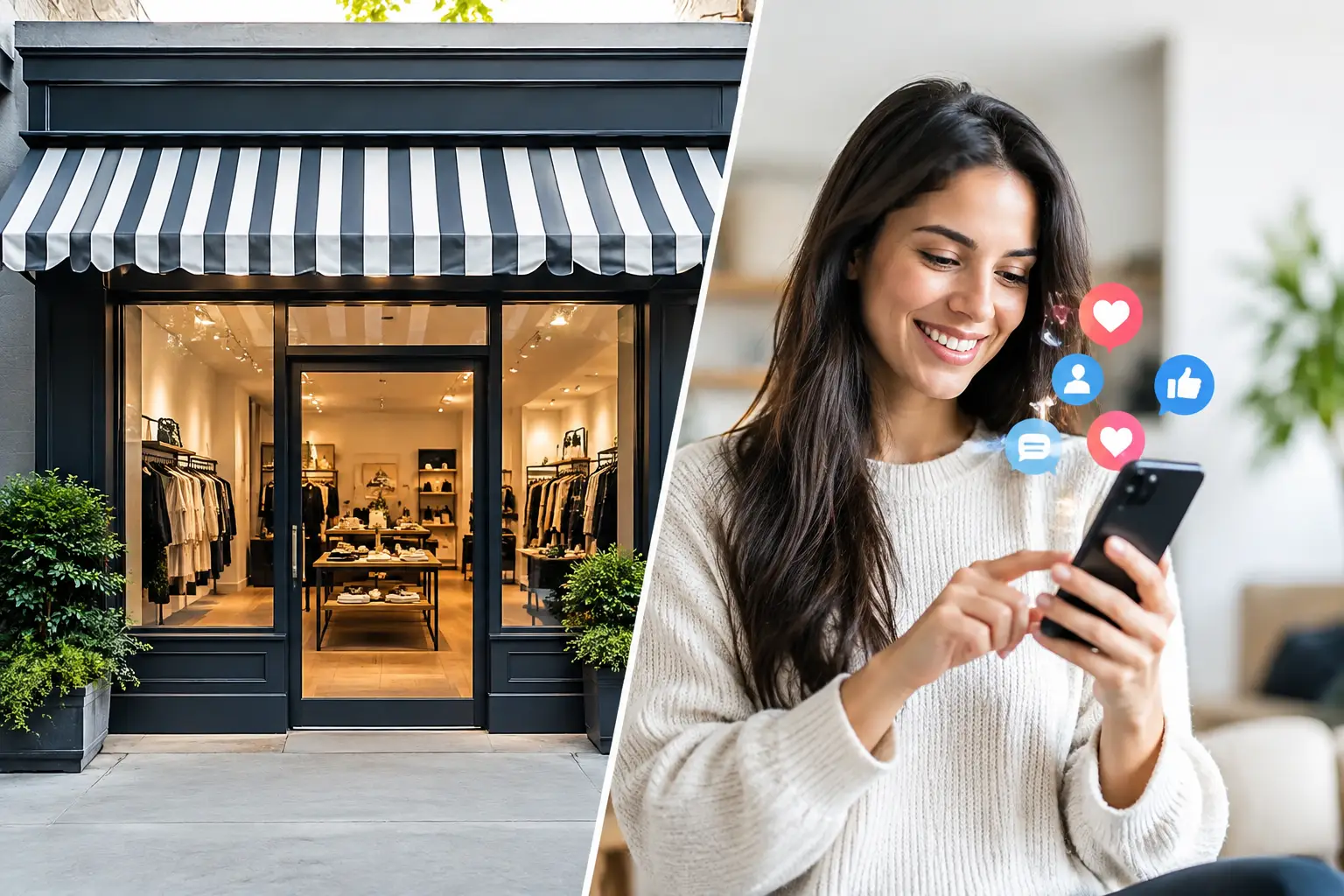
A busy Saturday market can make social selling look like the whole business. A customer films your candles, tags your stall, and a few hours later your inbox is full of “How much?” messages. That attention is valuable, but it can also disappear fast. Custom storefronts vs social selling is not really a choice between two sales channels. It is a decision about what happens after someone discovers you.
For event vendors, the strongest setup gives customers an easy way to find, trust and buy from you before, during and after an event. Social platforms create momentum. A custom storefront turns that momentum into a business asset you can operate on your terms.
Custom storefronts vs social selling: the core difference
Social selling happens where people already spend their time. Instagram, Facebook and TikTok are built for conversation, short-form content and quick discovery. They are ideal for showing a new menu item, sharing your market location, posting a reel from the ute at bump-in, or letting customers see the person behind the products.
A custom storefront is your dedicated sales space. It presents your catalogue, business details, product information and ordering options in one reliable place. It can live on a branded web address or a custom subdomain, giving customers a clear destination that is not competing with an endless feed of other sellers, memes and advertisements.
The difference is ownership. On social media, the platform controls the rules, the algorithm and the customer journey. In a storefront, you control the product presentation, the checkout path, the policies and the customer experience. Neither channel replaces the other. They do different jobs.
Where social selling earns its place
Social selling is particularly effective for vendors whose products benefit from personality, process or scarcity. A food stall can post that there are only 20 serves left. A vintage seller can show a one-off denim jacket arriving at a Sunday market. A gaming merchant can announce a fresh shipment before a convention opens its doors.
It also lowers the barrier to a first interaction. Customers can comment, share a post with a mate, send a direct message or save a product for later. That makes social media a practical top-of-funnel channel, especially when you are building local awareness or testing which products draw interest.
For organisers, social channels help create event energy. Vendor announcements, site maps, countdowns and attendee videos can bring a market to life before event day. A tagged vendor post may introduce a customer to both the stallholder and the event itself.
But social selling has operational limits. Direct messages become difficult to manage once volume rises. Product details get buried in old posts. Customers may see a sold-out item with no context, or ask the same questions repeatedly about price, delivery and where to find you next. Even a strong post can underperform because the platform does not show it to all your followers.
Social reach is rented reach. It can be powerful, but it is not a dependable shopfront on its own.
What a custom storefront changes for vendors
A storefront gives shoppers a place to act when they are ready, rather than asking them to hunt through highlights or wait for a reply. They can browse current stock, understand variations and pricing, and see your brand presented consistently.
That matters at live events. Customers often discover a stall in one of three moments: while planning their visit, while walking the aisles, or after getting home and realising they should have bought the item. A storefront supports all three. It lets them preview your range before attending, scan or search for you during the event, and return after the crowd has gone home.
It also removes friction from repeat sales. A customer who bought a handmade mug at a craft fair should not need to scroll through six months of posts to find the maker again. If they remember your business name or event listing, they should be able to find your current collection quickly.
Custom storefronts create stronger commercial signals too. You can see which products attract attention, where visitors come from and what converts. Those insights make buying decisions less guesswork-driven. If a particular product performs well after being featured at a market, you can plan more stock for the next event rather than relying only on what felt popular at the stall.
Brand trust is practical, not cosmetic
For independent sellers, branding is sometimes treated as a nice extra. In practice, it is a trust tool. Clear photography, accurate product descriptions, contact details and straightforward fulfilment information help a customer feel confident buying from a business they first met for thirty seconds in a crowded hall.
A custom storefront also gives you space to tell the useful version of your story: where you trade, what you make, whether you take custom orders, and when customers can find you next. That context is harder to organise in a social profile designed around the latest post.
The trade-offs to plan for
A storefront needs upkeep. Product availability must be current, photos need to be usable, and collection or delivery settings need to match how you actually operate. If you sell unique vintage pieces or limited food batches, stock accuracy is non-negotiable. Sending customers to a page full of unavailable products creates more frustration than sending them nowhere.
Social selling is faster for spontaneous updates. If rain changes your trading plans or you move bays at a market, a social post can reach regulars quickly. Your storefront should not be expected to handle every live update. It should be the dependable base, while social remains the fast-moving conversation channel.
There is also a content workload to consider. A beautiful storefront will not automatically attract visitors, and a popular social account will not automatically generate sales. Vendors need a simple rhythm: use social content to direct people to a relevant product page, collection or vendor profile, then make that destination worth the click.
A better model: social discovery, storefront conversion
The most effective approach for most event businesses is not to choose a winner. Use social selling to create discovery and connection. Use a custom storefront to organise products, capture purchase intent and support repeat business.
For example, a mobile food operator can post a weekly market schedule and a behind-the-scenes prep video on social media. Their storefront can show the menu, allergens, catering options and upcoming locations. A customer who is planning a birthday party has a clear next step, rather than needing to message for details.
A jewellery vendor can share new pieces through short videos, then direct shoppers to a storefront where sizing, materials and care instructions are already answered. A market organiser can promote vendors through event content while giving each seller a discoverable profile that attendees can browse before arrival.
This creates a more connected event experience. Attendees spend less time searching. Vendors get more chances to be found. Organisers can make their event more useful beyond a single day of foot traffic.
Build for the customer journey around the event
Think beyond the point of sale. Before an event, customers want to know what is on and who will be there. During the event, they want quick directions, vendor details and confidence that a product is available. Afterwards, they want an easy way to reconnect with businesses they enjoyed.
A platform such as Evntle can bring these moments together by pairing vendor storefronts with event discovery and live-event operations. That is especially useful for recurring markets, food festivals and conventions where vendors, organisers and attendees all benefit from a shared source of accurate information.
The key is to make every channel do a clear job. Keep social posts personal, timely and easy to share. Keep your storefront current, searchable and ready to convert interest into action. Do not force customers to choose between following you and buying from you. Give them a simple path from one to the other.
Your next customer may find you through a reel, a friend’s tag or an event listing. The business opportunity is in making sure they can find you again when the market is over.
📖 Related
See the KDS and POS in action — try the live demo or create a free account.