
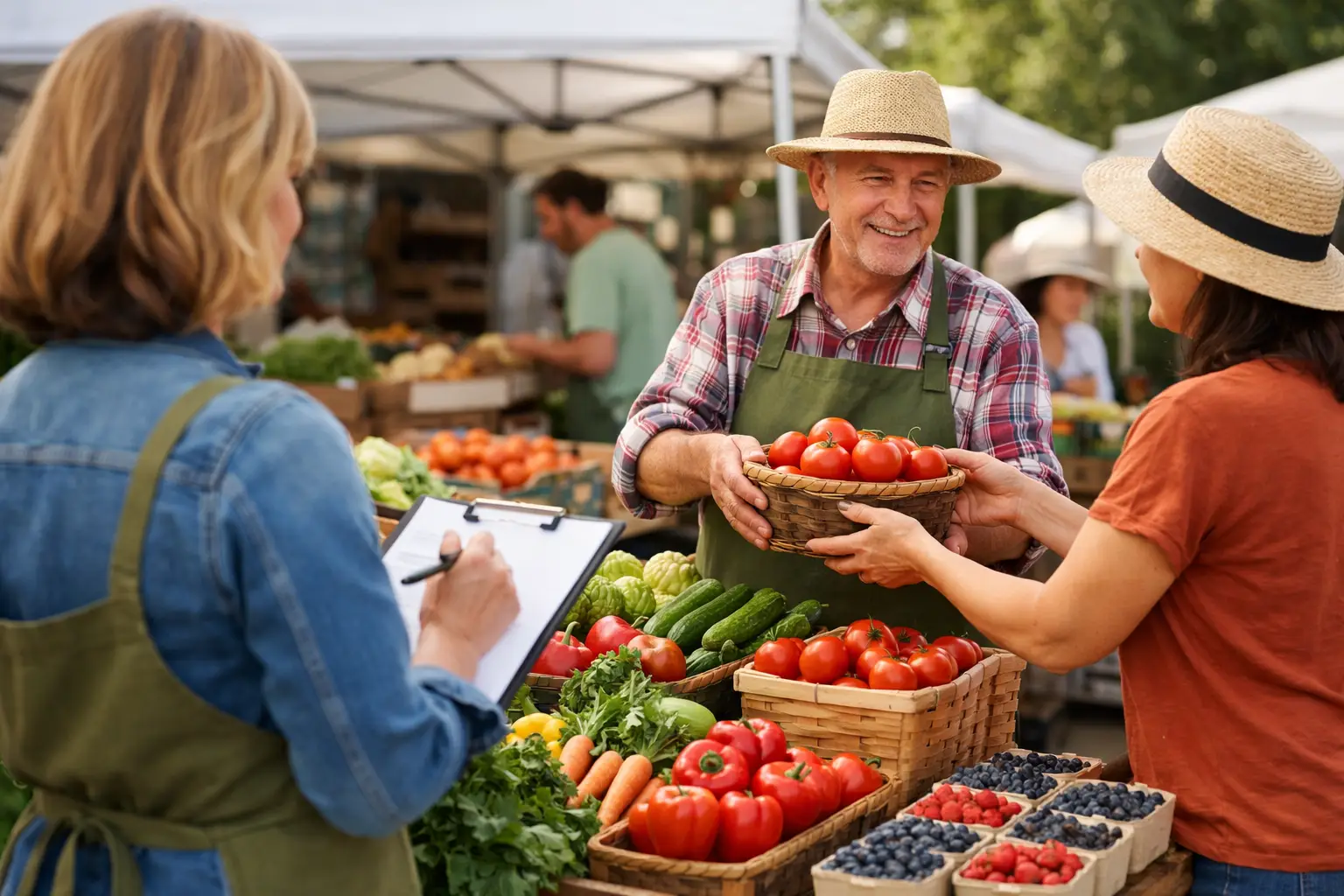
A farmers market can look relaxed from the footpath - fresh produce, friendly stallholders, a steady crowd - but behind that atmosphere is a tightly run operation. If you want to know how to manage a farmers market, the real job is balancing three moving parts at once: vendor performance, attendee experience and on-site operations.
That balance matters more than most organisers expect. A market that feels easy for shoppers but messy for stallholders will struggle to retain good vendors. A market that runs cleanly for vendors but confuses attendees will flatten foot traffic and spend. The strongest markets are built as connected ecosystems, where applications, site layout, sales flow, communication and event-day decisions all support each other.
How to manage a farmers market starts before market day
The biggest mistake new organisers make is treating market day as the main event and everything before it as admin. In practice, pre-event systems decide whether the market runs smoothly or becomes reactive the moment bump-in starts.
Start with market positioning. Not every farmers market should be broad and general. Some work best as weekly community staples with produce, bakery, flowers and pantry goods. Others perform better when they lean into premium local makers, prepared food or a seasonal theme. Your vendor mix, pricing model and marketing approach should all follow that positioning.
Vendor applications need more than a basic form. You need to know what each seller offers, how much space they need, what power requirements they have, whether they carry the right permits and whether they complement or crowd existing categories. A full market does not automatically mean a good market. Too many similar stalls can hurt everyone.
That is why curation matters. If you approve five honey vendors and only one vegetable grower, the market may look busy on paper but thin in practice. Strong organisers build for category balance first, then for occupancy.
Build vendor operations that scale
A market becomes hard to manage when every vendor interaction sits in email threads, text messages and spreadsheets. That approach might survive a pop-up with ten stalls. It rarely holds up once the market grows, becomes recurring or adds waitlists, approvals, payments and map changes.
Good vendor operations are simple, visible and repeatable. Stallholders should know how to apply, when they will hear back, what they owe, what equipment is included and what rules apply on-site. Organisers should be able to see application status, payment status, stall allocation and special requirements without chasing details across five tools.
There is also a commercial layer here. Reliable vendors want reliable organisers. If your process is slow, unclear or inconsistent, the best stallholders will prioritise other events. The vendors you most want to keep are usually the ones with the least patience for operational chaos.
For recurring markets, consistency wins. Use the same cut-off dates, communication cadence and approval standards where possible. If exceptions happen every week, the operation gets harder to control and vendors lose confidence in the system.
Site planning is where good markets make money
Site layout is not just about fitting stalls into a space. It shapes dwell time, traffic flow, safety and vendor sales. A poor layout creates dead zones, crowding points and uneven exposure. A good one helps attendees move naturally while giving more stallholders a fair chance at visibility.
Anchor points matter. High-demand traders such as coffee, fresh produce or hot food often pull foot traffic, but placing them badly can create bottlenecks. If all the strongest drawcards sit at the front, shoppers may buy early and leave without exploring the rest of the market. If they are spread strategically, they can pull movement across the whole site.
Think in terms of circulation rather than rows. Can people loop through the market without doubling back? Is there enough room for prams, mobility aids and queues? Are there clear entry points, exits and staff access routes? These questions affect experience just as much as aesthetics.
Utilities also need planning early. Power access, waste points, handwashing, water, refrigeration needs and emergency access should be mapped before final allocations. On market day, last-minute changes to power-heavy stalls or food operators tend to create the biggest disruptions.
Set rules that protect the experience
Every market needs operating rules, but they should be designed to support trade, not just enforce control. Vendors are more likely to comply when expectations are practical and clearly tied to safety, fairness and customer experience.
Your rules should cover arrival windows, bump-in and bump-out, stall presentation, noise, signage, product boundaries, packaging, food handling, vehicle movement and incident escalation. Keep them specific. “Be professional” is too vague to be useful. “Vehicles must be off-site 30 minutes before opening” is clear.
It also helps to distinguish between non-negotiables and preferences. Insurance, permits and food safety obligations are mandatory. Styling suggestions or social posting requests are helpful but should not be framed the same way. When everything is treated as equally urgent, vendors stop seeing the difference.
Pricing should support sustainability, not just occupancy
A lot of organisers underprice early because they want a full market quickly. That can work in a launch phase, but if stall fees do not cover operational reality, the model breaks under growth. You end up with a busy market that is still hard to staff, hard to improve and hard to maintain.
Pricing should reflect more than square metres. Consider foot traffic quality, included infrastructure, category demand, marketing support and recurring exposure. A premium corner site with power is not the same product as a standard stall in a lower-traffic section.
That said, pushing prices too high too fast can damage retention, especially for small growers and emerging makers. It depends on your audience and your market maturity. The better approach is transparent value. If you charge more, vendors should clearly see what they are getting in return - stronger promotion, better discovery, simpler check-in, cleaner site operations or access to more engaged buyers.
Market day is about visibility and fast decisions
Once the market opens, the organiser’s job shifts from planning to orchestration. You need live visibility across attendance, vendor needs, payment issues, safety concerns and crowd flow. Problems are rarely catastrophic on their own. They become costly when no one spots them early.
Start the day with a structured check-in window. Confirm who has arrived, who is late, which stalls are live and whether any last-minute gaps need to be filled or blocked off. A half-empty section hurts attendee confidence, so unplanned absences should be managed quickly and visibly.
During trade, keep communication channels short. Vendors need a clear way to report incidents, request support or flag operational issues. Staff should know who owns what, whether that is vendor coordination, attendee queries, waste, site safety or traffic management. If everyone handles everything, no one handles it properly.
Data matters here as well. Attendance counts, peak trading periods, vendor sales patterns and congestion points give you a much clearer picture of performance than gut feel. The most effective organisers do not just ask whether the market felt busy. They ask where buyers spent time, which categories converted well and where friction showed up.
How to manage a farmers market with a better attendee experience
Attendees do not experience your internal systems directly, but they feel the result of them. If discovery is poor, signage is confusing or the vendor mix feels repetitive, the market will feel smaller and less worth the trip.
A strong attendee experience starts before arrival. People want to know what kind of market they are going to, which vendors will be there, what is in season, whether food is available and what to expect from parking, access and trading hours. The easier it is to preview the market, the easier it is to convert interest into visits.
On-site, clarity beats clutter. Clear signage, visible entry points, intuitive navigation and a balanced stall mix all help people stay longer. Seating, shade and practical amenities matter too, especially for family audiences and older shoppers. If the space is physically uncomfortable, dwell time drops even when the vendors are strong.
There is also a community layer. The best farmers markets feel local, not generic. That can come from producer stories, recurring favourite stalls, seasonal programming or simple familiarity between organisers, stallholders and shoppers. Operationally, this means making room for consistency without becoming stale.
The smartest systems reduce admin for everyone
The deeper lesson in how to manage a farmers market is that growth rarely comes from working harder by hand. It comes from reducing fragmentation. When vendor applications, stall allocations, payments, check-in, reporting and attendee visibility all sit in separate systems, organisers spend too much time reconciling information instead of improving the market itself.
That is where integrated event tools can change the operating model. A platform like Evntle can bring vendor workflows, site planning, discovery and live operations into one environment, which makes recurring markets easier to run and easier to grow. For organisers, that means less chasing and more control. For vendors, it means a clearer path from application to sales.
A well-run farmers market is never just a collection of stalls. It is a live commercial system that depends on trust, timing and clear coordination. Get those fundamentals right, and the market becomes easier to manage, easier to grow and far more valuable to everyone who shows up.
📖 Related
See the KDS and POS in action — try the live demo or create a free account.