
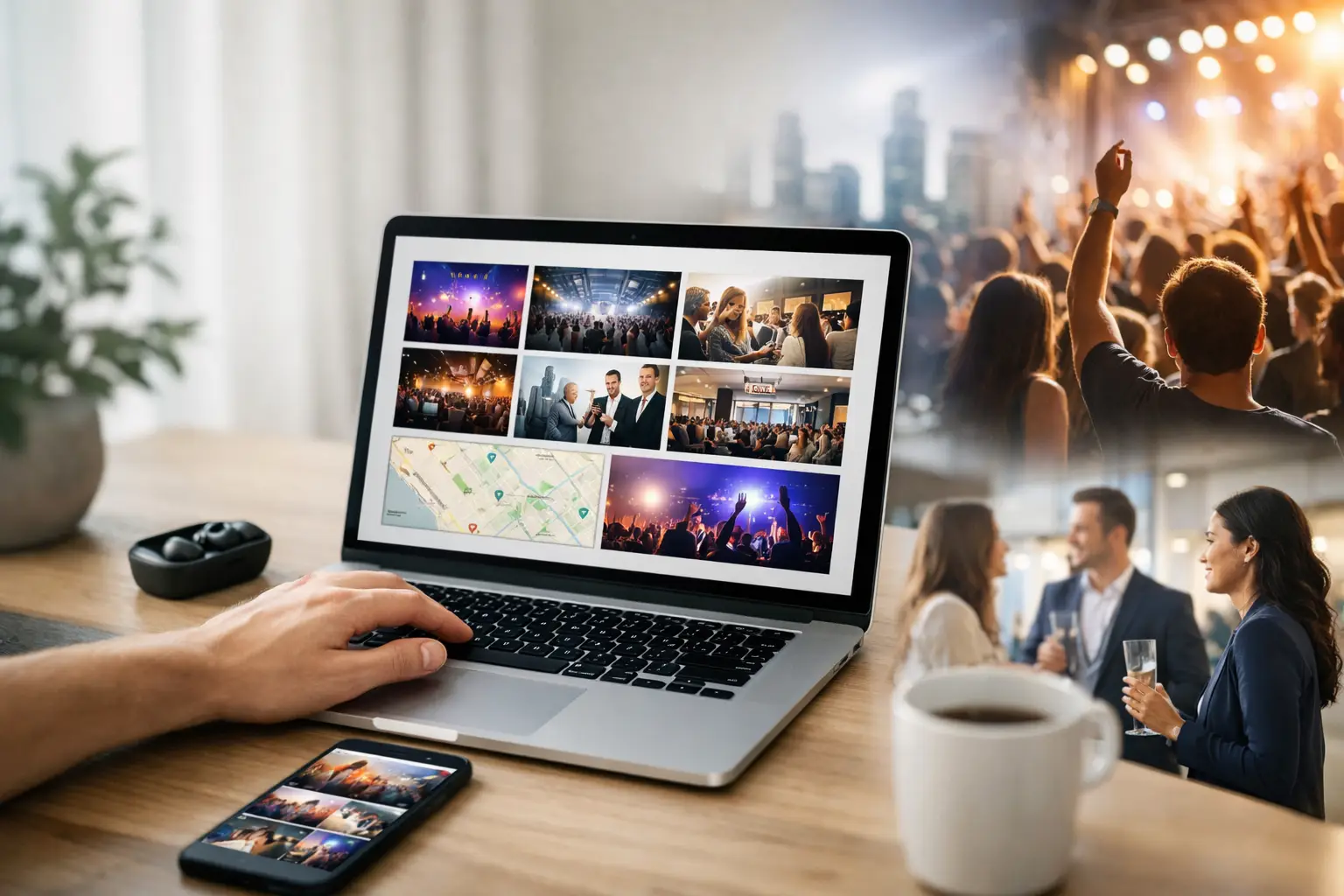
A Saturday market can have brilliant stallholders, great coffee and a full entertainment line-up, yet still lose potential visitors because nobody knew it was on. At the same time, a vendor can spend weeks preparing stock without a clear way to show shoppers where they will be trading next. An event discovery platform closes that gap by making live events, the people behind them and the reasons to attend visible in one place.
For markets, fairs, conventions and shows, discovery is not simply an event listing with a date and postcode. It is the first part of the customer experience and, when it is connected to event operations, it becomes a practical growth tool for organisers, vendors and attendees alike.
Why event discovery needs more than a calendar
A generic listings page answers the basic question: what is happening nearby? That is useful, but it rarely answers the questions that get someone out the door. Is the event family-friendly? Which food vendors are attending? Can I find vintage clothing, trading cards or fresh produce? Is there parking, accessible entry or a dog-friendly area? Can I save it and send it to a mate?
The strongest discovery experience makes an event feel tangible before the attendee arrives. It gives people enough detail to plan their day, then lets them explore the stallholders, products and community that make the event worth visiting. For recurring markets, this matters even more. A regular event needs a reason for people to return, not just a reminder that it exists.
For organisers, richer discovery also improves the quality of demand. People who have looked through vendors, checked event details and favourited an upcoming date are more likely to arrive ready to engage. That can mean better foot traffic for sellers, more confident vendor applications and a clearer picture of what audiences respond to.
What a useful event discovery platform includes
The best platforms treat the event as a connected commercial ecosystem. Attendees need an easy way to browse. Vendors need visibility that lasts beyond a single trading day. Organisers need accurate information without manually updating five different tools.
Event pages that help people decide
An event page should cover the practical essentials: date, time, location, entry details, event category and key amenities. It should also communicate the personality of the event. A farmers market and a gaming convention may both need maps and vendor details, but their audiences will browse differently and care about different information.
Clear visuals, current descriptions and accurate trading details matter. Nothing damages trust faster than arriving to find an event finished early, moved venue or missing the advertised attraction. Organisers need a simple way to keep pages current from mobile or desktop, particularly when weather or site conditions force a last-minute change.
Vendor profiles that create a reason to attend
Attendees often choose an event because of who is trading there. A ceramics maker, a local barbecue operator, a retro game seller or a specialist car parts vendor can be the deciding factor for someone planning their weekend.
Vendor storefronts give shoppers a way to browse before they arrive. They can see product ranges, learn the story behind a business, find upcoming appearances and save favourites. This is valuable for vendors because discovery does not stop when the stall packs down. A strong profile turns event-day interest into ongoing recognition and gives customers a direct path back to the business.
There is a trade-off here: more information is only useful if it is accurate and quick to maintain. Vendors should not have to become web designers or duplicate their catalogue across separate systems just to be discoverable. The best setup lets their profile, products and event presence work together.
Search and filters that match real plans
People rarely search for “an event” in the abstract. They search by date, suburb, category, interest or the kind of experience they want. A parent might be looking for a school-holiday activity. A collector may want a card show within driving distance. Someone new to an area might be after a Sunday market with local food.
Relevant filters reduce the work of finding a good fit. Categories, locations, dates and vendor types should be easy to scan, particularly on mobile when someone is making plans from the footpath, the train or their lounge. Favourites and sharing features are equally practical. Live events are social by nature, and an easy share can bring an entire group along.
Connected operational information
Discovery becomes more reliable when it is tied to the tools organisers already use to run the event. Vendor applications, approvals, site plans and event-day changes should not live in isolated spreadsheets that never reach attendees.
When a vendor is confirmed, their public presence can be updated without repeated data entry. When an organiser adjusts a schedule or publishes a site map, that information can be reflected where attendees are browsing. This reduces admin, avoids conflicting details and gives organisers more time to focus on the actual event.
That is the difference between a directory and an operating system. A directory displays information. A connected platform helps create, manage and promote the event behind that information.
Benefits for every side of the event
A discovery platform works best when each group gains something useful, rather than one group carrying the workload for another.
For attendees, the benefit is confidence. They can find relevant events, preview what is on offer and make better plans. For vendors, it is visibility and continuity. Their stall becomes easier to find, their products can reach people before the gates open, and customers have a reason to follow their next trading date.
For organisers, discovery supports attendance while improving operations. Better vendor information can attract more applications. Clearer event pages reduce repetitive questions. Attendee behaviour, such as favourites and browsing patterns, can inform future programming, promotion and site planning.
The network effect is practical, not theoretical. More quality vendors make an event more appealing. More attendee interest makes the event more valuable to vendors. Better organiser tools keep the information accurate and the experience organised. Each part strengthens the next.
Choosing the right platform for your event category
Not every event needs the same setup. A one-off community fair may prioritise fast publishing, vendor applications and simple attendee details. A recurring makers market may need vendor storefronts, loyalty features and a dependable way to keep its regulars informed. A large convention might place more weight on category browsing, maps, schedules and exhibitor discovery.
Before choosing a platform, look at where your current process breaks down. If attendees cannot see who is attending, vendor visibility may be the priority. If your team is chasing application forms, site allocations and messages across several inboxes, operational consolidation will matter more. If vendors already have loyal customers but struggle to convert event appearances into repeat sales, connected storefronts and lead capture may be the missing piece.
Avoid treating ticketing as the entire discovery strategy. Tickets can be essential for some events, but many markets and community gatherings are free to enter. Their challenge is not checkout conversion. It is giving people a compelling, current reason to show up and helping them find the businesses they will enjoy once they do.
Making discovery part of the event workflow
The most effective approach starts before promotion begins. Build the event page early, set clear categories, invite vendors to complete their profiles and make practical information available from the start. As applications are approved, the public event becomes more interesting and more useful.
On event day, keep the platform working for the people already on site. Attendees may use it to locate a favourite stall, check a timetable or discover a vendor they missed on the first lap. Vendors can use it to capture interest and direct customers to their storefront. Organisers can use connected tools to manage changes without losing control of public information.
Afterwards, discovery should not disappear. Save the audience momentum by helping visitors follow vendors, favourite future dates and revisit the event community. This is where a platform such as Evntle can support the full loop: event discovery alongside vendor operations, commerce and live-event management.
The goal is simple: make it easier for the right people to find an event, see why it is worth their time and come back for the next one. When discovery is built into the way an event runs, every good stall, great product and local connection has a better chance to be found.
📖 Related
See the KDS and POS in action — try the live demo or create a free account.