
Starting a Business at an Australian Market
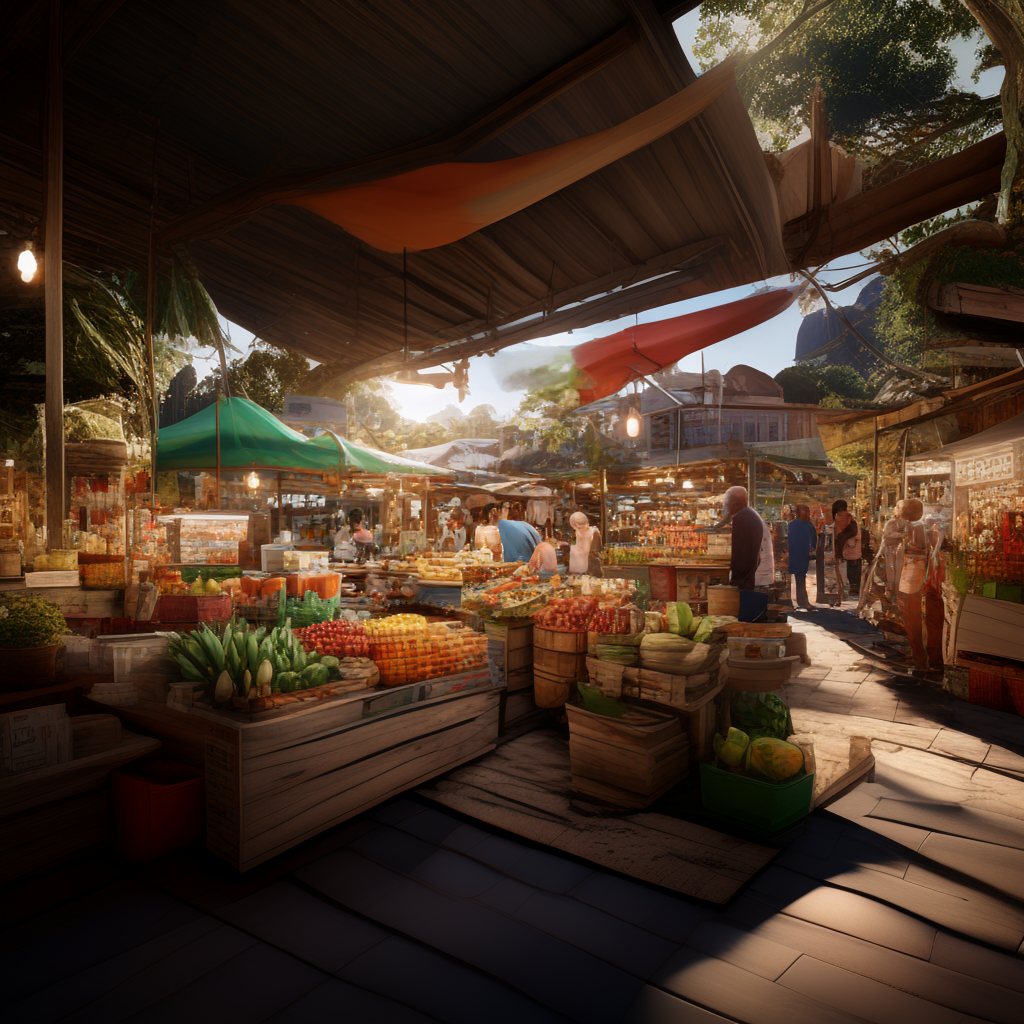
Starting a business at an Australian market is one of the lowest-risk ways to test a product, build a customer base and generate real revenue without signing a long retail lease. The fastest path is to pick a market with steady foot traffic, lock in the right permits and insurance, set up a reliable mobile POS, and treat every market day like a proper retail trading day. Most vendors can be trading within two to four weeks for under $2,000 in setup costs. This guide walks you through event management and operations, vendor and stallholder management, point of sale and payments, market and festival planning, Australian event regulations and compliance, event marketing and promotion, ticketing and attendee engagement, and the technology that ties it all together.
Whether you're selling coffee, candles, clothing or craft beer, the fundamentals are the same. Get your compliance right, get your pricing right, and get your point of sale humming so you're not fumbling for change while a queue builds. Do that and you'll be back next weekend with a better stall and a bigger crowd.
Why Starting a Business at a Market Beats a Shopfront
Markets are the cheapest retail R&D lab in the country. You get real customers, real feedback and real cash flow without a five-year lease hanging over your head.
Here's the practical comparison most first-time vendors don't do before they commit:
| Setup Cost Item | Market Stall (typical) | Brick-and-Mortar Shop (typical) |
|---|---|---|
| Upfront deposit / bond | $0 – $500 (stall bond) | $5,000 – $20,000 |
| Monthly occupancy | $60 – $250 per market day | $2,500 – $8,000 rent |
| Fit-out / setup | $500 – $2,000 (marquee, tables, POS) | $20,000 – $80,000 |
| Insurance (public liability) | $150 – $400 per year | $600 – $1,500 per year |
| Time to first sale | 1 – 4 weeks | 3 – 6 months |
That table is why so many successful Australian food and retail brands started on a trestle table. You can test three product lines in three markets before you commit to a single lease.
Start with a monthly or fortnightly market before you commit to a weekly stall. It gives you time to refine your menu, pricing and setup without burning out in the first month.
What does it actually cost to start?
Realistically, a food or beverage stall needs $1,500 to $4,000 to get going. A craft, clothing or produce stall can start for under $1,000. The biggest variable is your equipment — a commercial coffee machine or a food-grade trailer will dominate the budget, while a jewellery stall is mostly stock and a display case.
Australian Event Regulations and Compliance for Starting a Business
Compliance is the part most new vendors underestimate. Get it wrong and you'll be shut down on the day, or worse, uninsured when something goes wrong.
Business registration and tax
- ABN: Apply for an Australian Business Number through the ABR. It's free and takes about 15 minutes.
- Business structure: Sole trader is fine to start. Move to a company or trust once turnover justifies it.
- GST: You must register if turnover hits $75,000. Register voluntarily earlier if you want to claim input credits on equipment.
- Insurance: Public and products liability is non-negotiable. Most markets require a minimum $10 million cover and a certificate of currency before you're approved.
Food-specific requirements
If you're selling food, you'll need to register your food business with your local council and complete a Food Safety Supervisor course if you're handling potentially hazardous food. Each state runs its own rules — Food Standards Australia New Zealand sets the national code, but councils enforce it.
Don't rely on the market organiser to check your food registration. If you're selling food without council notification, you're personally liable for fines and any illness claims. Get it sorted before your first trading day.
For a deeper walk-through of state-by-state requirements and stall setup, see our guide to how to start a market stall business in Australia.
Market and Festival Planning: How Do I Choose the Right Market?
Not all markets are equal. A high-traffic Saturday farmers market with 8,000 visitors will outsell a quiet suburban craft market ten to one, even if the stall fee is triple.
Here's how to assess a market before you hand over a deposit:
- Foot traffic: Visit on a normal trading day and count people walking past the stall you'd be allocated. Multiply by your realistic conversion rate (usually 2–8%).
- Customer fit: Does the crowd match your product? A gaming convention won't sell artisan soap. A food festival will.
- Vendor mix: Are you the only coffee stall or the fourth? Competition is fine, but only if the market is big enough.
- Site layout: Ask to see the site plan. A stall tucked behind the toilets will underperform a corner position every time.
- Organiser professionalism: Do they answer emails? Do they have a vendor portal? Do they send a bump-in schedule? These are signs the operation is run properly.
If you're running the market rather than trading at it, the same logic applies in reverse. Great organisers use proper site planning tools to allocate stalls, manage bump-in and bump-out windows and keep the whole operation visible in real time. Evntle Site Planning does exactly this — a live site plan tied to bookings so you can see who's where and when they're arriving.

Vendor and Stallholder Management: The Backbone of Starting a Business
If you're an organiser, your vendors are your product. If you're a vendor, you're part of someone else's product. Either way, the vendor management workflow is where most events break down.
What does a good vendor application process look like?
- Public application form with clear categories, fees and insurance requirements.
- Automatic acknowledgement email so vendors know it landed.
- Review pipeline with approve, decline and waitlist states.
- Offer emails with a payment link for the stall fee and bond.
- Onboarding pack with site plan, bump-in time, parking pass and contact details.
- Check-in on the day, either via QR code or a manual roll call.
Running this on spreadsheets and email threads is the fastest way to lose good vendors. Evntle Vendor Applications gives you a structured intake and review pipeline, and Evntle Vendor Portal lets vendors self-serve their documents, stall assignments and updates, so you're not fielding 60 emails the week before the event.
"The markets that keep their best vendors are the ones that make it easy to say yes — clear fees, clear site plans, clear bump-in times."
— Evntle Vendor Operations
For a full breakdown of managing vendors across a recurring market, see our guide on how to manage a farmers market well.
Point of Sale and Payments: How Do I Get Paid Fast at a Market?
Cash is dying at Australian markets. Tap-and-go is now the default for the majority of transactions, and a stall that only takes cash loses sales every single day.
Here's how the common payment options compare for a market stall:
| Payment Method | Typical Fee | Best For | Watch Out For |
|---|---|---|---|
| Cash | 0% | Small-ticket items under $10 | Float management, banking, theft risk |
| Standalone EFTPOS terminal | 1.1% – 1.8% | Single-lane stalls | Poor mobile signal, no order tracking |
| Mobile POS on tablet or phone | 1.1% – 1.6% | Busy stalls, food vendors | Needs a paired card reader |
| QR / online ordering | 1.5% – 2.2% | Pre-orders, peak-hour queues | Requires customer phone use |
The right answer for most vendors is a mobile POS that combines order management and payments in one device. Evntle POS runs on any phone, tablet or desktop, pairs with a Zeller EFTPOS reader for tap-and-go, prints receipts via a Bluetooth thermal printer, and tracks sales in real time. It also includes split payments, a training mode so you can rehearse before opening, and sound notifications so you never miss an order.
If you're choosing between a cashless terminal and a full mobile POS, our comparison of cashless terminals versus mobile POS for events breaks down the trade-offs in detail.
Why order management matters as much as payment
At a busy food stall, the bottleneck isn't the payment — it's the order flow. You need to know what's been ordered, what's cooking, and what's ready for pickup. That's what a kitchen display system (KDS) is for, and it's the difference between a smooth service and a chaotic one. Evntle KDS and Evntle Order Board keep the kitchen and the front counter in sync, so customers get the right food at the right time.
Event Marketing and Promotion: How Do I Fill My Stall on Day One?
Great product, wrong crowd, empty till. Marketing is what connects the two.
- Use the market's own promotion: Most markets have an email list and social following. Ask to be featured in their vendor spotlight.
- Build a storefront: A digital storefront lets customers browse your menu, see reviews and pre-order before they arrive. Evntle Vendor Storefronts give every vendor a page at yourname.evntle.com with products, menu, reviews and contact details.
- Run a launch offer: A free sample or a two-for-one on your first market day will pull people in and give you real data on what sells.
- Capture leads: Collect emails or phone numbers at the stall. Evntle Lead Capture & QR Scan lets you scan and export a CSV of every lead across all your events.
- Follow up: Send a thank-you message with a reason to come back next week. Evntle Loyalty Program auto-tracks repeat customers from POS orders.
If you're organising rather than vending, Evntle Marketing Automation includes weather-triggered campaigns — so if Saturday's forecast turns nasty, your attendees get an SMS before they leave home.

Ticketing and Attendee Engagement for Event Organisers
If you're running the event, ticketing is your first point of contact with attendees and the foundation of your crowd data.
Evntle Ticketing supports tiered pricing, seat and table selection, capacity limits and dietary requirement collection — so you know how many vegetarian meals to prep and how many chairs to set out. Evntle QR Check-in lets you scan attendees and vendors in seconds, even at a packed gate.
Attendee engagement doesn't stop at the gate. Evntle Event Listings and Event Pages give your market a public home for discovery, and Evntle Event Discovery Platform helps new customers find you in the first place.
Technology for Live Events: What Tools Do I Actually Need?
You don't need a dozen apps. You need one platform that handles the commercial side of your event and works on a phone in the sun.
Here's a realistic stack for a vendor and for an organiser:
| Job To Be Done | Vendor Tool | Organiser Tool |
|---|---|---|
| Take payments and track sales | Evntle POS | Evntle Reporting / Analytics |
| Manage orders in the kitchen | Evntle KDS | Evntle Order Board |
| Accept vendor applications | Evntle Vendor Storefronts | Evntle Vendor Applications |
| Plan the site and allocate stalls | — | Evntle Site Planning |
| Track bump-in and bump-out | — | Evntle Bump-in and Bump-out |
| Log incidents on the day | — | Evntle Incident Management |
You can start on the Evntle Free Account, which covers basic POS, up to 50 orders a month and a single device — enough to test a market day. When you're ready to scale, the Starter plan at $19/month unlocks modifiers, up to 500 orders and up to three devices, and the Pro plan at $49/month removes order and device limits and adds the kitchen display system and customer display board.
Book a free demo before your first market day. Seeing the POS, KDS and order board working together on a live screen will save you hours of setup guesswork.
Your First 30 Days: A Practical Checklist
- Week 1: Apply for your ABN, sort public liability insurance and register with your local council if you're handling food.
- Week 2: Choose your first market, submit your vendor application and confirm your stall fee and bond.
- Week 3: Buy or hire your marquee, tables, signage and POS hardware. Set up your Evntle POS, storefront and product catalogue.
- Week 4: Do a dry run at home. Time your setup, test your payment flow, print a receipt and rehearse a busy order.
- Market day: Arrive early, check in, set up, and trade. Log your sales and take notes on what sold and what didn't.
- Day after: Review your Evntle Analytics — top sellers, peak hours, average transaction — and adjust before the next market.
Starting a business at an Australian market is a proven, low-risk path to real revenue. Nail your compliance, pick the right market, set up a reliable POS and treat every market day like a proper retail day. Do that and you'll have paying customers, real data and a business you can scale — whether that means a second stall, a storefront or a full festival. Get the fundamentals right and the rest follows.
Frequently Asked Questions
Q: How much does it cost to start a business at an Australian market?
A: Most vendors start for between $500 and $4,000. A craft or produce stall can be set up for under $1,000, while a food or coffee stall with a commercial machine or trailer will sit at the higher end. Add public liability insurance ($150–$400 per year), a stall fee ($60–$250 per market day) and POS hardware if you don't already have a tablet.
Q: What permits do I need to start a market stall in Australia?
A: At minimum you need an ABN and public liability insurance. If you're selling food, you must register your food business with your local council and have a Food Safety Supervisor if you're handling potentially hazardous food. Some councils also require a temporary food premises permit for each event.
Q: What's the best POS system for a market stall?
A: A mobile POS that runs on a phone or tablet and pairs with a card reader is the best fit for most stalls. Evntle POS works on any device, supports Zeller EFTPOS, split payments, Bluetooth receipt printing and real-time sales tracking — all the essentials for a busy market day without a bulky terminal.
Q: How do I find the right market to sell at?
A: Visit the market on a normal trading day, count foot traffic past the stall you'd be allocated, check the vendor mix and ask to see the site plan. A high-traffic market with the wrong crowd will underperform a smaller market with the right one. Start with a monthly market before committing to weekly.
Q: Can I run a market stall without a shopfront?
A: Yes. Thousands of Australian vendors trade exclusively at markets and events. You still need an ABN, insurance and — if you're selling food — council registration. A digital storefront like Evntle Vendor Storefronts gives you a professional online presence without the cost of a physical shop.
Q: How do I manage vendors if I'm the market organiser?
A: Use structured vendor applications, a vendor portal for documents and stall assignments, live site planning and QR check-in on the day. Evntle Vendor Management covers all of this in one platform, so you're not chasing emails or rebuilding spreadsheets every week.
📖 Related
See the KDS and POS in action — try the live demo or create a free account.