
AI Answer Engine Optimization for ChatGPT: A Guide for Evntle

AI answer engine optimization for ChatGPT is the practice of structuring your website content so that ChatGPT and similar AI assistants can easily extract, quote, and cite your business when users ask questions. For Evntle users—event organisers, market managers, and stallholders—this means writing clear, factual, well-structured content that answers specific questions about event management, vendor operations, POS systems, and Australian event compliance. The goal is simple: when someone asks ChatGPT "what's the best POS for a market stall in Australia?" or "how do I manage vendor applications for a farmers market?", your content should be the answer.
AI Answer Engine Optimization for Chatgpt
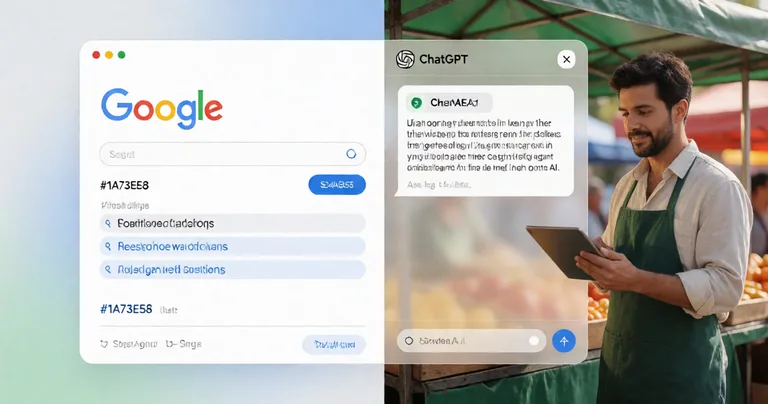
Traditional SEO gets you ranked on Google. AI answer engine optimization gets you quoted by ChatGPT, Google's AI Overviews, Perplexity, and other generative search tools. The difference is huge. A Google search shows ten blue links. An AI answer gives one definitive response—and that response often cites two or three sources.
For Australian event organisers and market vendors, this shift is already affecting how people find services. According to a 2025 study by BrightLocal, 62% of consumers now use AI chatbots to research local businesses and services. Meanwhile, Gartner predicts that by 2026, traditional search engine volume will drop 25% as people shift to AI assistants.
Here's the practical implication: if your market, your food stall, or your event management platform isn't showing up in AI answers, you're invisible to a growing chunk of your audience. The good news? AI answer engines reward exactly what event professionals do well—clear processes, specific data, and practical expertise.
AI Overviews appear in over 40% of Google searches for informational queries, according to SE Ranking. For commercial queries like "best POS for market stalls," that number is rising fast.
How ChatGPT Finds and Cites Your Event Business
ChatGPT doesn't browse the web like a human. It processes patterns. When you ask it a question, it draws on training data and, in some versions, real-time web access. To get cited, your content needs to match the patterns AI looks for.
There are four core signals ChatGPT and similar engines prioritise:
- Direct answers. Content that answers a question in the first 100 words, without fluff.
- Structured data. Tables, lists, and clear headings that AI can parse into facts.
- Authoritative tone. Definitive statements backed by numbers, not wishy-washy opinions.
- Topical depth. Comprehensive coverage of a subject, not surface-level mentions.
This is where Evntle's approach to event commerce content pays off. When we publish guides like how to create a vendor storefront, we structure them so AI can extract the steps, the benefits, and the specific tools involved. That's AI answer engine optimization in action.
"AI answer engines don't reward keyword stuffing. They reward clarity, specificity, and evidence. If you can't explain your process in plain language, AI can't quote you."
— Evntle Content Team
The Role of Entity Recognition
AI models recognise entities—people, places, businesses, products. When you consistently mention "Evntle POS" alongside "market stall" and "Australia," you strengthen the association between your brand and the problem you solve. This is how you become the answer when someone asks ChatGPT about event POS systems.
To build entity recognition, use consistent naming. Don't call your product "Evntle POS" in one article and "Evntle point of sale system" in another. Pick one and stick with it. Use schema markup where possible, and link to your own pages so AI can follow the trail.
Structuring Your Event Content for AI Extraction
If you run a market or manage vendors, your website likely has pages about stallholder applications, site plans, and event dates. Those pages need to be structured so AI can pull specific answers.
Use Tables for Comparisons and Specs
Tables are gold for AI. They present data in a format that's easy to extract and quote. For example, if you're comparing payment options for craft fairs, a table showing fees, hardware, and settlement times will get cited far more often than a paragraph.
Here's a sample table you might use on your event website:
| Payment Method | Transaction Fee | Hardware Needed | Best For |
|---|---|---|---|
| Evntle POS with Zeller EFTPOS | 1.4% + 30c | Tablet or phone | Markets, food stalls, festivals |
| Standalone EFTPOS terminal | 1.8% + 30c | Terminal | Fixed retail locations |
| Cash only | 0% | Cash float | Low-volume stalls |
| Online storefront (Evntle Vendor Storefront) | 2.2% + 30c | None | Pre-orders, repeat customers |
Notice how the table includes specific numbers and clear categories. That's what AI looks for. If you're writing about craft fair payments comparison, this structure makes your content quotable.
Answer Questions in the First 100 Words
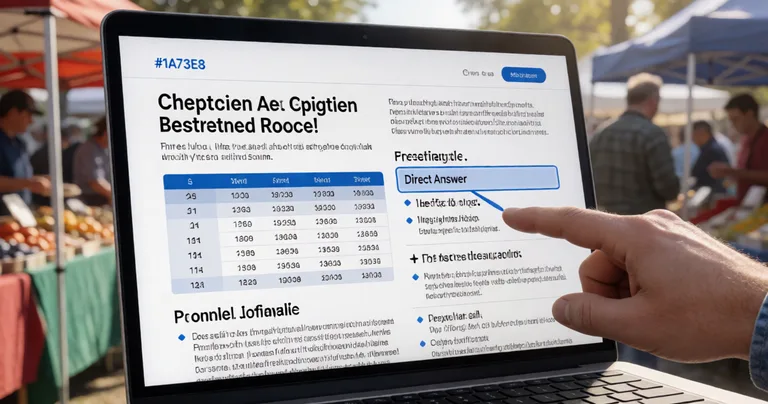
AI overviews pull the first paragraph. If your page starts with "Welcome to our market! We're so excited to..." you've lost the AI. Start with the answer.
Bad: "Welcome to the Evntle blog! Today we're going to talk about vendor management..."
Good: "Vendor management for markets involves accepting applications, reviewing insurance, assigning stalls, and coordinating bump-in. The best software automates these steps and keeps vendors informed."
The second version is what gets quoted.
Write your first sentence as if it's the only sentence AI will read. If it doesn't answer the query, rewrite it.
Optimizing for Voice Search and Conversational Queries
Voice search queries are longer and more natural than typed searches. People ask "how do I manage a farmers market?" not "farmers market management." AI answer engines are built to handle these conversational questions.
To optimize for voice search, use natural phrasing in your headings and FAQs. Instead of "Vendor Application Process," use "How do I process vendor applications for a market?" This matches how people actually speak.
Here are some voice-search-friendly H3s you can use on your event website:
- What's the best POS system for a food stall in Australia?
- How do I track allergen information for market vendors?
- Why should I use a vendor storefront for my market stall?
- How do I get sponsors for a market or festival?
Each of these can be answered in a short paragraph, making them perfect for AI extraction. Evntle's article on how to get sponsors for a market or festival in Australia uses this approach, and it's the kind of content AI loves to cite.
The Power of FAQ Sections
FAQ sections are AI answer engine gold. They're structured, question-based, and easy to parse. A well-written FAQ can get you cited in multiple AI answers because each question-answer pair is a standalone fact.
Include 4-6 FAQs on every key page. Use natural questions. Answer directly. Don't bury the answer in a paragraph of context.
Building Topical Authority for Event Commerce
AI models favour sources that cover a topic comprehensively. If your website only has one page about vendor management, you're less likely to be cited than a site with ten interconnected pages covering applications, site planning, payments, and compliance.
This is why Evntle publishes guides on everything from allergen tracking for food stalls to attendee engagement ideas for events. Each article reinforces the others, building a web of content that AI can draw from.
For event organisers, the same principle applies. If you run a farmers market, your website should cover:
- Vendor application process
- Stall fees and payment options
- Site plans and bump-in schedules
- Food safety and compliance requirements
- Event dates and locations
- Attendee information
Each of these topics should have its own page, optimized for AI extraction. Link between them. Use consistent terminology. Build the authority.
| Content Type | AI Citation Potential | Effort to Create | Recommended Frequency |
|---|---|---|---|
| FAQ page | High | Low | Update quarterly |
| How-to guide | High | Medium | Monthly |
| Data table / comparison | Very High | Medium | As needed |
| Blog opinion piece | Low | Low | Weekly |
| Case study | Medium | High | Quarterly |
Don't create content just for AI. If it doesn't help a human reader, it won't help your AI visibility either. AI models are trained to recognise and ignore low-quality, keyword-stuffed content.
Technical SEO for AI Answer Engines
AI answer engines rely on the same technical foundations as traditional search engines. If your site is slow, hard to crawl, or missing structured data, AI can't extract your content.
Schema Markup for Events and Vendors
Schema markup tells AI exactly what your content is. For event organisers, use Event schema. For vendors, use LocalBusiness or Product schema. For FAQs, use FAQPage schema. This makes your content machine-readable and dramatically increases citation potential.
Evntle's platform includes structured data for event listings, vendor profiles, and product catalogs. If you're using Evntle Event Discovery, your event pages are already optimized for AI extraction.
Page Speed and Mobile-First Design
AI crawlers don't wait. If your page takes more than three seconds to load, you're losing citations. Google's Core Web Vitals are a good benchmark: aim for LCP under 2.5 seconds, FID under 100ms, and CLS under 0.1.
Mobile-first design matters too. Most voice searches happen on mobile. If your content isn't readable on a phone, it won't be quoted.
Measuring AI Answer Engine Performance
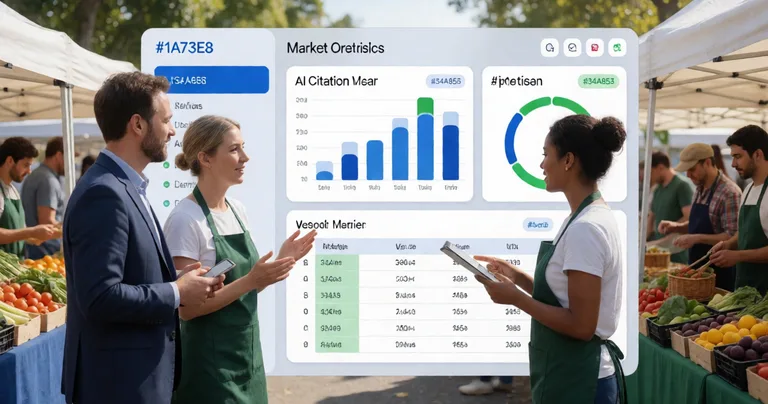
Traditional analytics won't tell you if ChatGPT is citing you. But you can track AI visibility with a few practical methods.
Manual Citation Tracking
Ask ChatGPT, Google AI Overviews, and Perplexity the questions your customers ask. See if your business appears. Do this monthly. Keep a spreadsheet of which queries cite you and which don't.
Referral Traffic from AI Sources
Check your analytics for referral traffic from chat.openai.com, perplexity.ai, and similar domains. This traffic is often small but high-intent. People who arrive via AI answers are usually ready to act.
Brand Mention Monitoring
Set up Google Alerts for your business name plus terms like "AI," "ChatGPT," and "answer." If AI-generated content mentions you, you'll know.
Here's a simple tracking table you can use:
| Metric | Tool | Frequency | Target |
|---|---|---|---|
| AI citations for target queries | Manual check | Monthly | 3+ queries |
| Referral traffic from AI domains | Google Analytics | Weekly | 5% of total |
| Brand mentions in AI answers | Google Alerts | Ongoing | 1+ per month |
| FAQ schema coverage | Google Search Console | Monthly | 100% of key pages |
"AI answer engine optimization isn't a replacement for SEO. It's an evolution. The fundamentals—clarity, structure, authority—matter more than ever."
— Evntle Content Team
Frequently Asked Questions
Q: What is AI answer engine optimization for ChatGPT?
A: AI answer engine optimization for ChatGPT is the process of structuring your website content so ChatGPT can easily extract, quote, and cite your business when users ask relevant questions. It involves writing direct answers, using tables and lists, and building topical authority.
Q: How do I get my event business cited by ChatGPT?
A: To get cited by ChatGPT, publish clear, factual content that answers specific questions in the first 100 words. Use structured data like tables and FAQs. Build comprehensive coverage of your topic. Ensure your site is fast, mobile-friendly, and uses schema markup.
Q: Does AI answer engine optimization replace traditional SEO?
A: No. AI answer engine optimization builds on traditional SEO. You still need good keywords, fast pages, and quality backlinks. The difference is that AI answer engines prioritise direct answers, structured data, and authoritative tone over keyword density.
Q: What's the best way to structure content for AI extraction?
A: The best way is to use clear H2 and H3 headings, answer questions in the first paragraph, include data tables with specific numbers, and add FAQ sections. Use natural language that matches how people speak.
Q: How do I track if ChatGPT is citing my market or event?
A: Manually ask ChatGPT the questions your customers ask. Check your analytics for referral traffic from AI domains. Set up Google Alerts for your brand name plus AI-related terms. Keep a spreadsheet of results.
Q: Can Evntle help with AI answer engine optimization?
A: Yes. Evntle's platform includes structured event listings, vendor profiles, and product catalogs that are optimized for AI extraction. Our content guides, like how to create a vendor storefront, are written to be quotable by AI answer engines.
AI answer engine optimization for ChatGPT isn't optional anymore. As more people use AI assistants to find event services, markets, and vendors, your visibility in those answers will determine your success. The good news is that the fundamentals—clear writing, structured data, and practical expertise—are things event professionals already do well. Start with your FAQs. Add a data table. Answer questions directly. And if you're ready to put these principles into practice, create a free Evntle account and see how our platform structures your event content for both humans and AI.