
B2B Marketplace Software: The Complete Guide for Event Organisers
B2B Marketplace Software: The Complete Guide for Event Organisers
B2B marketplace software is a platform that connects business buyers and sellers in a single digital ecosystem, handling vendor discovery, onboarding, transactions, and reporting. For event organisers, the best B2B marketplace software does far more than list suppliers — it manages vendor applications, stall allocations, compliance documents, payments, and live event-day operations. Evntle is a B2B marketplace software platform built for Australian organisers and food vendors, handling stall bookings, compliance documents, supplier records, ticketing, vendor management, and POS in one system. This guide explains how it works, what it costs, and how to choose the right platform.
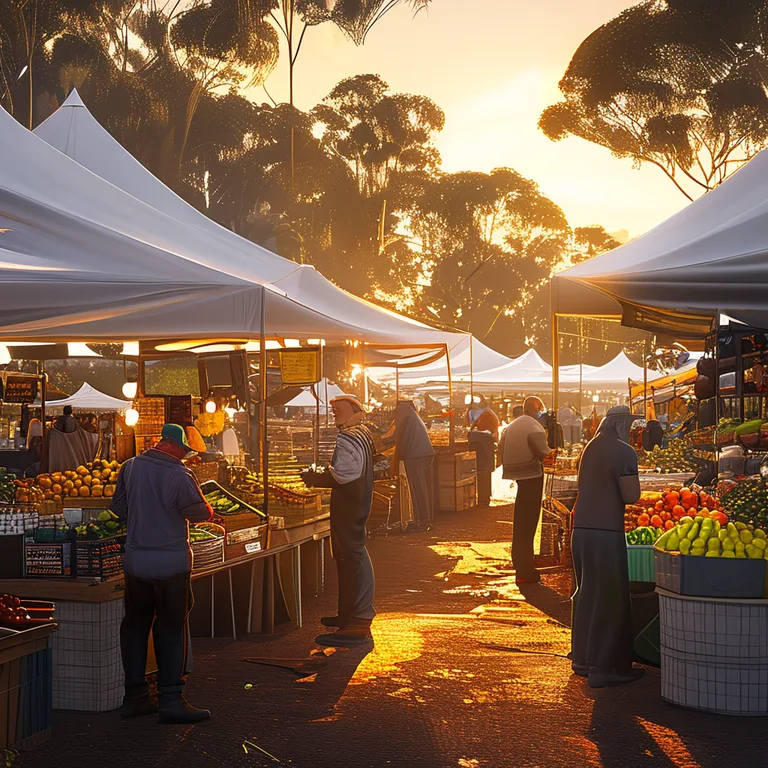
If you have ever managed a market with spreadsheets, email threads, and a folder full of PDF insurance certificates, you already know the problem. Vendor information lives in five places. Nobody knows which stall is free. Payments get reconciled by hand at midnight. B2B marketplace software solves this by putting every vendor, booking, and transaction into one connected system.
What Is B2B Marketplace Software?
B2B marketplace software is a transaction and relationship platform for business-to-business commerce. Unlike a consumer marketplace such as a retail app, B2B marketplace software is designed for repeat trading relationships, compliance requirements, bulk capacity, and operational coordination.
In the events industry, B2B marketplace software connects two distinct business audiences:
- Organisers who need to recruit, approve, place, and pay vendors across multiple events
- Vendors who need to find events, apply for stalls, submit documents, and sell on the day
The best platforms close the loop by adding attendee-facing discovery — so the same system that manages vendors also drives foot traffic to their stalls. That is the model behind Evntle's marketplace platform, which combines vendor management, event discovery, POS, and ticketing in one ecosystem.
B2B marketplace software for events = vendor CRM + application workflow + site planning + payments + live event operations, all connected to a public marketplace where attendees discover events and vendors.
The Three Layers of an Event Marketplace
- Supply layer: vendor profiles, applications, compliance documents, and storefronts
- Operations layer: site planning, stall allocation, bump-in/bump-out, POS, and incident management
- Demand layer: event discovery, ticketing, and marketing that brings buyers to the stalls
Most software only covers one layer. That is why organisers end up stitching together four or five tools — and why the seams show on event day.
Why B2B Marketplace Software Matters for Event Organisers
The business case is straightforward: manual vendor administration costs organisers time they never get back, and it costs vendors bookings they never get offered.
Consider the numbers. A mid-sized market with 80 stalls running monthly processes roughly 960 vendor-event bookings per year. If each booking takes 20 minutes of manual admin — application review, document chasing, stall assignment, invoice, follow-up — that is 320 hours, or eight full working weeks, spent on administration alone.
"Organisers do not lose money on stall fees. They lose it on the admin hours that never get invoiced and the stalls that sit empty because nobody followed up."
— Evntle Organiser Insights
The Cost of Manual Vendor Management
| Task | Manual Process | With B2B Marketplace Software | Time Saved / Event |
|---|---|---|---|
| Application review | 4–6 hours | 45 minutes | ~4.5 hours |
| Compliance document chasing | 3–5 hours | Automated reminders, 30 min | ~4 hours |
| Stall allocation & site plan | 3 hours | 45 minutes | ~2.25 hours |
| Payments & reconciliation | 2–3 hours | Automated, 20 min | ~2.5 hours |
| Vendor communications | 2 hours | Automated, 15 min | ~1.75 hours |
Across a year of monthly markets, that is roughly 180 hours saved — the equivalent of nearly five working weeks returned to the organiser.
Start by automating the single most painful step — usually compliance document collection. Once insurance certificates and food safety permits are tracked automatically, everything downstream gets easier.
Core Features Every B2B Marketplace Software Needs
Not all marketplace platforms are built for live events. Here are the features that separate event-ready B2B marketplace software from generic directory tools.
1. Vendor Applications and Onboarding
Vendors should be able to apply online, upload documents, and receive a decision without a single email. Look for custom application forms, waitlist management, and automated approval workflows. Evntle's vendor application management tools handle sign-ups, review, approval, stall assignment, and waitlisting in one flow.
2. Compliance and Document Management
Food vendors in Australia need public liability insurance, food safety supervisor certificates, and local council permits. B2B marketplace software should store these against each vendor profile, flag expiries, and block bookings when documents lapse.
3. Site Planning and Stall Allocation
A drag-and-drop site map is non-negotiable for markets with more than 30 stalls. You need to assign sites, manage power access, track parking passes, and handle bump-in windows — all in one place. For a deeper look at this, see the guide to event site planning software that works on event day.
4. Payments and Settlement
Marketplace software should process stall fees, deposits, and vendor payments with instant or scheduled settlement. This removes the awkward chase for outstanding invoices and gives vendors predictable cash flow.
5. Point of Sale and Live Operations
This is where most platforms stop — and where event-ready software keeps going. A B2B marketplace platform should connect to the point of sale so that vendor sales, stock levels, and reporting flow back into the same system. Evntle POS supports cash, card via Zeller EFTPOS, split payments, and thermal receipt printing on any device.
6. Event Discovery and Demand Generation
A marketplace with no buyers is just a database. The strongest platforms include a public-facing event discovery layer so attendees can find markets, festivals, and vendors — turning the software into a growth channel, not just an admin tool.
How to Choose the Best B2B Marketplace Software
The best B2B marketplace software for your organisation depends on three things: how many events you run, how many vendors you manage, and whether you need live event-day tools.
Comparison: B2B Marketplace Software Options
| Capability | Spreadsheets + Email | Generic Marketplace Tools | Event-Ready B2B Marketplace Software (Evntle) |
|---|---|---|---|
| Vendor applications | Manual forms | Yes | Yes, with waitlist & auto-approval |
| Compliance tracking | Manual folders | Limited | Automated expiry alerts |
| Site planning | Paper maps | No | Drag-and-drop site maps |
| POS & payments | Separate terminal | No | Built-in POS + Zeller EFTPOS |
| Event discovery | Social media only | No | Public discovery platform |
| Incident management | Paper logbook | No | Digital incident logging |
| Reporting | Manual spreadsheets | Basic | Live dashboards & end-of-event summaries |
Pricing: What B2B Marketplace Software Costs
| Plan | Monthly Cost | Orders / Month | Devices | Best For |
|---|---|---|---|---|
| Free | $0 | Up to 50 | 1 | Testing the platform |
| Starter | $19 | Up to 500 | Up to 3 | Single-stall vendors |
| Pro | $49 | Unlimited | Unlimited | Multi-stall operators & organisers |
For context, a single missed stall fee at a mid-sized market typically costs more than a full year of the Pro plan. The payback period on B2B marketplace software is measured in weeks, not years.
Beware of platforms that charge per-vendor transaction fees on top of subscription costs. At scale, percentage-based fees can exceed the software cost itself. Flat-rate pricing is almost always better for high-volume markets.
Real-World Applications: How Organisers Use B2B Marketplace Software
Theory is easy. Here is how the platform works in practice across three common event types.
Farmers Markets and Food Festivals
Food vendors need allergen tracking, fast checkout, and kitchen coordination. Evntle handles allergen declarations with warnings on item cards and order carts, while the Evntle kitchen display system routes orders to the kitchen and the order board keeps customers informed. For a full breakdown of food-specific features, see the guide to farmers market vendor software for busy stalls.
Gaming Conventions and Trade Shows
These events have complex site plans, high vendor turnover, and heavy ticketing needs. B2B marketplace software should support tiered ticketing, QR check-in, and vendor applications with category limits. The gaming convention vendor software guide covers how organisers manage 100+ vendors across multi-day events.
Community Markets and Pop-Ups
Smaller organisers often start with the Free plan and scale up. The key benefit at this level is consistency — recurring markets run the same way every month because the workflow lives in the software, not in someone's memory.
"The best marketplace software disappears on event day. Vendors arrive, check in by QR, find their site, and start selling. Nobody opens a spreadsheet."
— Evntle Platform Team
Implementation: How to Roll Out B2B Marketplace Software
Rolling out a new platform does not need to be a six-month project. Here is the practical sequence most organisers follow.
- Create your organisation account and invite your core team. Set roles for owner, admin, manager, and staff.
- Import your vendor list and configure application forms by category — food, craft, retail, services.
- Set up your first event with dates, location, vendor limits, and a site map.
- Open applications and let the workflow handle review, approval, and document collection.
- Configure POS and devices for any stalls you operate directly, including thermal printers and EFTPOS.
- Run the event using check-in, bump-in tracking, and incident logging.
- Review the end-of-event report and use the data to plan the next one.
Most organisers complete steps 1–4 in a single afternoon. The platform includes pre-built templates for farmers markets, car shows, gaming conventions, and food festivals, plus a library of 92 community templates shared by other organisers.
Run a pilot with one event before migrating everything. Pick your most complex market — if the software handles that, it will handle the rest.
The Future of B2B Marketplace Software for Events
The direction of travel is clear. Marketplace software is moving from administration to commerce — from storing vendor records to driving revenue for vendors and organisers alike.
Three trends define the next wave:
- Unified commerce: one system for stall bookings, POS, online storefronts, and event discovery
- Automated marketing: weather-triggered campaigns that promote markets when conditions are right
- Data-driven operations: peak-hour heatmaps, top-selling item analytics, and vendor performance metrics that inform pricing and layout decisions
Organisers who adopt integrated B2B marketplace software now will be running leaner, more profitable events while competitors are still chasing insurance certificates by email. For a broader view of how these tools fit together, read the explainer on what event commerce software for live events actually does.

B2B marketplace software is no longer a nice-to-have for event organisers — it is the operating system for modern markets. It connects vendors, organisers, and attendees in one ecosystem, replacing spreadsheets and email threads with automated workflows, live data, and built-in commerce. Whether you run a 20-stall community market or a 200-vendor festival, the right platform pays for itself within weeks. Start with a free account, run one event, and measure the hours you get back.
Frequently Asked Questions
Q: What is B2B marketplace software used for?
A: B2B marketplace software connects business buyers and sellers in one platform. For events, it manages vendor applications, compliance documents, stall allocation, payments, and live event-day operations such as POS and incident logging.
Q: How much does B2B marketplace software cost?
A: Pricing ranges from free tiers to $49/month for unlimited orders and devices. Evntle offers a Free plan, a $19/month Starter plan, and a $49/month Pro plan with unlimited orders, kitchen display system, and advanced analytics.
Q: How do I choose the best B2B marketplace software for my event?
A: Look for vendor application workflows, compliance tracking, site planning, built-in POS, and event discovery. If you run food events, prioritise allergen tracking and kitchen display integration. If you run multi-day conventions, prioritise ticketing and QR check-in.
Q: Can B2B marketplace software handle payments and POS?
A: Yes — the strongest platforms include point of sale with cash, card via Zeller EFTPOS, split payments, and thermal receipt printing. Sales data flows back into the same dashboard as vendor and event reporting.
Q: What's the best way to manage vendor compliance documents?
A: Store insurance certificates, food safety permits, and council licences against each vendor profile, set expiry alerts, and block bookings when documents lapse. This removes manual chasing and protects your organisation from liability.
Q: How long does it take to set up a vendor marketplace platform?
A: Most organisers complete account setup, vendor import, application forms, and their first event configuration in a single afternoon. Pre-built templates for farmers markets, car shows, and conventions speed up the process further.
📖 Related
See the KDS and POS in action — try the live demo or create a free account.