
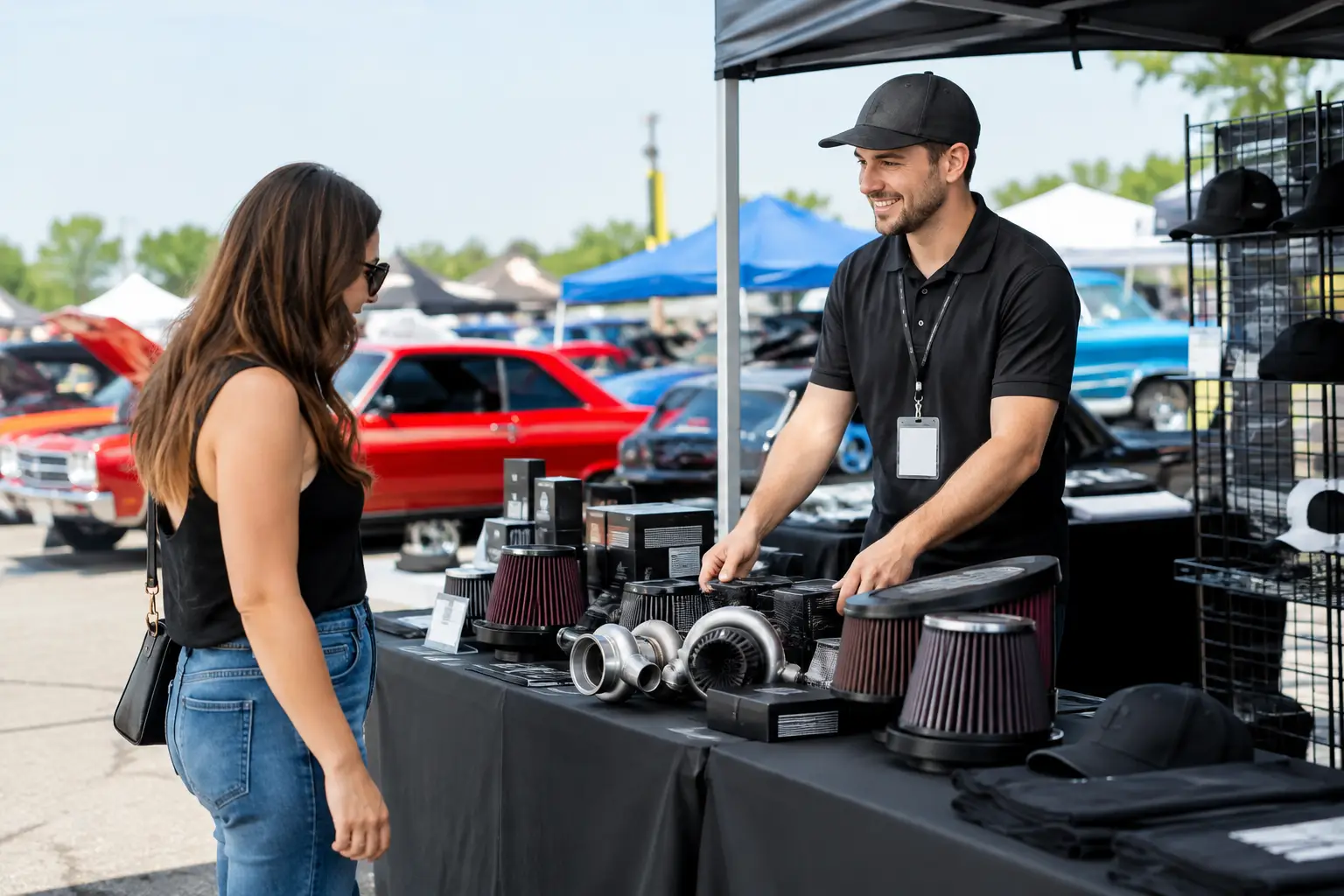
A great car show can bring a steady stream of buyers past your stall, but only if people can see what you sell, understand it quickly and pay without friction. This car show vendor setup guide is built for the reality of event day: hot bitumen, early bump-in windows, loud engines, unpredictable weather and customers who may stop for only a minute between looking at vehicles.
Your setup is not just a table and an EFTPOS terminal. It is your shopfront, stockroom, queue system and brand experience for the day. Get the flow right and you will sell more while making the day easier for your customers, your team and the event organiser.
Car Show Vendor Setup Guide: Plan the Site First
Start with the site allocation, not the gear you want to bring. Ask the organiser for your bay dimensions, vehicle access rules, bump-in time, power availability, surface type and where customer foot traffic is expected to move. A corner site has different potential from a narrow row space. A spot near food may deliver volume, while a location beside a feature-car area may attract a more targeted crowd.
Check whether you can park your ute or trailer behind the stall. If not, plan how much stock and equipment your team can move from the designated parking area. This changes what is realistic to restock during the day.
Car shows also have their own rhythm. Crowds can arrive hard in the morning, thin out while judging happens, then gather again for presentations and departures. Put your high-demand, easy-to-carry products at the front from opening time. Save larger items, special orders and longer product demonstrations for shoppers who have stopped to talk.
Build a clear customer path
Customers should be able to understand your stall from a few metres away. Use one strong sign that says what you sell, then group products by use or price point rather than filling every surface. For example, a detailing vendor might separate wash, polish and interior care. An apparel seller might lead with car-club shirts and caps, with premium jackets displayed behind them.
Keep the entrance open and avoid placing a table straight across the front of your marquee. A barrier can make browsing feel like a commitment. Put a compact display at the edge of the site to draw attention, then leave enough space for people to step in, browse and exit without creating a bottleneck.
Pack Your Stall in Operating Zones
The fastest bump-in is not the one with the least equipment. It is the one where every item has a place before you arrive. Pack by operating zone so the first boxes off the vehicle are the first things you need: marquee hardware, weights, tables, signage, display stock, payment gear and back-up stock.
Keep sales essentials together in one clearly marked crate. That means your card reader, charged power bank, charging cables, cash float if you accept cash, receipt supplies, tape, pens, price signs and a printed contact list. When these items are scattered through the trailer, opening time becomes a scramble.
Your vehicle should work as a secure back-of-house area where venue rules allow it. Use tubs or cartons labelled by category and keep a simple stock count for your best sellers. You do not need to count every low-value item during a busy show, but you do need to know when the products people are asking for are close to selling out.
For heavy or awkward stock, bring a trolley suited to grass, gravel or uneven ground. A narrow hand trolley is often useless on a wet oval. If your show is on a hardstand, protect products from dust and heat with covered tubs rather than relying on cardboard cartons alone.
Make Weather Protection Part of the Display
A marquee looks professional, but it is only useful when it is properly secured. Use suitable weights on every leg, even when the morning is still. Do not assume pegs are allowed or effective on bitumen, compacted ground or showgrounds with underground services.
Heat matters at car shows. It can damage stock, fade printed material, make card terminals overheat and send customers walking past rather than stopping. Position your payment point in shade where possible, and keep water available for your team. If you sell food, cosmetics, vinyl products, adhesives or other temperature-sensitive goods, check the storage requirements before packing.
Rain creates a different problem: water runs under tables, blows through the side of a marquee and turns paper bags into rubbish. Raise stock off the ground, keep spare bags in a sealed tub and bring fitted sidewalls when the forecast is uncertain. Sidewalls can help with wind and rain, but use them selectively. Closing off the whole stall may hide your display and reduce foot traffic.
Set Up Payments for a Moving Crowd
A customer who has decided to buy should not have to wait while you find the card reader, calculate a price or search for mobile reception. Test your EFTPOS equipment before leaving home, charge every device and bring a power bank that can last the full trading day.
Use clear, visible pricing. Car show visitors often browse in groups, and a price label lets one person point out a product while another makes the purchase. It also reduces repetitive questions when your stall is busy. For bundles, show the saving in plain language: “Three microfibre cloths for $20” is easier to act on than a complicated discount rule.
Have a practical fallback for weak reception. This may mean using a second mobile network, accepting a limited cash float or moving your terminal closer to the edge of the marquee. Do not promise a payment method you cannot process reliably.
A connected point-of-sale system can help you track what sells by event, manage product variants and keep customer details organised for follow-up. Platforms such as Evntle are designed to bring vendor operations, payments and storefront visibility into one event-focused workflow, rather than leaving you to reconcile separate tools after every show.
Turn Browsers Into Useful Conversations
Car enthusiasts are usually happy to talk when the product is relevant. The key is to open with a useful question, not a generic sales line. Ask what they are working on, what they drove in, or whether they are shopping for a project car, a daily driver or a gift. The answer helps you recommend the right product without forcing the interaction.
Demonstrations work well for products with a visible result, including detailing gear, tools, lighting and restoration accessories. Keep the demo short and repeatable. If it needs a long explanation, use a sign or a sample board to handle the basics while you speak with serious buyers.
Not every visitor will buy on the day, especially when they are considering higher-value parts or custom work. Make it easy for them to find you later with a clear business name, social handle and a way to capture enquiries. Record what they asked about, not just their contact details. “Wants pricing for an EH interior kit” gives you a useful reason to follow up; a name alone does not.
Work With the Organiser, Not Around Them
The vendors who get invited back are rarely just the ones with the busiest stalls. They arrive on time, follow site instructions, keep their area safe and make life easier for the event crew. Read the vendor pack before show day and confirm any uncertainty early, particularly around vehicle movements, power, generators, gas bottles, food requirements, insurance and pack-down timing.
Keep walkways clear, secure cables with proper covers where required and manage your own rubbish throughout the day. If you run a food or drink stall, plan queues so they do not spill into display vehicles or neighbouring vendors. If you sell parts or merchandise, do not let unpacked cartons create trip hazards behind the table.
Pack-down deserves the same discipline as bump-in. Start by securing payments and high-value stock, then pack display items before dismantling the marquee. Resist the urge to bring the vehicle in before the organiser gives the all-clear. Mixing moving vehicles with departing attendees is one of the easiest ways for a good event day to become a safety problem.
The best setup feels effortless to the customer because the work happened before the gates opened. Plan the site, protect your stock, make payment quick and give every visitor a clear reason to stop. At the next car show, improve one part of the setup that slowed you down this time - those small operational gains quickly become better sales days.
📖 Related
See the KDS and POS in action — try the live demo or create a free account.