
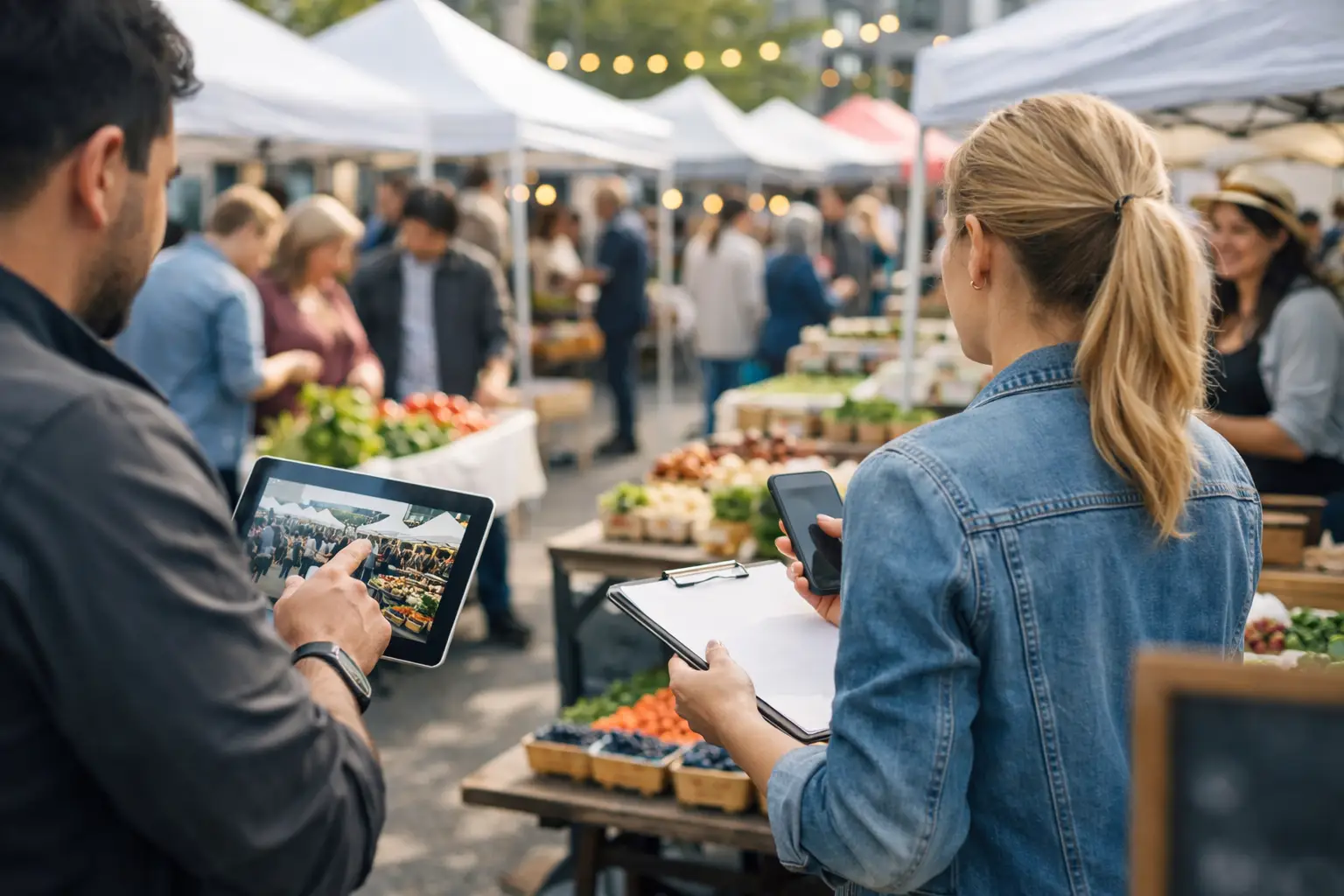
A busy event is not created by one social post the night before. It comes from event promotion that gives people a clear reason to attend, shows them what they will find, and makes the day easy to plan around. For organisers, that means selling the experience. For vendors, it means helping customers know their stall is worth seeking out.
A farmers market, craft fair, food festival or car show has more to promote than a date and a venue. It has products, personalities, local stories, limited offers and a community people want to be part of. The strongest campaigns bring those elements together well before gates open.
Event promotion starts with a clearer promise
“Come to our market this Saturday” is accurate, but it is not much of a reason to leave the house. People are deciding between errands, sport, family plans, the weather and a dozen other ways to spend a weekend. Your promotion needs to answer a simple question quickly: what will make this event worth their trip?
Start by defining the event’s core draw. A neighbourhood market might lead with fresh local produce and breakfast. A makers fair could focus on finding one-off gifts directly from the people who made them. A gaming convention may need to spotlight tournaments, featured exhibitors and hands-on demos. The aim is not to cram every attraction into every post. It is to make the event recognisable and specific.
That promise should be consistent across listings, social content, vendor communications, signage and email. Consistency matters because attendees often see an event more than once before committing. If the event feels like a relaxed family morning in one place and a late-night street-food party in another, people do not know what to expect.
Promote the practical details early
Atmosphere gets attention, but logistics decide whether someone follows through. Put the essentials where people can find them: date, opening hours, location, entry cost, parking or public transport options, accessibility information and whether pets are welcome. If there is a wet-weather plan, share it.
For recurring events, keep these details current rather than copying last month’s information. A changed entrance, road closure or earlier finish can create frustration before the event has even begun. Clear information also reduces the volume of last-minute messages your team has to answer.
Build the campaign around the people at the event
The event brand can attract a crowd, but individual vendors give people a personal reason to attend. A visitor may come because they saw a new jewellery maker, a favourite dumpling stall, a rare-vinyl seller or a restored ute at a car show. Good promotion makes room for those individual hooks.
Create a simple process for vendor features. Ask each confirmed stallholder for a short description, a few strong photos, their social handle, product categories and any event-only offer or new release. Set clear image requirements so organisers are not chasing blurry photos taken in poor light. Vendors should know when features will be posted, what they can share, and how to direct customers back to the event listing.
This is where a shared event platform earns its place. When vendor profiles, event listings and stall details live in the same ecosystem, attendees can browse who is coming before they arrive. Vendors gain visibility beyond a single post, while organisers avoid rebuilding the same information across disconnected tools. Evntle is designed around that connected workflow, from vendor operations through to event discovery.
Not every vendor needs an individual feature. Rotate through categories so the campaign reflects the range of the event: food, homewares, fashion, collectables, activities and services. If you only showcase the stalls with the biggest followings, the event may look smaller and less varied than it is.
Give vendors a promotion kit they will actually use
Vendors want customers, but they are also setting up stock, arranging staff and preparing for trade. Make it easy for them to help. Provide the event name, key details, approved graphics, suggested captions and a prompt to share their stall location or product highlight.
Avoid demanding that every vendor post the exact same message. Repetitive content performs poorly and feels forced. Instead, give them a useful framework: announce attendance, show what they are bringing, mention a limited quantity or special, then tell people when and where to find them. Their audience will respond better to their own voice.
Use a practical event promotion timeline
The right lead time depends on the event. A weekly community market needs a steady rhythm, while a large ticketed convention may need months of build-up. The principle is the same: increase detail and urgency as the date gets closer, rather than trying to say everything at once.
Four to six weeks out, announce the event and its main reason to attend. This is the time for the broad story: seasonal produce, a themed market, a headline activity or an expanded vendor line-up. If vendor applications are still open, keep recruitment messaging separate from attendee messaging so neither audience is confused.
Two to three weeks out, make the event tangible. Introduce vendors, preview products, show the site or venue, and share useful planning details. Short videos work well when they show real preparation: a baker loading trays, a ceramicist glazing a new collection, or an organiser mapping the stalls. The content does not need to be polished to be effective. It needs to be clear and real.
In the final week, focus on decisions. Remind people of the date, hours, location and key attractions. Share transport advice, weather updates where relevant, and a simple reason to come early. A limited product drop, live demonstration or first-hour giveaway can help, but only if it fits the event and can be delivered without creating crowd-management problems.
On event day, post useful live information rather than generic hype. Let attendees know the gates are open, show where queues are moving quickly, highlight a popular activity, and communicate any operational changes straight away. A live update can be more valuable than another glossy promotional tile.
Choose channels based on what they need to do
Social media is useful for creating interest and showing personality, especially when vendors share content with their own communities. It is not enough on its own. People also need a reliable place to confirm details, browse participants and decide whether the event suits them.
Email works well for returning attendees because it reaches people who have already shown interest. Use it for timely information and genuinely helpful previews, not a daily stream of reminders. Local community groups, printed posters at aligned businesses, venue signage and partnerships with nearby clubs or schools can also be effective, particularly for suburb-based events where trust and proximity matter.
Paid promotion can extend reach, but it should not be used to cover a weak message. Start small, test two or three creative angles, and pay attention to whether the campaign is attracting the audience you can serve. A food-focused ad might draw a crowd to a craft market, but if food is only a minor part of the offer, expectations will be out of step with the actual event.
Measure the actions that improve the next event
Likes are encouraging, but they do not tell you whether promotion led to attendance, sales or repeat visits. Track the signals that help you make better decisions: event listing views, saves, vendor profile visits, applications, email sign-ups, check-ins, transaction volume and attendee feedback.
Look for patterns rather than treating every number as a verdict. If a vendor preview generates many listing visits, feature similar categories more often. If people repeatedly ask about parking, bring that information forward in the campaign. If a particular time slot is quiet, consider whether your promotions, programming or site layout are steering people elsewhere.
Ask vendors what customers mentioned at the stall. Did they arrive looking for a specific product they had seen online? Did they discover the event through a friend, a local group or an organiser post? Those conversations can reveal more than surface-level engagement reports.
Protect the experience your promotion promises
Promotion can succeed too well if operations are not ready. A strong campaign that leads to long entry queues, unclear stall locations or poor payment connectivity damages confidence quickly. Coordinate promotion with site planning, staffing, point-of-sale readiness, wayfinding and incident procedures.
Be honest about the scale of the event. If it is an intimate local market, that is a strength, not something to disguise with oversized claims. If it is growing fast, communicate how attendees can plan their visit comfortably. The goal is not simply more foot traffic. It is the right level of attendance for a good day of trade and a positive visitor experience.
The most useful event promotion gives people something concrete to look forward to, then delivers it when they arrive. Keep showing the real vendors, real products and real reasons your community gathers. That is how a first visit becomes a saved date for next time.
📖 Related
See the KDS and POS in action — try the live demo or create a free account.