
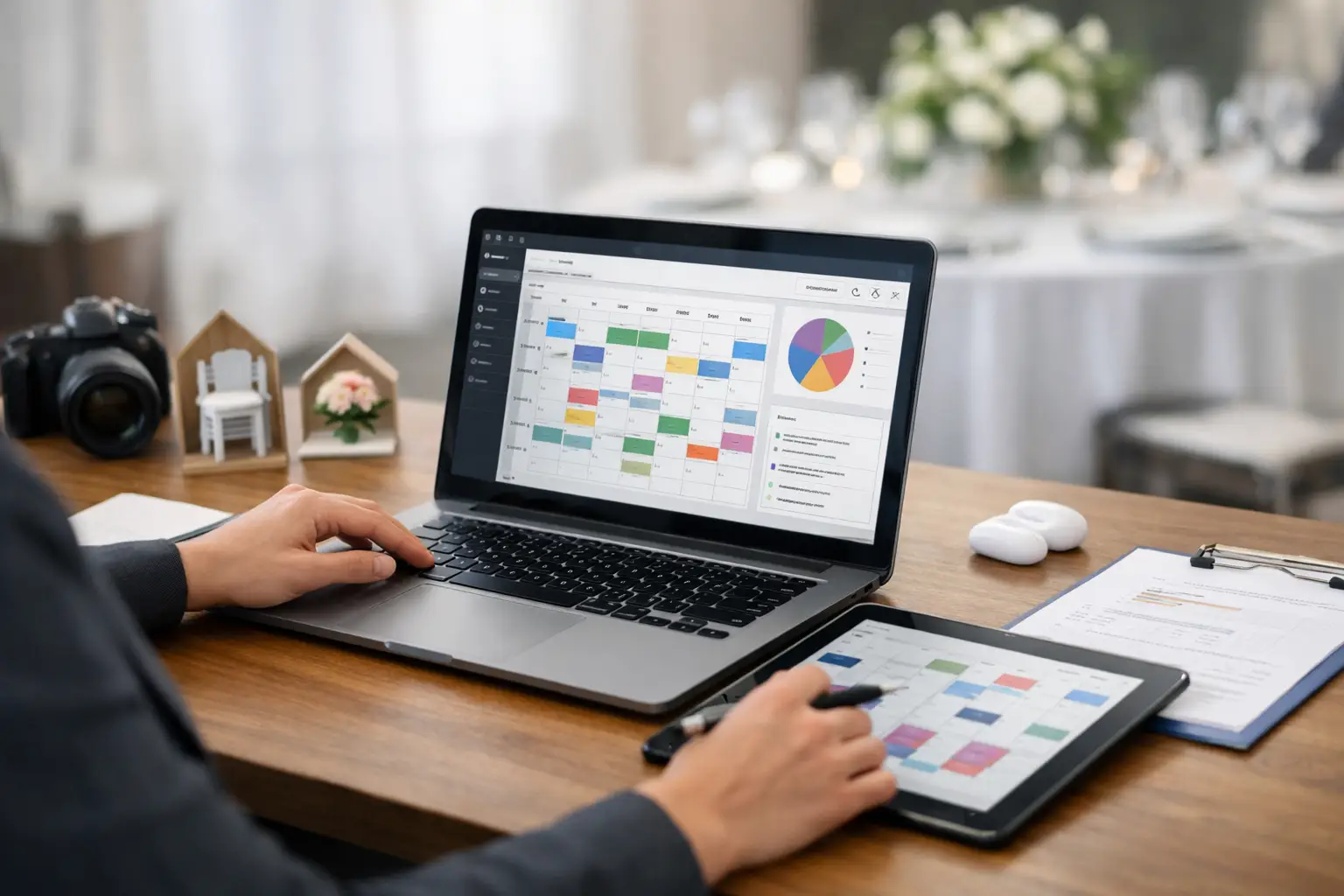
If you have ever chased missing insurance documents at 10 pm, redrawn a site map the night before bump-in, and fielded vendor messages across email, text, and social DMs, you already know the problem. Event vendor management software exists because live events are still being run on too many disconnected systems, and that gap gets expensive fast.
For organisers, the cost shows up as admin blowouts, slower approvals, patchy reporting, and event-day confusion. For vendors, it looks like unclear application status, poor communication, awkward check-in, and lost sales once the crowd arrives. The right software does more than tidy up paperwork. It gives organisers, stallholders, and attendees a shared operating layer so the event runs better before, during, and after the gates open.
What event vendor management software should actually do
A lot of platforms claim to support vendors when what they really offer is a basic ticketing add-on or a form builder with a payment field. That may be enough for a once-a-year school fete. It falls apart for recurring markets, food events, pop-ups, conventions, and multi-vendor experiences where layout, compliance, sales, and communication all move at once.
Good event vendor management software should handle the full vendor lifecycle. That starts with applications and approvals, but it should also cover document collection, stall allocation, payment tracking, event-day operations, and post-event reporting. If vendors need separate tools for point of sale, online listings, customer follow-up, and event updates, the software is not solving the whole problem. It is just moving it around.
The strongest platforms also recognise that vendors are not a back-office detail. They are part of the product. A food stall, a vintage seller, a craft maker, or a gaming merchant is not just filling a square on a map. They are a reason people attend. Software that treats vendors as active participants, not just records in a spreadsheet, creates better outcomes for everyone.
Where fragmented systems break down
Most event teams do not choose messy workflows on purpose. They accumulate them. Applications might come through one form, invoices through another system, layouts in a PDF, customer messages in a group chat, and sales data somewhere else again. Each tool solves one immediate need, but together they create blind spots.
That usually becomes obvious in three moments. The first is onboarding, when organisers are trying to approve vendors quickly without missing key details. The second is site planning, when spacing, power access, category mix, and traffic flow all depend on clean vendor data. The third is event day, when staff need answers now, not after someone checks a laptop back at the office.
Fragmentation also hurts vendors more than many organisers realise. If a stallholder cannot see where they stand, what they owe, what they need to upload, or where they are placed, confidence drops. And when confidence drops, so does repeat participation.
The features that matter most in real event operations
Application workflows are the obvious starting point, but the details matter. Organisers need structured forms that collect the right information for each event type, whether that is food handling credentials, product categories, vehicle details, or public liability cover. Approval should not be a manual maze. It should be fast, trackable, and easy to audit.
Site planning is where event vendor management software starts proving its value. A vendor list is useful. A live site plan that connects stall assignments to real operational data is far better. When teams can match placements to size requirements, utilities, access needs, and category balance, the event becomes easier to manage and easier to attend.
Payments matter too, but not only stall fees. Vendors often need a way to trade efficiently on-site, manage transactions, and keep business moving across multiple devices. That is especially important for markets and mobile operators where queues form quickly and patchy setup creates friction. If the software stops at registration and never touches revenue operations, it leaves a major gap.
Communication is another point where average platforms underperform. Event teams need one place to send updates, flag incidents, confirm changes, and keep vendors informed without digging through scattered threads. Vendors need clarity, not noise. A message that reaches the right group at the right time is more useful than a dozen generic reminders.
Reporting should also be practical. Organisers need visibility into applications, approval rates, payment status, vendor mix, attendance patterns, and event performance. Vendors want sales data, customer insights, and a better sense of what worked. Useful reporting supports the next event, not just the wrap-up meeting.
Why organisers and vendors need the same system
This is where many platforms miss the mark. They are built for organisers only, with vendors treated as external users who log in for one task and disappear. That creates a shallow workflow. It may reduce some admin, but it does not build a stronger event business.
A better model is shared infrastructure. Organisers need tools for approvals, layouts, compliance, and operations. Vendors need tools for selling, managing inventory, building visibility, and staying connected to customers. Attendees want to discover events and preview who will be there. When those parts live in the same ecosystem, each group gets more value from the same data.
That does not mean every event needs an all-in-one platform at every stage. A small community market with twenty stalls may not need advanced incident logging or loyalty features on day one. But even smaller operators benefit when vendor records, event listings, communication, and payments are connected. The question is not whether you need every feature now. It is whether your current setup can grow without becoming harder to manage.
How to evaluate event vendor management software properly
Start with your actual event model, not a generic checklist. A farmers market has different needs from a car show. A food precinct has different operational pressure from an artisan fair. If a platform cannot reflect those differences in applications, layouts, and trading workflows, it will feel awkward from the start.
Look closely at vendor experience. Can applicants complete the process without back-and-forth emails? Can they upload documents, track status, and understand what happens next? Can they trade on-site and maintain some visibility beyond a single event? If vendors need constant hand-holding, the software may be adding work rather than removing it.
Then look at event-day reality. Can staff check vendor details quickly from a mobile? Can issues be recorded and acted on in the moment? Can site changes be communicated without confusion? Event software often looks polished in a demo and then struggles once the weather turns, someone is late to bump-in, or a power issue affects half a row.
Finally, think about network value. Some tools help you run one event. Others help you build an event ecosystem, where organisers, vendors, and attendees continue engaging between dates. For recurring operators, that difference matters. One-off efficiency is useful. Ongoing discoverability and participation are where growth starts to compound.
What better software changes on the ground
When event vendor management software is set up well, the improvements are not abstract. Organisers spend less time chasing forms and more time shaping the event. Vendors know where they stand and can focus on sales. Attendees get a clearer picture of what is on and who is there before they arrive.
That changes the quality of the event itself. Better vendor mix leads to stronger foot traffic. Better site planning reduces congestion. Better communication cuts avoidable stress. Better sales tools mean fewer missed transactions when the rush hits. These are operational gains, but they also shape reputation. Events that feel organised tend to keep their best vendors and attract stronger crowds.
For platforms built specifically around live event commerce, that is the real opportunity. Not just digitising paperwork, but connecting operations, selling, and discovery in one place. That is the difference between software that stores vendor data and software that helps an event economy grow. Evntle sits in that second category, because it is designed for the real workflows of organisers, stallholders, and attendees rather than forcing event teams into generic systems.
If your current process still relies on spreadsheets, inbox searches, and crossed fingers on event morning, the issue is not that your team needs to work harder. It is that your tools are asking people to bridge gaps they should not have to bridge at all. The best systems give everyone a clearer way to show up, trade well, and come back stronger next time.
📖 Related
See the KDS and POS in action — try the live demo or create a free account.