
How to Manage Food Stall Vendor Compliance at Events
How to Manage Food Stall Vendor Compliance at Events
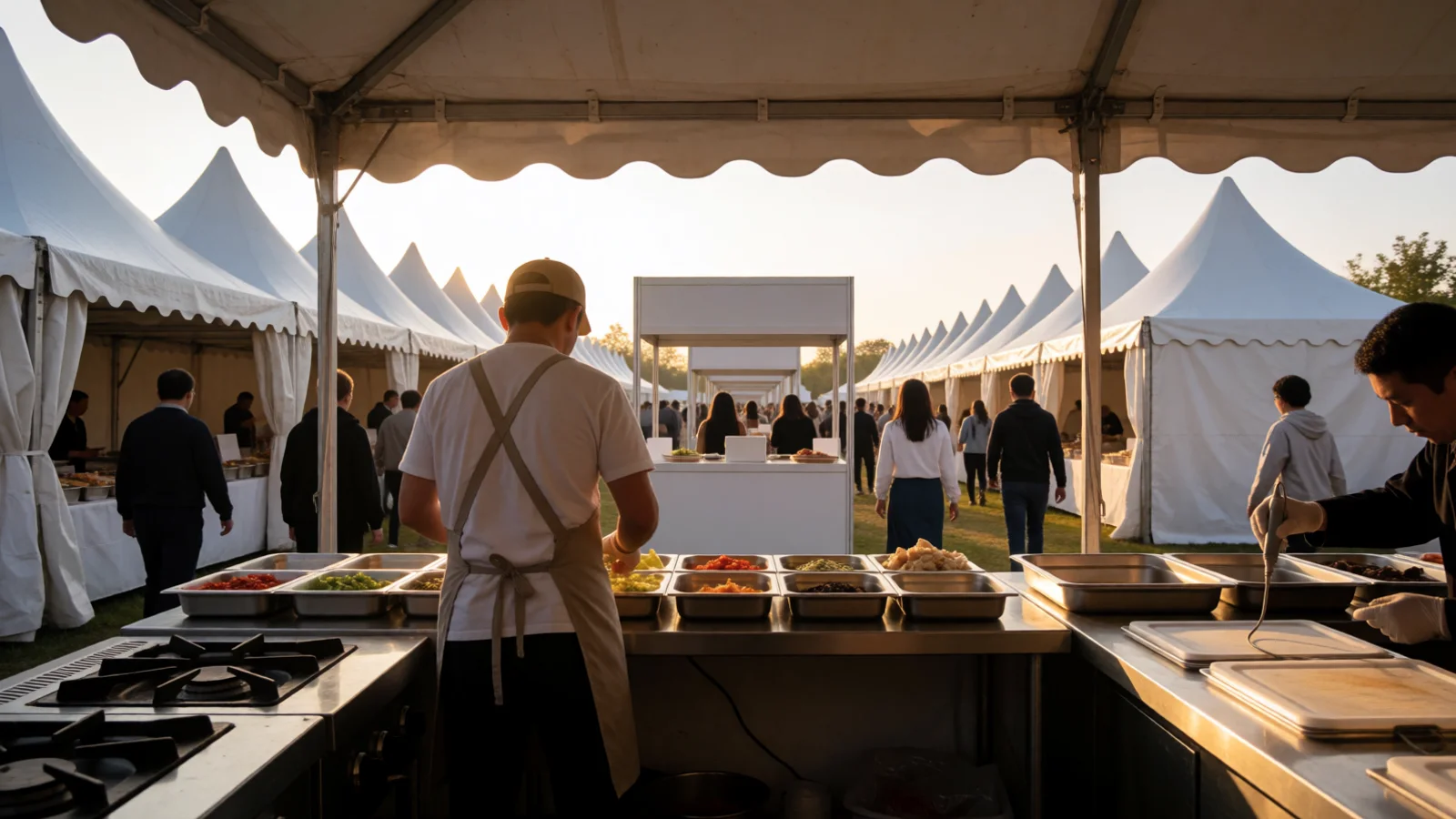
To manage food stall vendor compliance at events, you need a single system that collects and verifies documents before the day, tracks allergens and incident records on site, and keeps proof for every stallholder. That means digital applications, expiry-checked insurance and food-safety certificates, site plans that separate raw and cooked handling, live incident logging, and a payment trail that matches each vendor to their site. Get these four things right — documents, allergens, incidents, and records — and you can run a 60-stall food festival without a single clipboard.
Compliance isn't paperwork for its own sake. It's what protects your event's permit, your vendors' livelihoods, and the public. And in Australia, it's also a legal obligation shared between the organiser and every stallholder on site. The good news: it's far less painful than most organisers think, once you stop chasing forms by email and start running compliance as a workflow.
Why food stall vendor compliance matters at Australian events
Food safety in Australia is regulated state by state, but the principles are consistent. Every food business — including a weekend stall — must be registered with the relevant local council, must nominate a Food Safety Supervisor where required, and must be able to demonstrate safe handling practices on demand.
Under national food safety standards, food businesses must be able to trace and recall product, keep records of suppliers, and know the allergen status of everything they sell. For events, the organiser carries an extra layer: your event permit, your public liability cover, and your duty of care to attendees all depend on vendors being properly vetted before they trade.
When compliance fails, the fallout is expensive. A single undeclared peanut in a satay sauce can send someone to hospital, trigger an investigation, and put your event's future in doubt. Councils can shut a stall mid-event. Insurers can refuse a claim if documents weren't verified.
If a vendor trades without current public liability insurance or a valid food registration, your event's own insurance may be void for that incident. Verify before bump-in, not after.
The practical answer is to treat compliance as a pipeline: apply, verify, approve, brief, monitor, archive. The rest of this guide walks through that pipeline step by step.
How to build a food stall vendor compliance workflow before event day
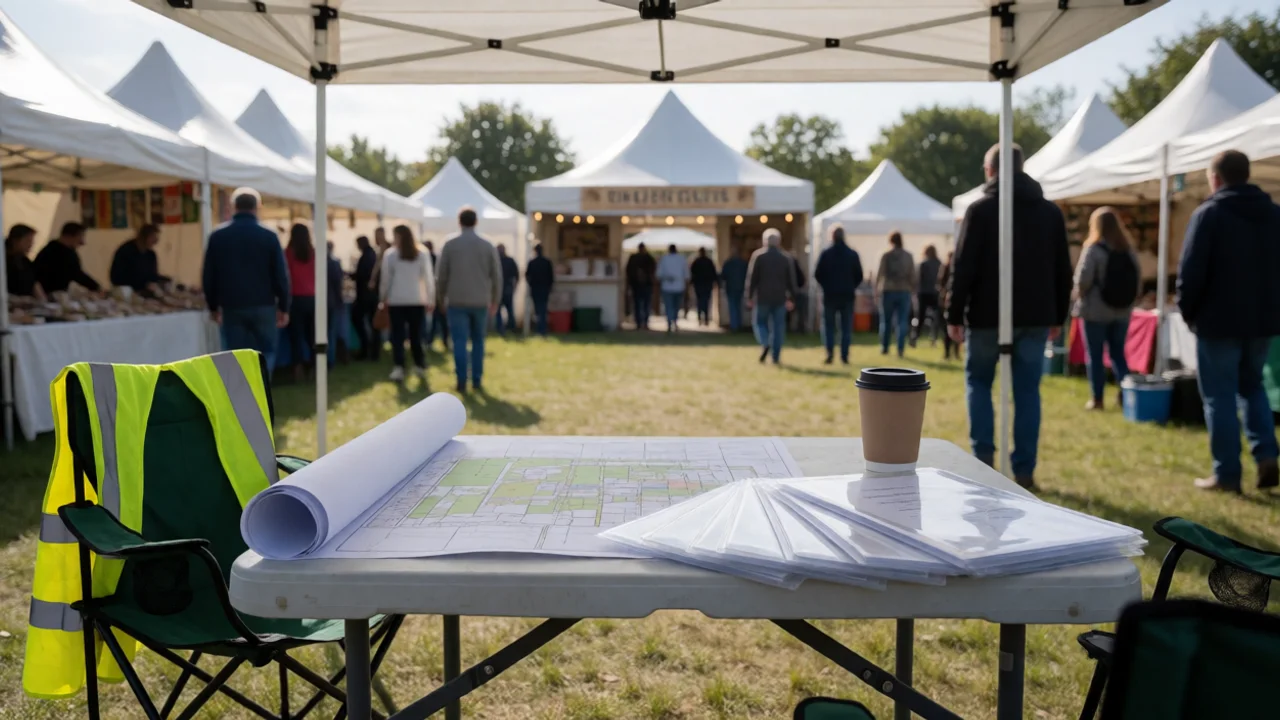
The single biggest cause of event-day compliance chaos is leaving verification to the morning of the event. Vendors arrive, you're checking certificates on a folding table while queues form, and something gets missed. Move all of it forward.
Step 1: Collect documents at application, not approval
Ask for everything at the point of application: public liability certificate of currency, food business registration, Food Safety Supervisor certificate, menu with allergen declarations, and any gas or electrical certificates for equipment. If you're running a market, a vendor application management workflow|soro-how-to-organise-vendor-applications with required document fields saves you weeks of back-and-forth.
Step 2: Verify and date-stamp every document
Don't just collect — verify. Check the insurer name, the policy number, the expiry date, and the covered activities. A certificate of currency that expires the day before your event is worthless. Log the verification date and who checked it.
Step 3: Approve, allocate, and brief in one flow
Once verified, the vendor moves to approval. From there, allocate a site, send the site plan, and issue the event-day brief. Evntle Vendor Onboarding Workflows is built for exactly this — moving an applicant from first form to event-day trading with approvals, sites, comms, and payment setup in one place, so nothing gets lost between inboxes.
Step 4: Chase expiries automatically
For recurring markets, set reminders at 30, 14, and 7 days before each certificate expires. A surprising number of public liability policies roll over annually, and organisers who don't track this end up with a vendor trading on lapsed cover.
Build a standard document checklist once, then reuse it across every event. Consistency is what makes compliance defensible if a council or insurer ever asks.
What documents and checks food stall vendors actually need
The exact list depends on your state and the type of food being sold, but the core set below covers the vast majority of Australian market and festival stalls. Use it as your baseline checklist.
| Document or check | Who needs it | Typical validity | Verify before |
|---|---|---|---|
| Public liability insurance (min. $10M–$20M) | All vendors | 12 months | Application |
| Food business registration | All food vendors | Annual | Application |
| Food Safety Supervisor certificate | Food vendors handling high-risk foods | 5 years | Application |
| Allergen declaration and menu | All food vendors | Per event | Approval |
| Gas and electrical equipment certificates | Vendors using LPG or generators | Annual | Site allocation |
| Food handler training / induction | All staff on the stall | Per event | Bump-in |
If you're new to the space, our complete guide to food safety compliance for market vendors in Australia|food-safety-compliance-market-vendors-australia walks through each document in detail, including state-by-state differences.
When you're drafting the definitions and declarations vendors must sign, it helps to align your wording with authoritative sources. The Cambridge Dictionary definition of compliance and the Merriam-Webster entry for compliance both emphasise the idea of conforming to rules and requirements — a useful framing when you explain to stallholders why verification is non-negotiable. For the technical side, the W3C food data standards show how structured, machine-readable records make traceability and recall far easier to demonstrate.
Allergens: the highest-risk compliance item
Allergen management is where most compliance incidents originate. Under the Food Standards Code, the 13 declared allergens must be identified on request, and cross-contamination controls must be in place. For stallholders, the practical answer is clear labelling and a written allergen matrix for every menu item.
Evntle Allergen Tracking lets vendors declare allergens in their store profile, and those allergens then appear as prominent warnings on item cards and in the order cart — so the person taking the order sees the risk at the moment it matters. Pair that with printed labels using our guide to creating food allergen labels|soro-create-food-allergen-labels and you've covered both the digital and physical sides of the problem.
On-site compliance: what to check from bump-in to bump-out
Compliance doesn't stop at the gate. On event day, you're managing three live risks: safe setup, safe service, and safe pack-down.
Bump-in checks
At arrival, confirm the vendor matches their application, their equipment matches their certificates, and their stall layout matches the site plan. Food stalls need hand-wash facilities, temperature control for high-risk foods, and separation between raw and ready-to-eat handling. Evntle Bump-In and Bump-Out gives you checklists and tracking so every arrival is recorded against a timestamp.
Service-time monitoring
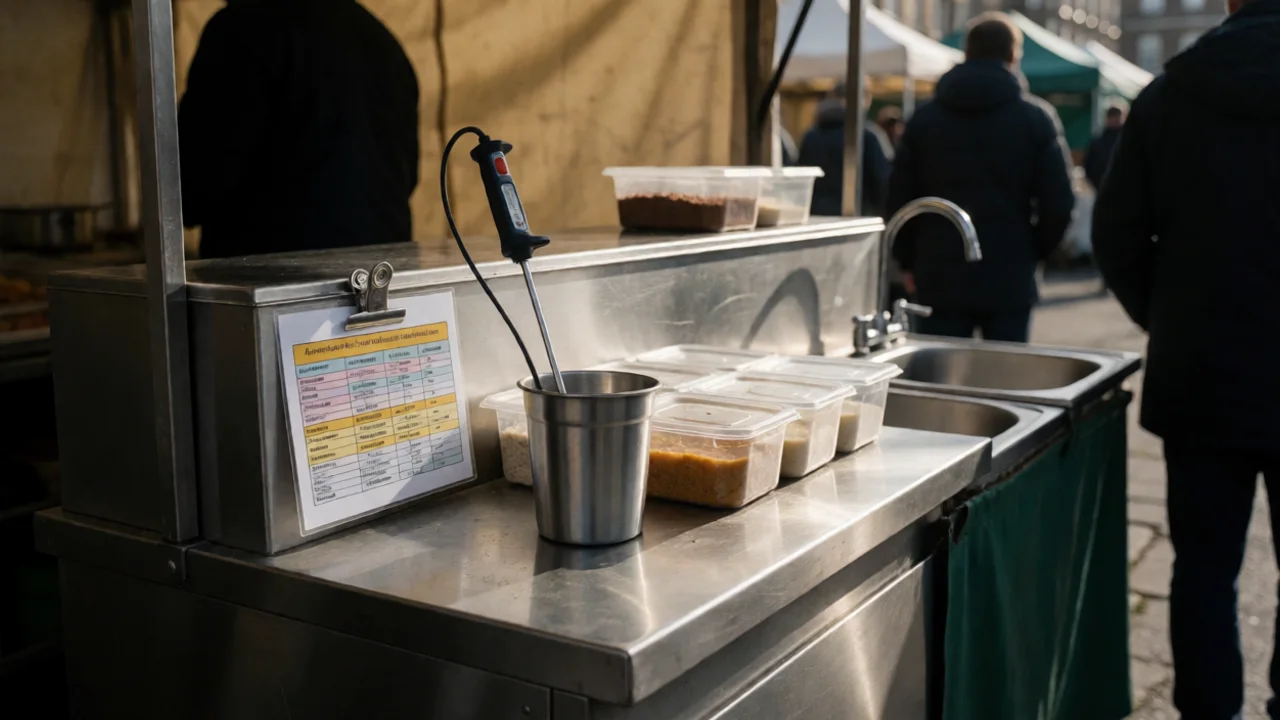
During trade, the main compliance touchpoints are allergen queries, temperature logs (for vendors handling high-risk food), and crowd flow around the stall. If you're managing queues, our food queue management tools|soro-best-food-queue-management-tools overview covers how to keep service moving without compromising safety checks.
Bump-out and post-event
At pack-down, confirm gas is off, waste is removed, and any incidents are logged before the vendor leaves site. This is also the moment to capture any near-misses while memories are fresh.
"Compliance isn't a form you file once. It's a habit you run every single trading day."
— Evntle event operations team
Incident management and risk: what to do when something goes wrong
Even well-run events have incidents — a slip near a fryer, an allergic reaction, a gas leak, a verbal altercation. What separates a professional event from an amateur one is whether those incidents are logged, assigned, and resolved with a timestamped record.
Evntle Incident Management lets you log an incident on the spot, assign an owner, and track it to resolution — with custom form templates for the incidents your event type actually sees. That record becomes your evidence if a claim or council review ever lands on your desk.
| Incident type | Typical trigger | Immediate action | Record required |
|---|---|---|---|
| Allergic reaction | Undeclared or cross-contaminated allergen | First aid, call 000 if severe, isolate food | Yes — time, vendor, item, response |
| Food temperature breach | Fridge failure or prolonged display | Withdraw affected stock, notify vendor | Yes — temperature log and disposal |
| Gas or electrical fault | LPG leak, generator failure | Isolate, evacuate zone, call fire service if needed | Yes — with equipment details |
| Slip or trip near stall | Spill, cable, wet floor | First aid, cordon area, clean up | Yes — witness and site details |
Under Australian work health and safety law, you may be required to report certain incidents to your state regulator. Keep records for at least the period your insurer and council specify — often five years.
Payments, records, and the audit trail that ties it all together
Compliance and payments are more connected than most organisers realise. If you can't prove which vendor was allocated which site, on which date, and paid what, your compliance file has a hole in it. Stall fees, deposits, and any vendor sales data should live in the same system as your approvals and site plans.
Evntle Stallholder Booking Software links applications, offers, allocation, payments, and site plans in one place, so the audit trail is automatic. For food vendors taking their own payments, Evntle Food Stall Point of Sale handles cash and card (including Zeller EFTPOS), split payments, and thermal receipt printing — with an offline mode for when event connectivity drops, which it always does.
Why does this matter for compliance? Because every transaction timestamp is a data point. If a council asks when a specific stall started trading, or an insurer asks what was sold at the time of an incident, you can answer with records, not recollections.
Building a compliance culture that vendors actually accept
The best compliance systems are the ones vendors don't resent. Three principles make that happen.
- Make it easy to comply. A vendor portal that shows exactly what's missing and lets them upload from a phone will outperform an email chase every time.
- Explain the why. Vendors who understand that verification protects their own insurance and their own trading rights are far more cooperative.
- Be consistent. Apply the same checklist to every stallholder. Exceptions erode trust and create legal risk.
If you're running a recurring market, our farmers market operations guide|soro-how-to-manage-a-farmers-market covers how to fold compliance into a repeatable weekly rhythm rather than a monthly scramble.
Frequently Asked Questions
Q: How do I check a food stall vendor's insurance before an event?
A: Ask for a certificate of currency at application, then verify the insurer, policy number, expiry date, and covered activities. Log the verification date against the vendor's record. Never accept a certificate that expires before or during your event.
Q: What's the best way to manage allergen information across dozens of food stalls?
A: Require a written allergen matrix from every vendor at approval, then digitise it. Tools like Evntle Allergen Tracking surface declared allergens on item cards and in the order cart, so the risk is visible at the point of sale rather than buried in a folder.
Q: Who is legally responsible for food safety at an event — the organiser or the vendor?
A: Both. The vendor is responsible for their own food handling and registration. The organiser is responsible for vetting vendors, providing safe infrastructure, and managing site-wide risks. Your permit and insurance depend on both being done properly.
Q: Do I need to log incidents during a market or festival?
A: Yes. Timestamped incident records protect you with insurers, councils, and regulators. Evntle Incident Management lets you log, assign, and track incidents on the spot with custom form templates.
Q: How do I stop vendors trading without current documents at a recurring market?
A: Automate expiry reminders at 30, 14, and 7 days, and block stall allocation until documents are current. A vendor portal that shows exactly what's missing removes the ambiguity.
Q: Why should I move compliance off spreadsheets and email?
A: Because spreadsheets don't send reminders, don't timestamp verifications, and don't survive staff turnover. An integrated platform like Evntle keeps applications, documents, sites, incidents, and payments in one auditable record.
Managing food stall vendor compliance at events comes down to four disciplines: verify documents before the day, surface allergens at the point of sale, log incidents as they happen, and keep a payment-and-site record that ties it all together. Do those four things consistently, and compliance stops being a source of stress and becomes a reason councils, insurers, and vendors trust your event. Start with one workflow — vendor applications — and build from there.