
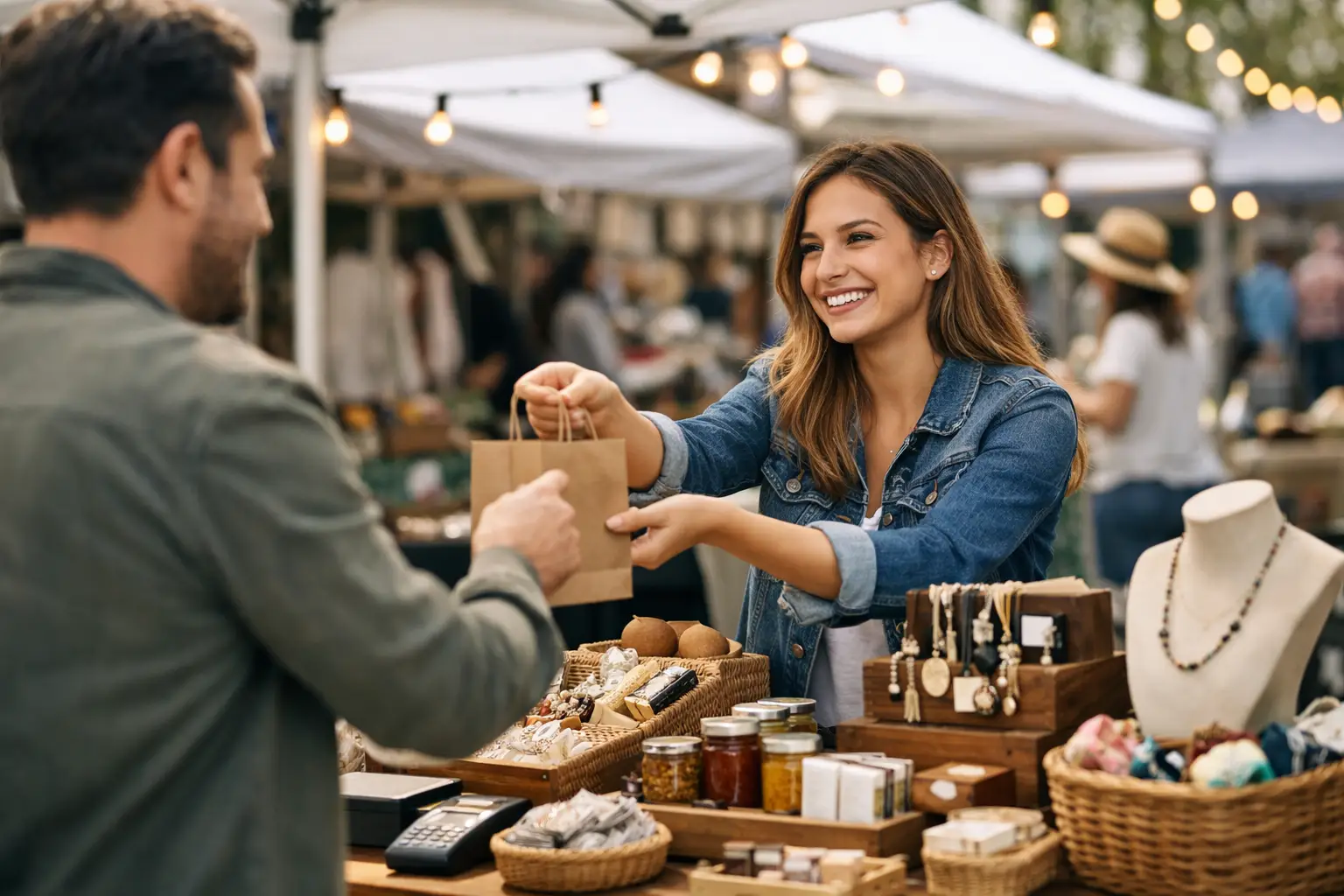
A busy market is not automatically a profitable one. If people are walking past your stall with coffees, prams and shopping bags but not stopping, the issue is usually not the crowd - it is the buying experience. The best ways to boost stall sales combine visibility, a clear offer and an easier path from first glance to payment.
For a food trader, that might mean a menu customers can read from the queue. For a handmade jewellery seller, it could mean displaying one clear price point at the front of the stall. For every vendor, the goal is the same: make it simple for the right customer to notice you, understand what you sell and buy without friction.
1. Sell the outcome, not just the product
Customers rarely have time to work out why an item matters. Your signage, display and opening line need to answer that question fast.
Instead of a sign that says “Natural Soy Candles”, try “Clean-burning candles for cosy winter nights”. A condiment seller could lead with “Small-batch hot sauce for your weekend barbecue”. This gives shoppers a reason to pause before they start comparing products or prices.
Keep the message visible from a few metres away. At crowded markets, the first job of your stall is to earn a second look. Your brand name can be prominent, but the product category and customer benefit should be even clearer.
2. Build a stall layout that makes buying easy
A beautiful stall can still lose sales if shoppers do not know where to stand, what to touch or where to pay. Create a natural customer flow: an eye-catching front display, products customers can browse in the middle, and a clearly marked payment point near the exit.
Put your best-selling, easiest-to-understand items at the front and at eye level. Save detailed collections, premium options and add-ons for people who have already stopped. If someone needs to dig through crowded tubs, squeeze around a table or ask for every price, they may move on.
For food stalls, separate ordering, collection and payment as much as your footprint allows. For retail stalls, leave enough room for two or three people to browse without blocking the footpath. The ideal setup depends on your product, but every layout should reduce hesitation.
Make prices visible before the conversation
Price tags are not a barrier for serious customers. Hidden prices are. Clear pricing qualifies buyers, speeds up decisions and lets you focus your conversation on fit, flavour, size or use.
Use simple price signs for entry products, bundles and bestsellers. If your products vary, label each item clearly rather than relying on a single sign that says “from $20”. Customers are more likely to pick something up when they know what it costs.
3. Give shoppers a reason to buy now
Live events create urgency naturally, but you need to make it useful rather than pushy. A limited event special, a market-only bundle or a bonus with purchase can convert interest into action.
The offer should protect your margin. Discounting everything is rarely the best move, especially when stall fees, travel, packaging and card charges are already part of the day. Instead, use bundles to lift average order value. A candle vendor might offer any two for a set price. A vintage seller might pair a jacket with a discounted accessory. A food operator could add a drink or side at a modest upgrade.
The strongest offers are easy to explain in one sentence and easy for staff to process during a rush.
4. Start better conversations without hovering
A warm greeting works, but “Can I help you?” often earns a polite “Just looking”. Give people an opening connected to the product instead.
Try, “Those earrings are made from recycled glass,” or “The mild chilli sauce is on the left if you want to try it.” A coffee trader can say, “We have a new single-origin batch today.” These lines invite engagement while allowing customers space to browse.
Ask practical questions once someone responds: Is this for a gift? What size do you usually wear? Do you prefer mild or hot? The answer helps you recommend the right product, not simply the most expensive one.
If you have a team, assign clear roles during peak periods. One person should welcome and guide browsers while another handles payments or order collection. When every staff member does everything, queues form and customers can feel ignored.
5. Accept fast, reliable payment options
A customer ready to buy should never have to hunt for a payment sign or wait while you troubleshoot a terminal. Accept contactless card and mobile payments, keep the terminal charged, and make your payment point obvious.
Check connectivity before gates open, especially at regional shows, indoor halls and large festivals where mobile coverage can be patchy. Have a backup plan for power and connectivity where possible. It is also worth checking that staff know how to process refunds, split payments and receipts before the first rush.
Speed matters beyond the transaction itself. A quick checkout keeps your queue moving, makes the stall feel active and reduces the chance that someone walks away after seeing a long wait.
Best ways to boost stall sales after the event
The event day is not the end of the sale cycle. A person who tried a sample, admired your work or bought one small item may be a repeat customer if you give them a simple way to find you again.
Capture permission, not just interest
Offer customers a useful reason to join your list or follow your stall: early access to a new collection, a monthly market schedule, restock alerts or a giveaway. Keep the sign-up process short. A QR code at the counter can work well, but it should lead to a mobile-friendly page and make the value clear.
Do not rely solely on social follows. Platforms change, posts get missed and a customer who loved your stall can struggle to remember your name a week later. A direct customer list gives you a more dependable way to announce your next event, seasonal release or online restock.
A vendor storefront and event profile can also help shoppers locate you before and after market day. Platforms such as Evntle bring vendor discovery, point-of-sale operations and event participation into one connected workflow, which is particularly useful for sellers attending recurring markets.
Follow up while the experience is fresh
Send a short thank-you within a few days, not a generic sales blast. Reference the event, show a few popular products and tell customers where you will be next. If you sell consumables, time the message around when they may be ready to reorder. If you sell durable products, focus on complementary items, care tips or a new collection.
The point is not to chase every visitor. It is to stay visible to people who already showed genuine intent.
7. Use stock data to plan the next stall
Your instinct is valuable, but sales records show what actually happened. Review sales by product, price point, time of day and event. Look for patterns: Did one low-cost item bring people in? Did bundles increase spend? Did a popular item sell out too early? Were certain sizes, colours or flavours dead stock?
This is where product decisions become less risky. Bring more of proven sellers, test new products in small quantities and reduce stock that regularly takes up space without moving. For a mobile food business, data can guide prep levels and reduce waste. For a craft vendor, it can prevent hours of making products that do not match the event audience.
Also compare events honestly. A high-traffic festival may produce fewer sales than a smaller curated market if the audience is wrong for your price point. Track stall fee, travel, labour, stock costs and total takings so you can judge profitability, not just turnover.
8. Make your stall recognisable across every event
Repeat customers should be able to spot you before they read the sign. Consistent colours, table covers, packaging, product photography and staff presentation make your stall easier to remember.
Consistency does not mean every event setup must be identical. A compact indoor table needs a different approach from a marquee at an outdoor fair. Keep the core cues the same while adapting the layout to weather, space and customer flow.
Small details matter here. A clean counter, stocked bags, tidy cables and readable menus signal that buying from you will be straightforward. Customers notice operational confidence, even when they cannot name it.
9. Treat organisers as growth partners
The right event organiser can help your stall perform well before customers arrive. Read vendor briefings, provide accurate product information, submit good photos and ask about site placement, audience profile and expected attendance. If an organiser promotes vendors ahead of time, give them assets worth sharing.
After the event, offer constructive feedback and ask for performance context where available. Strong organiser relationships can lead to better planning, repeat bookings and a place in events that suit your products.
The next sale often starts before the next market opens. Set up a stall that is easy to find, easy to understand and easy to buy from, then use what you learn to make the following event sharper than the last.
📖 Related
See the KDS and POS in action — try the live demo or create a free account.