
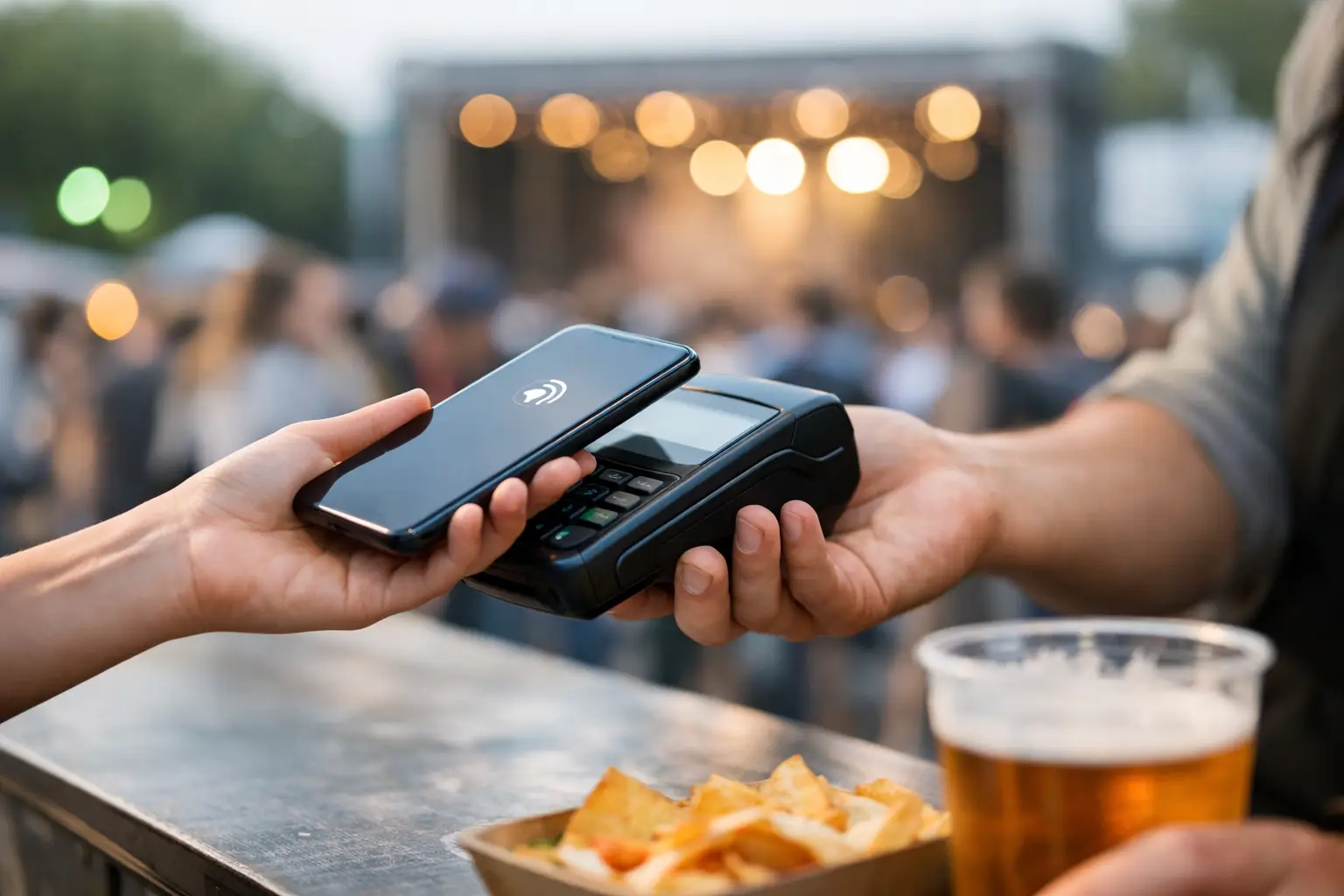
A customer has chosen a handmade candle, a coffee and a vintage tee. They are ready to buy, but the queue is moving slowly because each sale depends on finding change, checking notes and doing mental maths. At a busy market, cashless payments turn that friction into a quick tap - and that can change the pace of an entire event.
For vendors, accepting cards and mobile wallets is no longer a nice extra. For organisers, it affects queue management, sales reporting and the experience people take home with them. The goal is not to ban cash without thought. It is to build a payment setup that helps more people buy, keeps stalls moving and gives every operator a clearer view of trade.
Why cashless payments matter at live events
Live events run on momentum. A food stall can handle a rush only if orders, payment and collection move in a clear sequence. A craft seller may have just a few minutes to convert someone who is browsing between workshops. A cashless option removes one of the most common reasons for hesitation: not having the right notes or enough cash on hand.
For attendees, tap-to-pay feels familiar. They can use a debit or credit card, a phone or a smartwatch without making a detour to an ATM. That matters at farmers markets, conventions, night markets and car shows, where people often arrive to explore rather than with a fixed shopping list. Lower payment friction makes impulse purchases easier, especially for small-ticket items such as snacks, stickers, accessories and add-ons.
The operational gain is just as valuable. Digital transactions create a record of what sold, when it sold and which payment method was used. That gives vendors a more reliable close-of-day process than counting a float after a long shift. Organisers can also understand total event activity when payment tools are connected to their wider event operations.
What a practical cashless setup looks like
The best setup depends on the event category, the site and the seller. A single coffee cart at a weekday market has different needs from a multi-vendor gaming convention. Still, most strong setups share a few foundations: a portable card reader, a charged mobile or tablet, a clear product catalogue, stable connectivity and a backup plan when conditions change.
Make tap the default, not the obstacle
Place the payment terminal where customers can reach it easily after an order is confirmed. Keep the screen visible enough for them to check the amount before tapping. For food vendors, separating order taking from collection can prevent a payment bottleneck during a rush. For retail stalls, a simple display counter with the terminal ready to go is often enough.
Speed also comes from the product setup behind the terminal. Group common items, create variants for sizes or flavours, and add quick buttons for popular bundles. If every sale requires searching a long catalogue, the card reader will not solve the queue problem on its own.
Prepare for patchy reception
Outdoor events are not controlled retail environments. Reception can weaken when hundreds of people arrive, stalls are spread across a showground, or bad weather moves through. Before gates open, test mobile coverage from the actual stall location, not just the car park.
Bring charged backup batteries, charging cables and a mobile data option that does not rely on public Wi-Fi. If your payment provider supports offline transaction processing, understand the rules before using it. Offline payments can help maintain trade, but they may carry limits and a risk that a transaction cannot ultimately be collected. Vendors should know when to pause, when to retry and how to explain a delay without holding up everyone else.
Organisers can make a major difference here by mapping signal black spots during site planning, sharing connectivity expectations in vendor briefings and providing power where it is safe and practical. Payment reliability is event infrastructure, much like signage, access routes and waste collection.
Keep the customer informed about surcharges
Australian customers are used to tapping, but they still expect clarity. If a card surcharge applies, display it before payment and make sure the terminal is configured correctly. Surprise fees at the point of tap can undo the goodwill created by a fast checkout.
Some vendors choose to absorb processing costs and include them in pricing. Others apply a small surcharge. Neither approach suits every business. The useful decision is the one that protects margin while staying clear and consistent with customer expectations. Review your costs and sales mix rather than copying the stall next door.
The trade-offs vendors should plan for
Cashless payments bring costs, dependencies and new habits. Processing fees can be meaningful for low-margin products, particularly where average order values are small. A bakery selling individual items may need a different pricing approach from a jewellery seller with fewer, higher-value sales.
There is also a risk in going cashless-only. Some attendees still prefer cash, have a limited banking setup, or arrive at a community event where digital payment is less practical. A full cashless policy may be appropriate for some ticketed events or high-volume food operations, but it should be a deliberate decision, communicated before people arrive. For many local markets, accepting both gives customers choice while digital payments handle the majority of transactions.
Cash needs controls as well. A float has to be prepared, stored safely, reconciled and taken home or banked after the event. Notes can be damaged, change runs out, and staff may make mistakes under pressure. The real comparison is not card fees versus free cash. It is card fees versus the total time, risk and administration involved in handling cash.
Refunds deserve a clear process too. Digital refunds are easier to trace than handing cash back from a till, but staff need permission settings and a consistent policy. Make sure your team knows who can approve a refund, what evidence is required and how the customer will receive confirmation.
Better payment data helps vendors trade smarter
A card terminal should do more than collect money. It should show sellers what happened during the day. When sales are recorded by item, time and staff member, vendors can spot patterns that are hard to see while serving a queue.
A food operator might find that cold drinks peak earlier than expected. A vintage seller may learn that certain price points convert more reliably after lunch. A craft vendor could see that bundles perform better than individual products at family events. These insights inform stock levels, staffing, pricing and the events worth returning to.
For organisers, aggregated sales data can support better site decisions without exposing an individual vendor's private business information. If a certain zone consistently gets less traffic, the answer may be changing the site plan, moving entertainment or improving directional signage. If food queues are strongest at a particular time, more vendors or staggered programming may help.
A connected platform such as Evntle can bring point-of-sale activity into the same operating environment as vendor management, site planning and event reporting. That reduces the need to stitch together spreadsheets, messages and separate systems after the gates close.
How organisers can support vendor adoption
Payment readiness starts well before bump-in. Add payment expectations to vendor applications and event packs. Ask whether each stall accepts cards, whether it needs power and whether it has tested its connectivity plan. This gives organisers an early picture of likely pressure points.
On event day, clear attendee messaging helps. If most stalls accept tap-to-pay, say so on event signage and event communications. Avoid promising a fully cashless experience unless every vendor has agreed and the site infrastructure supports it. Accuracy matters more than a polished slogan.
Organisers should also make space for operational support. A designated contact who can help with power questions, site access or a signal issue can prevent one vendor's problem from escalating into a queue across an aisle. At larger events, a short vendor briefing before doors open is often enough to confirm processes for outages, refunds and customer complaints.
A simple test before your next event
Run a checkout test as if the first ten customers have already arrived. Can a staff member find the most common product in seconds? Does the terminal accept a tap quickly? Is the screen charged, the receipt option clear and the surcharge displayed correctly? Can the team continue if the primary mobile loses signal?
Then test the human side. Give staff a short script for a declined payment, a refund request and a network delay. Customers do not expect perfection at every outdoor event. They do expect calm communication and a clear next step.
The strongest payment setup is not the one with the most hardware. It is the one that fits the way your stall sells, supports the people serving customers and keeps the event moving when the crowd arrives.
📖 Related
See the KDS and POS in action — try the live demo or create a free account.