
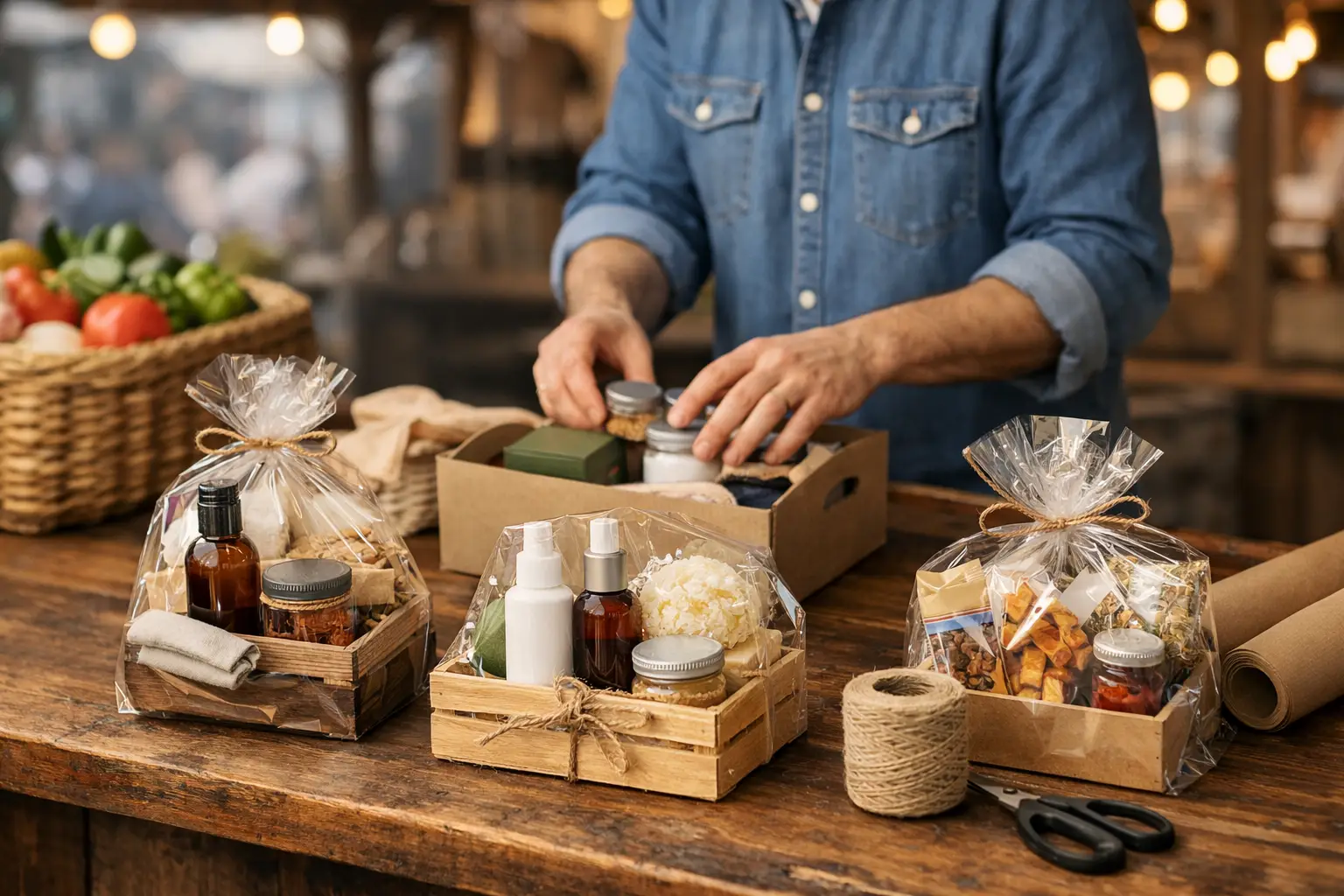
A busy Saturday market is not the time for staff to total a coffee, pastry and bottled water as three separate decisions. When you configure product bundles for stalls before gates open, customers see a clear offer, staff tap fewer items, and the queue keeps moving. Done well, bundles raise average order value without making your menu, stock count or checkout process harder to manage.
For a food stall, that might be a breakfast deal or family meal. For a craft seller, it could be a gift-ready set built around a best-selling item. Apparel, gaming and specialty retail vendors can use bundles to turn related products into an easy choice rather than hoping shoppers spot the connection themselves.
Start with the customer decision
The best bundle answers a real question a shopper already has: “What should I get with this?”, “Is there a better-value option?” or “Can I buy this as a gift?” It should reduce decision-making, not create another menu to decode from the footpath.
Look at your most common multi-item transactions. A mobile coffee operator may notice that many customers order a hot drink and a sweet treat. A handmade jewellery stall may see earrings purchased alongside gift boxes. A gaming merchant might sell card packs with protective sleeves and a deck box. These combinations are stronger starting points than products you simply need to clear.
Choose one clear customer type or occasion for each offer. The weekday commuter wants speed. A family at a food festival wants a simple meal for several people. A visitor shopping at a makers market wants something that feels complete and easy to carry. One bundle can serve each of these needs, but trying to serve all of them in a single package usually makes the offer vague.
Configure product bundles for stalls around margin
A bundle should feel like value without quietly damaging your margin. Start with the total standard selling price of every item, then compare it with the bundle price. The difference is your visible saving, but it is not your only cost. Include packaging, added preparation time, payment fees and any high-cost component that becomes more popular because of the deal.
A $22 food bundle made from items that normally total $25 may work well if it moves customers through the line faster and uses ingredients you already prep. The same discount may not work if the bundle includes a labour-heavy made-to-order item that causes a queue at peak time. Value does not always need to be a bigger discount. It can be priority service, convenient packaging, a limited-edition combination or a small add-on with a low unit cost.
Keep the maths simple enough to check after the event. For each bundle, record the selling price, product cost, gross profit and the number sold. After two or three events, you will know whether the offer is lifting spend or merely replacing full-price sales.
There is a trade-off here. A larger discount can create urgency and attract price-sensitive shoppers, particularly at a crowded community market. A lighter discount protects margin and can still convert when the bundle saves time or makes gifting easier. Your event type, audience and nearby competition will shape the right approach.
Build bundles that are easy to sell live
Event-day bundles need clean names, predictable inclusions and short staff prompts. If a customer has to ask what is included, your offer is not ready for a rush.
Use names that describe the outcome or occasion: Morning Market Deal, Picnic Pack, Festival Fuel, Gift Set or Starter Deck Kit. Avoid internal labels such as Bundle A or Weekend Special. The name should make sense on a menu board, in your online storefront and when a staff member says it aloud.
Set precise product rules in your point-of-sale setup. Decide whether the bundle contains fixed items, allows one choice from a category, or permits upgrades. Fixed bundles are quickest and easiest to count. Choice-based bundles can increase appeal, but too many options slow service and create stock complications. At a high-volume stall, one drink choice and one snack choice is usually manageable. Six substitutions are not.
Price upgrades clearly. If customers can swap a standard drink for a large one or add a premium flavour, make the extra charge visible before checkout. Staff should never need to guess which changes are free, and customers should not feel surprised at the terminal.
A useful setup includes these four details:
- the exact included products and allowed choices
- the bundle price and any upgrade prices
- the sales window, such as one event weekend or a daily morning special
- the inventory behaviour when one included item runs low or sells out
This is where connected vendor tools pay off. In Evntle, your stall can align POS products, storefront listings and event-day operations so the offer customers see is the offer your team can actually fulfil.
Treat stock as part of the bundle, not an afterthought
A bundle is only as reliable as its least available product. If every lunch deal includes a specific soft drink and that drink runs out at 12:30 pm, staff either need a substitution rule or must stop selling the offer. Neither decision should be made under pressure.
Before an event, estimate bundle demand from previous sales and expected foot traffic. Reserve enough stock for your standard best sellers as well as bundle orders. For example, if your tote bag appears in a gift set, do not allocate every tote to bundles when standalone sales are still highly profitable.
Create a fallback for products likely to sell out. You may allow an equivalent flavour, swap a low-cost item, or end the bundle once stock reaches a set level. For premium or limited-run products, it is often better to use a fixed bundle with a firm quantity cap. Scarcity can support demand, but only when it is communicated honestly.
Physical preparation matters too. Pre-pack gift sets, label them clearly and keep them where staff can reach them without blocking the service area. Food vendors can pre-stage packaging and common add-ons while leaving freshness-sensitive items to order. A bundle that takes longer to assemble than its separate items can defeat its purpose.
Make the offer visible before the queue forms
Customers cannot choose a bundle they do not notice. Put the offer in the first places they look: a front-facing sign, your printed menu, your event listing and your vendor storefront. Keep the wording consistent across every surface so shoppers recognise it when they arrive.
Lead with the outcome, then the inclusions and price. “Lunch for $18: wrap, chips and drink” is easier to process than a long paragraph about ingredients and savings. Retail bundles benefit from a photo or a physical display showing exactly what the customer receives. If the set comes in a reusable bag or gift box, show that too.
Train staff to offer bundles at the right moment, not as a scripted upsell on every transaction. A simple prompt such as “Would you like the market deal with your coffee?” works because it is relevant and quick. For retail, “That print is part of our gift set today” gives the customer useful context without pressure.
Test one variable at a time
Do not launch five new bundles and then try to work out what changed. Start with one or two offers that address a clear sales pattern. Keep them active long enough to collect useful data across similar events, especially if weather, crowd size or venue timing can affect sales.
Track bundle units, average transaction value, gross profit, attach rate and service time. Attach rate tells you how often shoppers who bought the main product also selected the bundle. It is especially useful when deciding whether a deal is creating extra purchases or simply discounting purchases that would have happened anyway.
Also collect feedback from the people serving customers. They will spot problems your reports cannot show: confusing choices, packaging that takes too long, an offer that customers repeatedly misunderstand, or a popular upgrade that should become standard.
If sales are slow, change only one element first. Test a clearer name, a more visible sign, a different product pairing or a tighter price point. If the bundle sells well but crowds out higher-margin standalone items, reduce the discount or reposition it for a quieter service period. The goal is not to force every product into a package. It is to create offers that make buying easier and your stall more profitable.
The strongest bundles earn their place at every event: customers understand them in seconds, your team can fulfil them confidently, and the numbers justify bringing them back next weekend.
📖 Related
See the KDS and POS in action — try the live demo or create a free account.