
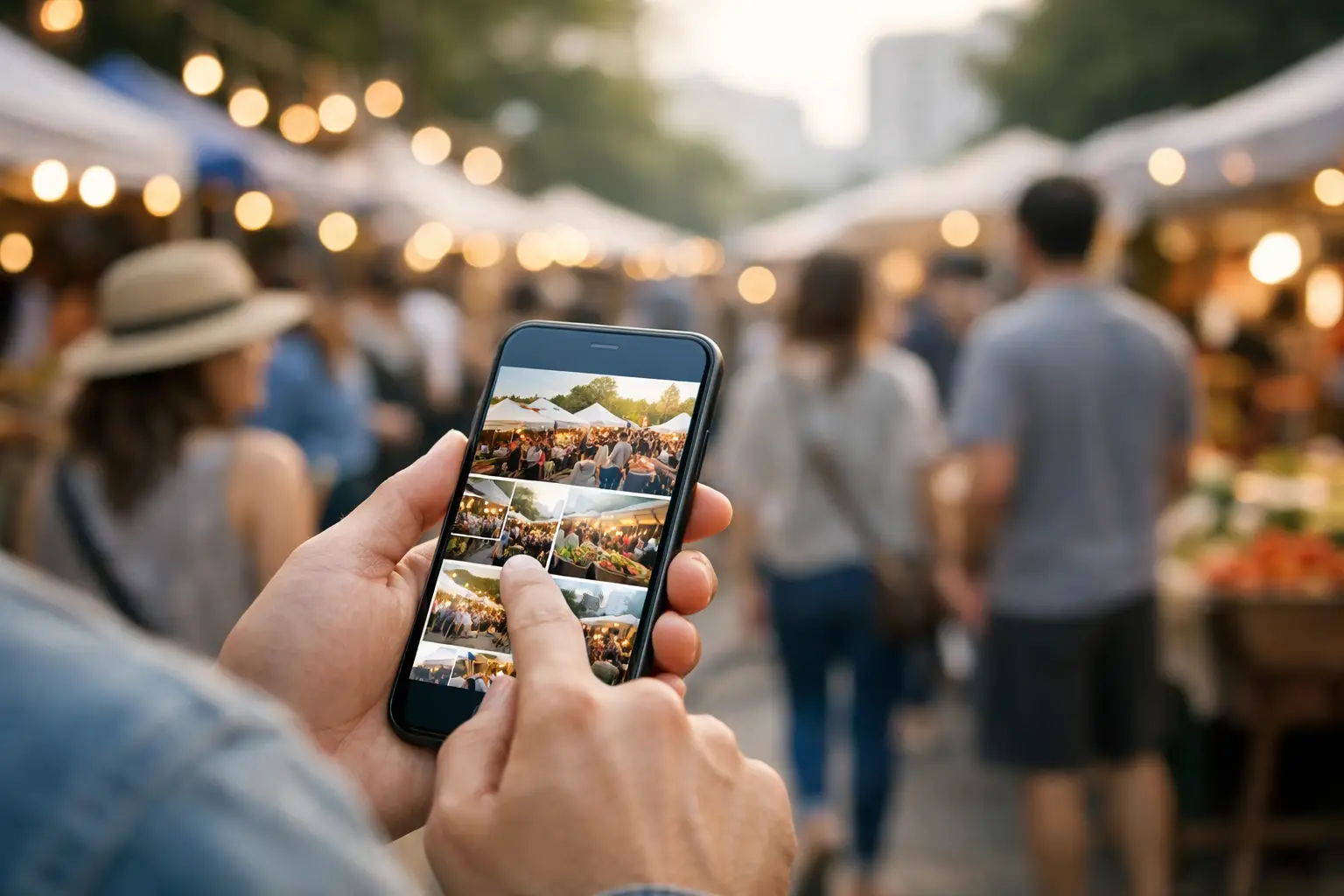
A market can have brilliant coffee, sought-after vintage, fresh produce and a full vendor line-up, yet still lose potential visitors before the gates open. The problem is often discovery. If people cannot quickly find the event, see what is on offer and decide it is worth the trip, they will make other weekend plans. An event discovery app for markets gives attendees the information they need to choose your event before they are already standing at the entrance.
For organisers and vendors, this is not just a marketing issue. Better discovery affects foot traffic, stallholder sales, repeat attendance and the long-term strength of a market community. The best experience connects the digital decision to attend with the real-world experience of browsing, buying and coming back next month.
Why market discovery needs more than an event listing
A basic event listing covers the essentials: date, time, venue and perhaps a short description. That is useful, but markets are not generic events. A Saturday farmers market, a night food market and a vintage fair can all happen in the same suburb, yet attract very different crowds.
People want to know what makes this market worth their time. Is there a favourite baker returning? Are there handmade ceramics, local designers or a record stall worth digging through? Is it family-friendly, dog-friendly, indoors, or accessible by public transport? For a visitor deciding between a market, brunch or a trip to the beach, those details matter.
A dedicated event discovery experience lets the event tell a fuller story. Instead of asking attendees to hunt through social posts, search old comments or message organisers with basic questions, it puts the useful information in one place. That reduces hesitation and helps people arrive ready to buy, not merely browse.
What attendees should be able to see before they visit
The strongest market discovery pages make planning feel quick. Attendees should be able to understand the event at a glance, then explore further if something catches their eye.
The practical details
Start with the essentials: dates, opening hours, exact location, entry details, parking guidance, accessibility information and whether the event is indoors or outdoors. For recurring markets, clearly show the next date rather than making visitors work out whether an old post still applies.
Small details prevent avoidable friction. If parking is limited, say so. If there is a nearby train station, mention it. If wet-weather arrangements may change, make updates easy to find. Clear information builds trust before a visitor has spent a dollar.
The people and products behind the stalls
Markets are built around vendors, not just marquees. A discovery app should let attendees preview the traders they may meet, browse stall categories and find businesses that match their interests.
That could mean a shopper looking for gluten-free treats, a collector searching for vintage clothing, or a family checking whether there are kid-friendly food options. Vendor profiles turn a broad promise such as “local makers and food” into a specific reason to attend.
For stallholders, this visibility is commercially valuable. A customer who favourites a jewellery maker before market day is more likely to seek out that stall, ask informed questions and make a purchase. Discovery becomes a lead-in to real sales, not just a page view.
Reasons to return
Regular markets need more than one-off awareness. New vendors, seasonal produce, workshops, live music and special themes give people a reason to check what is happening next.
A good platform makes it easy for attendees to save favourites, follow vendors and revisit upcoming events. This matters most for community markets, where the goal is not simply a busy Saturday but a reliable audience that comes back, brings friends and develops habits around the event.
An event discovery app for markets must support operations
Discovery does not sit separately from event delivery. If the public event page says a food trader is attending but they cancel on Friday night, the organiser needs a simple way to update the line-up. If site plans change or an entrance moves, visitors need accurate information before they arrive.
This is where disconnected tools create work. An organiser may manage vendor applications in one system, payments in another, social posts on a mobile, site maps in a PDF and attendee information somewhere else entirely. Every update becomes manual, and errors are more likely when the team is busy setting up bump-in.
A connected platform gives organisers one operational source of truth. When vendors are approved, their business details and stall information can support both event planning and attendee discovery. When an event is updated, the public-facing information can stay current without duplicating work across multiple tools.
That approach is especially useful for recurring markets with changing line-ups. It also helps larger fairs, food events and conventions where hundreds of visitors may be looking for a particular exhibitor or category.
How organisers can make their market easier to choose
The quality of the event listing still matters. Technology can organise information, but organisers need to give attendees a clear reason to care.
Lead with the event's real identity. A makers market should highlight its independent creators. A farmers market should foreground growers, producers and fresh local food. A car show should make the featured vehicles, clubs or demonstrations visible. Avoid vague copy that could describe any event in any suburb.
Use current vendor information rather than relying on last season's photos. A familiar market can still feel fresh when visitors see new stallholders, limited-run products or a themed date ahead. At the same time, keep the basics consistent. People should never have to guess where the event is held or whether it is actually on.
Think about the attendee journey in practical terms. Someone may discover the event on Thursday evening, save it, check the vendor list on Saturday morning and use their mobile while walking between stalls. Each stage needs useful information, not a wall of promotional text.
Vendors benefit when shoppers arrive with intent
For a vendor, event discovery is a visibility channel that works before the tent is up and after the cash float is counted. A proper vendor profile gives a stallholder a place to show what they sell, where they will be and how shoppers can find them again.
This is particularly useful for businesses that trade across multiple events. Instead of rebuilding an audience from scratch every weekend, vendors can create recognition over time. Customers can find their favourite candle maker, street-food operator or gaming merchant at the next event, then share that discovery with friends.
There is a trade-off, though. More visibility only helps if the profile is accurate and actively maintained. A sharp product image, clear category, current event schedule and simple stall description do more for conversion than a long brand story. Vendors should treat their discovery presence as part of their stall set-up, alongside signage, stock and payment readiness.
Measure whether discovery is bringing the right crowd
High attendance is useful, but it is not the only measure of a healthy market. Organisers should look for signs that discovery is attracting people likely to engage with vendors and return.
Useful signals include event page visits, saved events, vendor profile views, favourites, shares and repeat attendees. Compare these with on-the-ground outcomes such as vendor sales feedback, queue pressure, entry patterns and the categories visitors asked about most.
The results can guide better decisions. If food vendors receive strong interest before the event but craft sellers are overlooked, the event page may need clearer category browsing. If attendees save an event but do not arrive, practical information such as transport, weather plans or entry expectations may be missing. If one vendor consistently drives profile views, feature complementary stalls nearby and help visitors discover more of the market.
Data should inform the next market, not become another reporting task. The goal is simple: understand what gets people through the gate and what helps them have a better day once they are there.
Build a connected local event community
The most valuable markets become part of how people spend their weekends. They are where locals discover new businesses, meet friends, buy from independent sellers and return because the experience feels familiar without becoming repetitive.
That requires organisers, vendors and attendees to operate in the same ecosystem. Evntle is designed around that connection, bringing event operations, vendor tools and attendee discovery together for markets and live events that depend on real foot traffic.
The next time a potential visitor is choosing what to do on a Saturday, make the choice easy. Show them what is happening, who they can meet and why this market deserves a place in their plans.
📖 Related
See the KDS and POS in action — try the live demo or create a free account.