
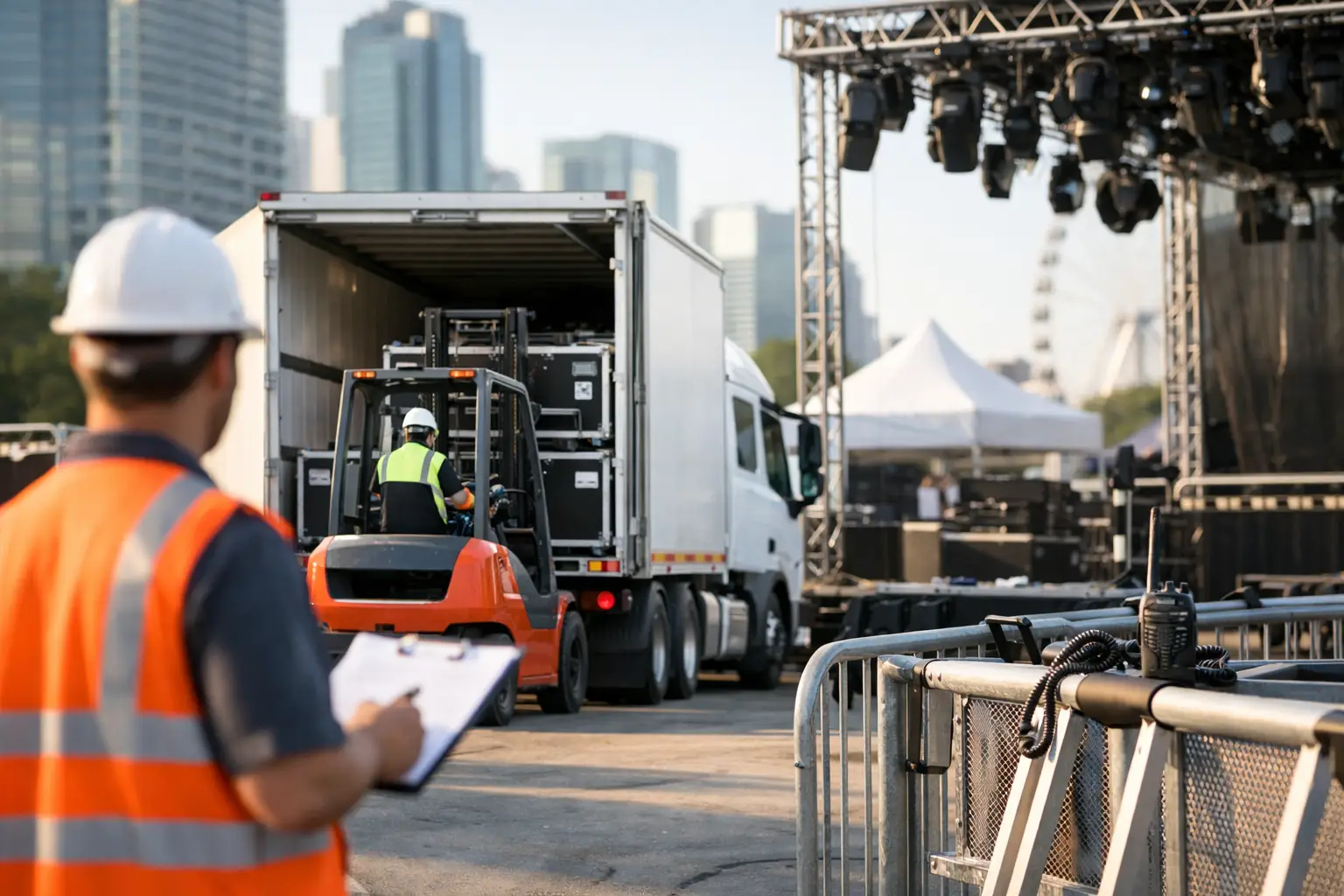
A market can have brilliant vendors, a strong location and a queue around the block, then still lose money because two coffee vans arrive through the same gate at once. Event logistics is the operating work that stops those small failures becoming a frustrating day for vendors, organisers and attendees.
For a farmers market, craft fair, food festival or car show, logistics is not just moving tables and putting up signs. It is the system behind how people, stock, vehicles, payments, information and problems move through the site. When that system is clear, vendors can start trading faster, attendees can find what they came for, and organisers spend less time fielding avoidable calls on event day.
Event logistics starts before bump-in
The most useful logistics decisions happen well before anyone turns up with a gazebo or a ute full of stock. Start with the event's real constraints: site access, vehicle movements, power, water, weather exposure, noise limits, trading hours and emergency access. A site plan that looks neat on a screen can fail quickly if it ignores a narrow gate, a steep kerb or the fact that food vendors need more setup time than a jewellery stall.
Build the plan around movement, not just stall count. Ask how vendors enter, where they wait, which direction they leave, and whether a vehicle can turn around without crossing pedestrian areas. Map attendee entry points, accessible paths, amenities, rubbish stations, first aid and any areas likely to form queues. At a food-focused event, the seating and ordering zones matter as much as the stalls themselves. At a vintage market, wide browsing lanes may matter more than vehicle access after opening.
Vendor information needs to be practical enough to use at 5.30 am in poor weather. A confirmation email should tell each trader their arrival window, gate, site number, vehicle rules, contact method, bump-in deadline and what they need to bring. If a vendor has to search across emails, PDFs and group chats to find that information, the logistics plan is not finished.
Match arrival windows to setup complexity
Giving every vendor the same arrival time creates a queue before the event has begun. Stagger access according to setup needs. Food trucks, large marquees and vendors with heavy equipment usually need the earliest slots. Smaller stallholders can arrive later, once the main access lanes are clear.
This does not mean overcomplicating the schedule. It means setting a few realistic windows and enforcing them consistently. Allow extra time where the site requires manual check-in, security checks or shared loading areas. For a busy city-centre location, it may also mean setting a strict vehicle-out time before attendees arrive.
A digital vendor workflow makes this easier because organisers can collect vehicle details, power needs, insurance documents and site preferences before assigning spaces. It also gives vendors one reliable place to check event instructions rather than relying on last-minute messages.
Design the site for trade, not just appearance
A good site plan helps people spend time and money comfortably. It should make popular vendors easy to reach without blocking smaller stalls, keep food queues away from key entrances, and avoid sending attendees into dead ends. The best layout depends on the event category and site shape, but the principle is consistent: people need room to browse, stop, turn and leave.
Place operational essentials where they can be found without creating clutter. Power distribution, water access and waste collection should support vendors without running cables across high-traffic paths. If cables must cross a walkway, use suitable covers and inspect them before gates open. Give food vendors enough space for gas safety requirements, stock storage and customer queues. Do not assume a standard three-metre stall allocation works for every business.
There is a trade-off between maximising vendor numbers and protecting the attendee experience. More sites can increase revenue, but tight aisles, poor visibility and long queues can reduce dwell time and discourage return visits. A smaller, well-spaced market with clear categories can often perform better than a crowded layout that feels difficult to navigate.
For recurring events, keep notes on what actually happened. Which entrance clogged? Which stalls had the strongest foot traffic? Where did people ask for directions? The next site plan should be shaped by evidence, not memory.
Keep vendor operations clear on the day
Event-day communication works best when it is short, specific and tied to an action. A vendor needs to know where to go, who to contact and what to do if something changes. They do not need a long announcement while they are unloading stock.
Set a check-in point that is visible before vehicles enter the trading area. The check-in team should have current site allocations, vendor contact details, notes on special requirements and a way to record arrivals. If a vendor is late or absent, the organiser needs to know quickly so the gap can be managed before attendees notice it.
Also plan for the questions that always appear: where to park after unloading, where to find a power lead, whether an extra table is allowed, and what happens if weather delays setup. A single operational channel prevents conflicting advice from staff, volunteers and neighbouring vendors.
This is where an integrated platform such as Evntle can reduce admin pressure. When applications, site assignments, vendor profiles and live operational notes sit in one place, organisers are less likely to work from outdated spreadsheets while vendors are left guessing.
Payments need a backup plan
Cashless payments have made on-site selling faster, but they have also made connectivity and device power part of event logistics. Vendors should test their point-of-sale devices before opening, carry charged battery packs where needed, and understand the available fallback process if mobile coverage drops.
Organisers cannot control every bank outage or network issue, but they can assess coverage at the site, identify weak areas and brief vendors before the event. For higher-volume markets, consider whether shared Wi-Fi is genuinely reliable enough for trading. It may help in some locations, but it can also become overloaded, so vendor mobile data remains an important backup.
Keep attendee-facing information equally clear. Signage for entrances, toilets, payment options, parking, accessible access and event activities should answer basic questions before they reach the operations desk. Fewer directional questions gives the team more capacity for genuine issues.
Prepare for the failures you can predict
Weather, delayed vendors and equipment faults are not unusual exceptions. They are normal operating risks. The goal is not to create a massive contingency manual that nobody reads. It is to agree on practical responses before pressure is high.
For weather, establish the decision points. Who monitors conditions? Who has authority to delay, pause or cancel trading? How will vendors and attendees be notified? A light shower may be manageable for a covered craft market, while high winds can make marquees unsafe within minutes. The response should fit the site, infrastructure and forecast, not a one-size-fits-all rule.
For incidents, document the facts as they happen: time, location, people involved, action taken and any follow-up required. This supports safety, insurance and better future planning. It also keeps the team focused on solving the immediate problem instead of reconstructing events from scattered messages later.
Pack-down deserves the same attention as bump-in. Stagger vehicle access again, protect pedestrian areas until the site is clear, and confirm who is responsible for waste, hired equipment and final inspections. A rushed pack-down is where site damage, missing gear and exhausted vendors often become expensive problems.
Measure what made the day easier
The value of event logistics is not measured only by whether gates opened on time. Look at vendor arrival times, setup delays, incident patterns, queue locations, sales activity where available, attendee feedback and the number of support questions received. These signals reveal where the operating model is working and where it is adding friction.
For organisers, the aim is repeatability. A well-run monthly market should not require rebuilding every process from scratch. For vendors, reliable operations mean more time serving customers and less time chasing instructions. For attendees, the result is simple: an event that is easy to enter, enjoyable to explore and worth returning to.
The next time you plan a site, focus on the moments where people are most likely to wait, get lost or need help. Fixing those moments is often the fastest way to build an event people trust, trade at and talk about long after pack-down.
📖 Related
See the KDS and POS in action — try the live demo or create a free account.