
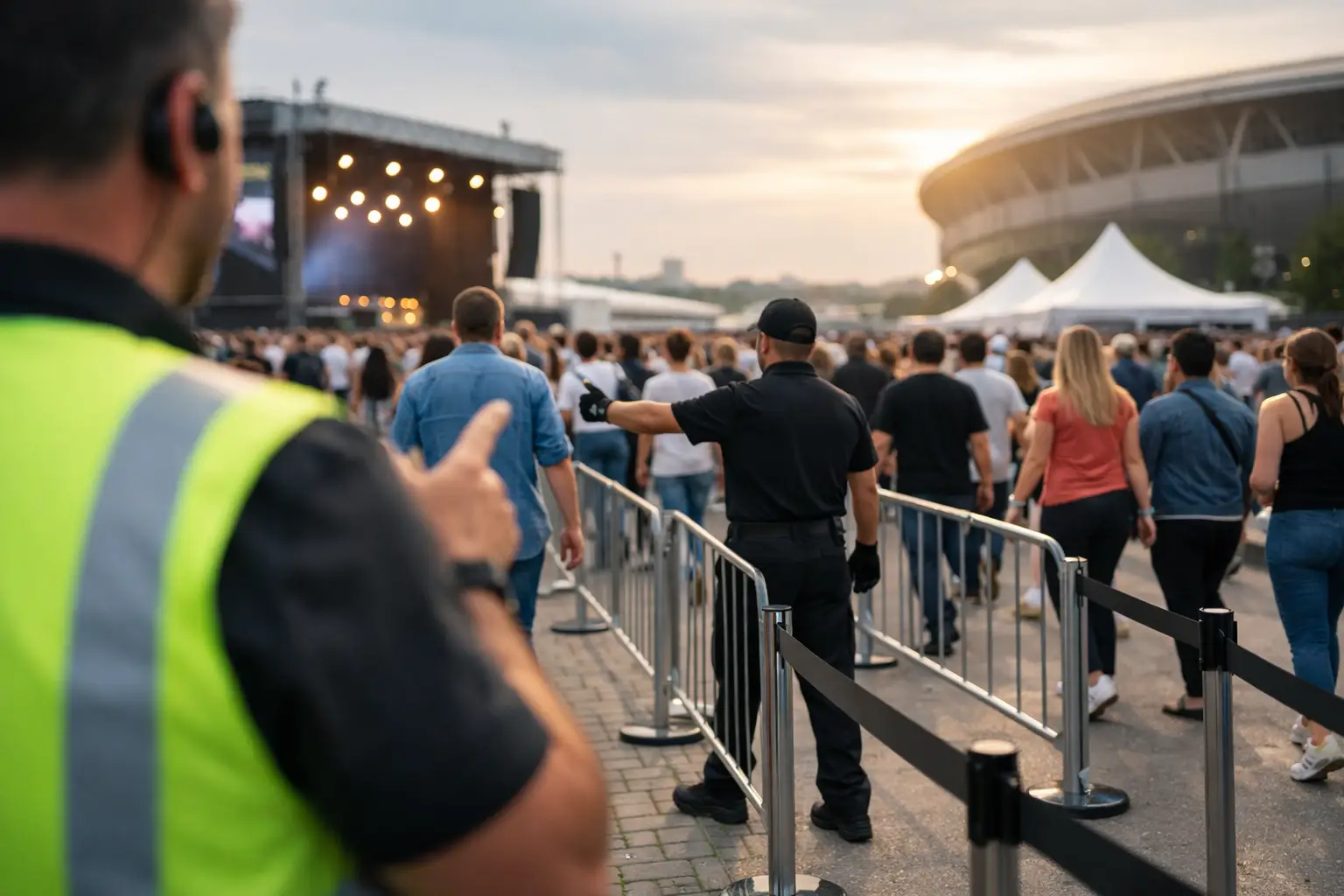
A queue at the gates can change the mood of an entire market before the first coffee is poured. When people cannot find an entry, stallholders are blocked from trading, or the main aisle becomes a standstill, visitors spend less time browsing and more time looking for a way out. Crowd flow management is how organisers turn that pressure into a clear, comfortable event experience.
For farmers markets, craft fairs, food events, gaming conventions and car shows, good flow is not about directing every person’s movement. It is about making the next sensible choice obvious: where to enter, where to browse, where to sit, where to queue and how to leave. Done well, it protects safety, supports vendor sales and gives attendees more reasons to stay.
Why crowd flow management affects sales and safety
Crowds naturally gather around the things that create friction or excitement: entry points, popular food stalls, toilets, demonstrations, prize draws and headline vendors. That is not a failure of planning. The issue starts when these gathering points sit inside the main walking route or compete for the same narrow space.
A busy market can still feel easy to move through when people have room to pause without blocking others. Vendors benefit because customers can stop, compare products and pay without being rushed by the crowd behind them. Attendees benefit because the site feels organised rather than chaotic. For organisers, fewer pinch points also mean staff can spot incidents, lost children or accessibility issues sooner.
There is a commercial upside as well. If visitors can reach more parts of the site, smaller vendors are less likely to be stranded in low-traffic corners. The goal is not to force people past every stall. It is to create a layout that rewards exploration and makes the full event feel worth discovering.
Start with the attendee journey
The strongest crowd flow plan begins before you place a single marquee on the site map. Walk through the day as an attendee would, from the car park or public transport stop to their first purchase and eventual exit. This reveals the moments where people may hesitate, turn around or bunch together.
Ask practical questions. Can a first-time visitor identify the entrance from the street? Is there enough space for ticket checks, bag checks or wristbands without spilling onto the footpath? Once inside, can they immediately see an information point, event map or the first row of stalls?
Then consider different visitor needs. A parent with a pram, a customer using a mobility aid, someone carrying food, and a stallholder moving stock from a ute will all experience the same site differently. A route that works on paper may fail if it depends on tight turns, uneven ground or one shared access lane.
Separate movement from stopping
Every event site needs two types of space: circulation space for people moving through, and dwell space for people who are shopping, eating, chatting or watching. Problems appear when those uses overlap.
Place seating, performance areas, photo moments and food tables off the main aisle where possible. Give popular vendors enough frontage for a queue that does not cut across neighbouring stalls. If a product launch, raffle or live demonstration is likely to draw a crowd, designate its viewing area in advance instead of asking staff to solve it on the spot.
This does not mean every aisle must be wide and empty. A smaller boutique market may deliberately use a more intimate layout. The trade-off is that tighter spaces need fewer obstacles, clearer one-way cues and more active staff oversight during peak periods.
Build a site plan around pressure points
Use your site plan as an operational tool, not just a vendor allocation sheet. Mark entrances and exits, emergency access, toilets, first aid, seating, food areas, waste stations, power runs and accessible routes before assigning stall locations. These elements influence movement more than a neat grid ever will.
Give particular attention to the first 20 metres after entry. If attendees stop immediately to check a map, collect a wristband or meet friends, that area needs room to absorb them. A welcome point placed slightly to the side can help people orient themselves without closing the gate behind them.
Vendor placement also matters. Spread known crowd-pullers across the event rather than clustering them at one end. Put complementary vendors near each other when it encourages browsing, such as homewares beside plants or gaming merchandise near a tournament area. But avoid placing two high-queue food operators face to face in a narrow corridor.
A practical plan should identify four operational zones:
- arrival and entry, including queues, ticket checks and information
- browsing areas, where customers need clear sightlines and space to pause
- high-demand zones, such as food, activations and headline vendors
- service routes for staff, waste collection, emergency access and vendor restocking
Keep service routes distinct from public routes where the venue allows it. If vehicles must enter during bump-in or restocking, set clear time windows and communicate them to vendors early. A pedestrian-friendly market loses its rhythm quickly when a van has to reverse through a lunchtime crowd.
Use signs, staff and live information together
Signage is most useful at decision points, not everywhere. Visitors need a clear sign when they arrive, reach a junction, look for toilets or need to find an exit. Too many signs compete for attention and become background noise.
Use plain language, consistent colours and large directional arrows. For recurring events, keep the visual system familiar so returning attendees know what to expect. Printed site maps are useful, but a mobile-friendly event listing that lets people browse vendors ahead of time can reduce the number of visitors stopping in the first aisle to work out where to go.
Staff should be positioned where a small intervention has a big effect. At peak entry, one team member may guide queues while another answers ticket questions. Near food zones, staff can keep walkways open and direct people towards nearby seating. Give the team short, specific instructions such as, “Keep this crossing clear” or “Direct queues along the fence line”, rather than asking them to simply manage crowds.
Tools that connect site planning, vendor details, incident reporting and live operations make this easier. Evntle can help organisers keep those moving parts in one place, so the site team is working from current vendor and event information rather than separate spreadsheets and group chats.
Plan for peaks, not just average attendance
Most flow failures happen at predictable moments: opening time, the lunch rush, a scheduled performance, bad weather, and the final hour when attendees and vendors begin leaving at once. Build your plan around these peaks.
For a food market, stagger promotions or live entertainment so every visitor is not drawn to the same area at midday. At a convention, schedule popular panels with enough time between sessions for rooms to empty before the next queue forms. At an outdoor fair, have a wet-weather response ready, because a sudden shower can push hundreds of people under one small awning.
It also helps to decide your triggers in advance. If a queue reaches a certain point, staff might open a second service position, pause entry briefly, or redirect attendees through another aisle. These decisions are far easier when they are agreed before the event begins.
Measure what actually happened
After pack-down, review crowd flow while details are fresh. Compare attendance times with sales data, vendor feedback, incident reports and team observations. A high-attendance day is not automatically a successful one if vendors in one zone saw little traffic or attendees left early because queues felt too long.
Look for patterns: which entry built up first, where people stopped unexpectedly, which vendors generated long queues, and whether accessible routes remained usable. Ask vendors what they saw from their frontage. They often notice movement patterns that the operations team cannot see from a central control point.
Keep the changes focused. Moving one food stall, widening one crossing or shifting the information desk can have more impact than redesigning the entire event. Each event gives you evidence for a smarter site plan next time.
The best event layouts do not make people feel controlled. They make browsing, buying, meeting and discovering feel easy. When the crowd can move with confidence, vendors get more meaningful customer time and your event has the space to grow.
📖 Related
See the KDS and POS in action — try the live demo or create a free account.