
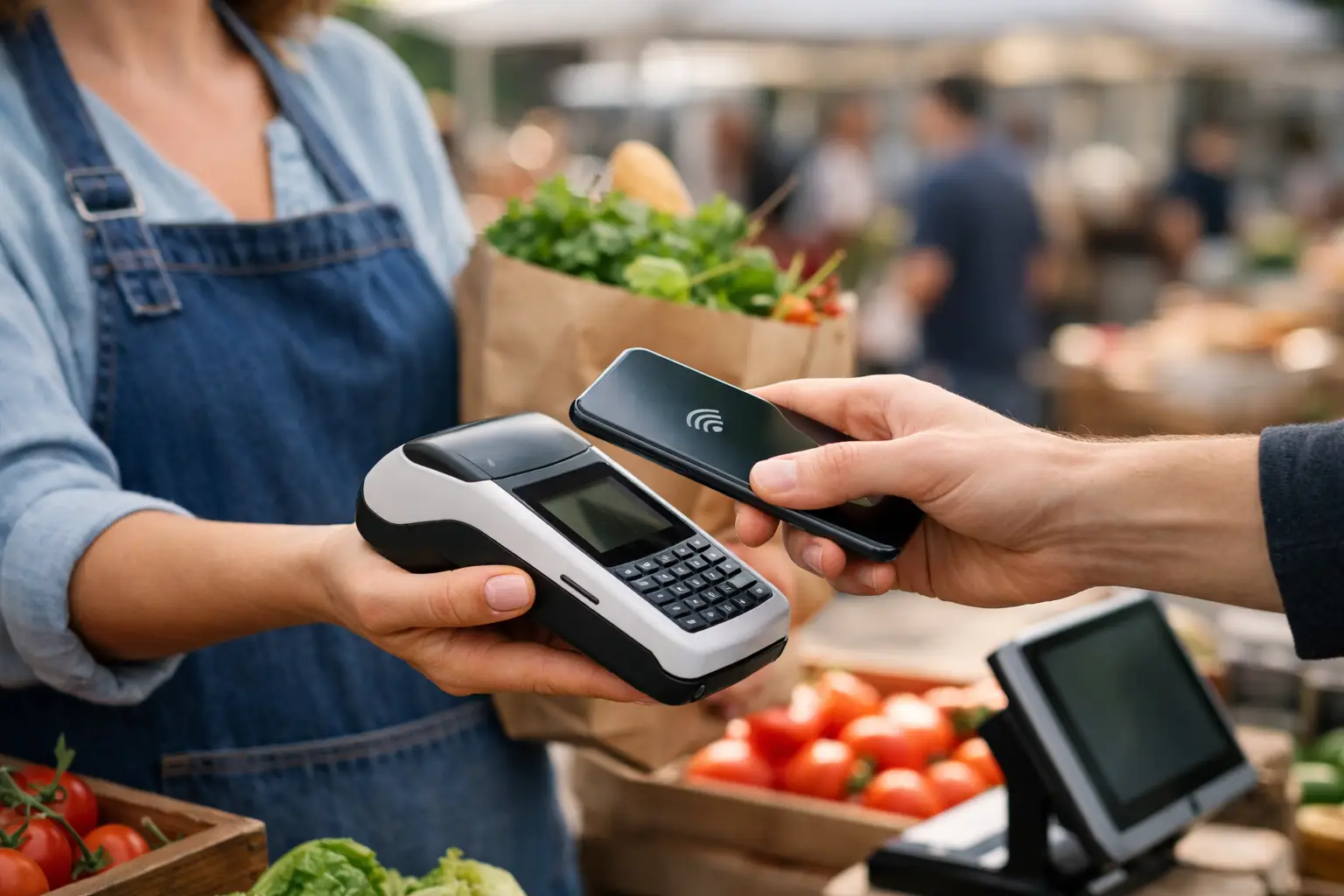
A Saturday market can turn on a few seconds at the counter. A customer has chosen a candle, a loaded toastie or a vintage jacket, but the EFTPOS terminal is slow, the mobile signal is patchy, and the queue is building behind them. The future of cashless market payments is not simply about replacing notes and coins. It is about making every transaction faster, more dependable and more useful for the people running the event.
For Australian market vendors and organisers, cashless is already normal. Shoppers expect to tap a card, use a mobile wallet or pay from a wearable without needing to find an ATM first. The next shift is bigger: payments will become connected to stock, customer loyalty, vendor operations and event-wide reporting. That creates real opportunities, but only when the technology suits the realities of a busy paddock, hall, laneway or showground.
What the future of cashless market payments looks like
The strongest payment setup will feel almost invisible to the customer while giving vendors more control behind the counter. A tap should confirm quickly, update stock, record the sale and keep the queue moving. For an organiser, aggregated payment data can show where foot traffic is converting, which trading periods are busiest and whether site layout is helping vendors sell.
Mobile wallets will continue to grow because they are quick and familiar. Customers increasingly arrive with a phone or watch rather than a physical wallet, particularly at food markets, pop-ups and ticketed events. Tap-to-pay on a mobile device will also lower the barrier for new vendors. A seller who has forgotten a card reader or needs an extra checkout during a rush may be able to accept contactless payments from a compatible phone.
That does not mean every stall needs the same setup. A coffee van processing hundreds of small orders needs speed, clear order flow and multiple devices. A jeweller selling fewer, higher-value pieces may care more about receipts, customer details and fraud controls. The right payment experience depends on queue volume, average transaction value, product type and connection quality.
Payments will connect with the rest of the stall
A standalone terminal can take money, but it cannot tell a vendor much about what happened. Connected point of sale turns a payment into an operational record. When a handmade soap sells, the vendor can see which scent moved, how many units remain and whether a repeat customer used a loyalty offer.
This matters well beyond event day. Vendors can use sales patterns to decide what to make, bring or promote at the next market. If a particular product sells out before lunch at coastal events but barely moves at an indoor fair, that is useful commercial intelligence. It reduces guesswork and helps smaller businesses use limited stock, staff time and working capital more carefully.
For organisers, connected payments can support stronger vendor relationships without exposing individual business data unnecessarily. Event-level reporting can reveal peak trading windows, popular categories and the practical effect of changing entry points, seating areas or site plans. That is a better foundation for planning than relying on anecdotal feedback after pack-down.
Speed matters, but reliability matters more
Cashless payments only improve an event when they work under pressure. Markets do not operate in controlled retail environments. Terminals are exposed to sun, rain, crowds, depleted batteries, mobile blackspots and the occasional accidental knock off a trestle table.
The future will favour systems built for resilience. Vendors need devices with reliable battery life, more than one connectivity option where possible, and a clear process when the network drops out. Organisers can help by assessing coverage before the event, identifying known dead zones and communicating practical backup expectations to vendors.
Offline or delayed-authorisation features can be valuable, but they come with risk. A vendor may be able to continue taking eligible transactions temporarily, yet there is no guarantee every payment will later be approved. High-value stalls may choose a more cautious approach than a food trader handling low-value purchases. The key is to understand the settings before gates open, not while a queue is waiting.
Cash also remains a useful contingency. A cashless-first event may be right for some audiences and venues, but going fully cashless can exclude people who prefer or rely on cash, including some older shoppers, children with spending money and visitors managing a strict budget. Australian organisers should make the policy clear in advance and consider whether an ATM, a cash-capable vendor option or another fallback is appropriate for their community.
Fees, surcharges and trust will shape adoption
Payment acceptance is not free, and vendors are right to look closely at the cost. Transaction fees can feel especially sharp on low-margin items such as baked goods, produce and small accessories. As cashless use grows, vendors will compare providers not only on headline rates but also on settlement timing, hardware costs, refund workflows, reporting and support when something goes wrong on a Sunday afternoon.
Surcharging may help some businesses recover costs, but it must be handled carefully. Unexpected fees at the final tap can frustrate customers and slow the sale. Businesses also need to follow Australian payment-surcharging rules, including limits on passing through costs. A clear, compliant approach builds more trust than a last-minute surprise on the terminal screen.
Trust also extends to data. Customers may welcome a digital receipt or a loyalty reward, but they should not have to hand over more personal information than necessary to buy a $6 coffee. Vendors should be transparent about what details are collected, why they are collected and how customers can opt in to future marketing. Useful data builds a better customer relationship. Excessive data collection damages it.
Digital loyalty will become more practical
Paper stamp cards are easy to start and easy to lose. Future payment experiences will make loyalty simpler by connecting it to the transaction itself. A shopper could earn rewards for visiting a favourite food stall, buying from multiple vendors at a seasonal market or returning across a series of events.
The best programmes will reward genuine community behaviour rather than pushing discounts for their own sake. A craft market might encourage customers to save favourite vendors before the event, then offer a small reward after purchases from three independent makers. A food festival could help visitors discover quieter stalls by offering a timed incentive during an off-peak period.
For vendors, loyalty should not become another complicated dashboard to manage. It needs to work alongside payments and storefront activity, with clear controls over offers, customer permissions and results. When a vendor can see that a reward brought a customer back twice, rather than merely generating redemptions, the programme starts to earn its place.
Organisers will treat payments as event infrastructure
Payments are often left to each individual vendor, and that flexibility still matters. Yet organisers have a growing role in setting the standard for an event’s commercial experience. Clear vendor guidance on accepted payment types, connectivity, surcharging, device charging and queue management can prevent confusion on the day.
There is also value in a shared operating system. When vendor applications, site allocation, event discovery, point of sale and post-event insights sit in disconnected tools, important details get lost between inboxes and spreadsheets. An integrated platform such as Evntle can help organisers and vendors coordinate the work around the sale, from being discovered before the event to reviewing performance afterwards.
That does not require organisers to dictate every vendor’s payment provider. It means creating cleaner processes, giving traders practical information early and building an event environment where customers can confidently buy. The goal is operational clarity, not control for its own sake.
Preparing your stall or event now
The smartest move is not to chase every new payment feature. Start by removing the friction already costing sales. Test your terminal in the actual venue area, not just at home or in the office. Carry charging options, train staff on refunds and failed transactions, and make accepted payment methods visible before the customer reaches the counter.
Then look at the information each sale produces. Can you identify best-selling products by time of day? Can a customer receive a receipt and find your next market date? Can your team reconcile event sales without spending Monday morning matching terminals, paper notes and stock sheets?
Cashless payments will keep changing, but the standard customers expect is straightforward: pay quickly, know the price, receive confirmation and get on with enjoying the event. Vendors and organisers that build around that expectation will have more time for the part of markets that cannot be automated - meeting people, telling the story behind the product and creating reasons for the community to return.
📖 Related
See the KDS and POS in action — try the live demo or create a free account.