
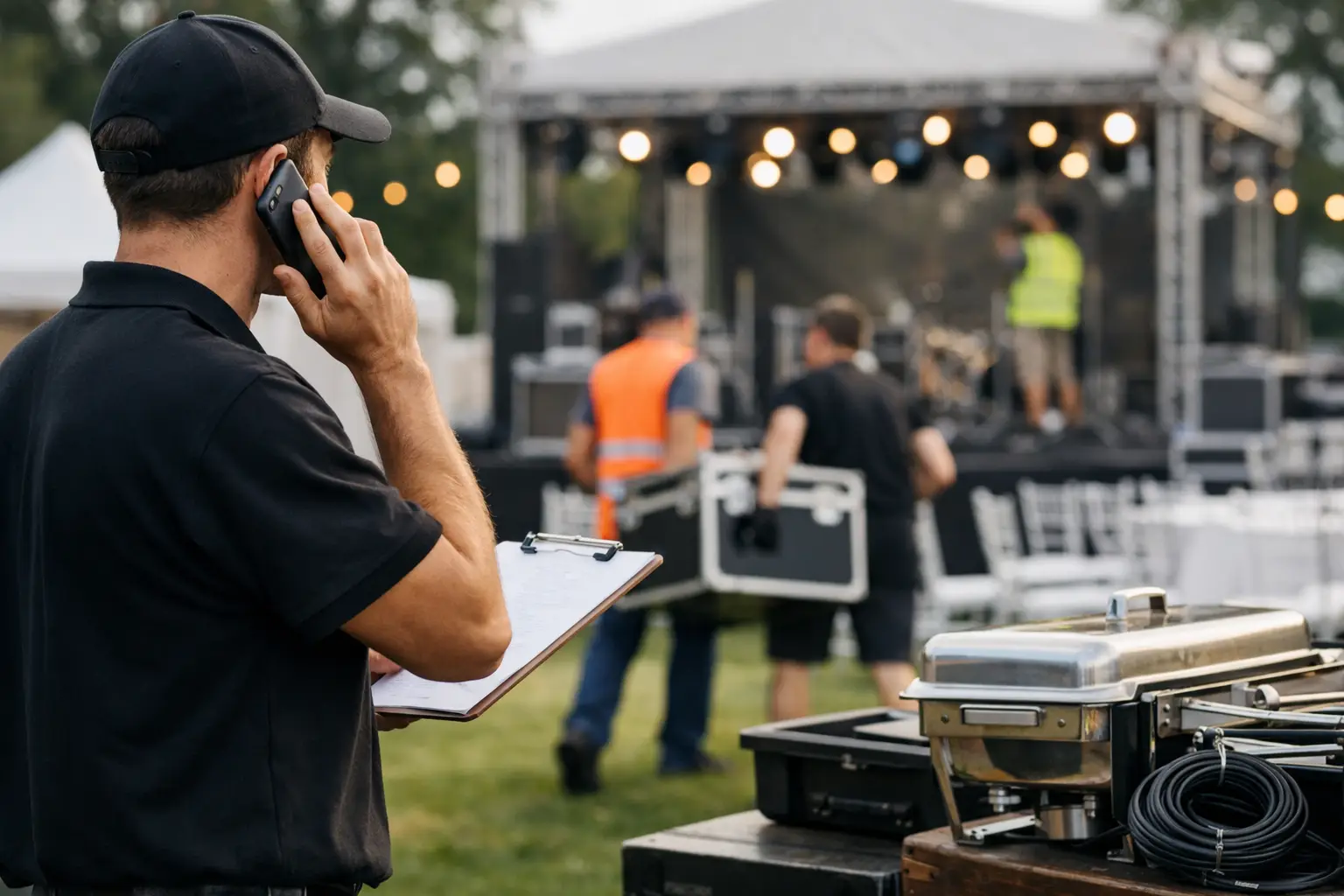
A busy Saturday market can unravel before the gates open. A stallholder is parked in the wrong zone, two food vendors believe they have the same power allocation, and an organiser is scrolling through old emails to find a public liability certificate. Vendor operations are what prevent those small gaps from becoming a poor experience for sellers, attendees and your event team.
For markets, fairs, conventions and car shows, vendor coordination is not back-office admin. It directly shapes queue times, sales, site safety, vendor retention and whether people want to return next month. The goal is simple: give every vendor a clear path from application to bump-out, while giving organisers one reliable view of what is happening.
What vendor operations actually covers
Vendor operations is the system behind bringing traders into an event, placing them on site, supporting them during trading and capturing the information needed to improve the next event. It includes applications, approvals, documents, fees, stall allocations, communications, point-of-sale readiness, incident reporting and post-event reporting.
The exact workflow depends on the event. A monthly farmers market may need quick renewals, food compliance checks and casual stall changes due to weather. A gaming convention may need product categories, vehicle access windows and detailed floor plans. A food festival has bigger requirements around power, water, gas, waste and food safety.
The common issue is fragmentation. Applications arrive through a form, documents sit in a shared drive, allocations live in a spreadsheet, payments happen elsewhere and last-minute messages disappear in group chats. Each tool may work on its own, but the hand-offs create risk. A connected workflow gives organisers and vendors the same operational picture.
Build one vendor journey, not a pile of tasks
Strong vendor operations start before an application is submitted. Vendors should understand the event, audience, dates, fees, stall sizes, inclusions, rules and deadlines without needing to chase answers. Clear expectations attract better-fit applicants and reduce repetitive questions for your team.
Collect the details that affect event delivery
An application should do more than capture a business name and email address. Ask for the information that helps you make placement and compliance decisions: product category, food or retail requirements, site dimensions, vehicle details, power needs, insurance, permits and preferred trading dates.
Keep the form relevant. A jewellery seller does not need to answer gas-bottle questions, while a mobile food operator needs a more detailed operational profile. Conditional questions keep applications shorter without leaving organisers blind to site requirements.
It also helps to request vendor imagery, product descriptions and social profiles where appropriate. These details support event promotion and attendee discovery, but they should not replace the operational basics. A great-looking stall still needs the right footprint, documentation and arrival instructions.
Make approval decisions visible and consistent
Approval should trigger a defined next step. Whether a vendor is accepted, waitlisted, declined or asked for more information, both the vendor and internal team should know the status and what happens next.
This matters when several people review applications. Without agreed criteria, decisions can feel inconsistent and the site mix can drift. Set practical rules around category balance, product quality, compliance, previous attendance, local representation and stall capacity. For curated events, this protects the attendee experience. For high-volume community markets, it keeps decisions fast and fair.
A waitlist is also an operational tool, not a dead end. When a vendor cancels on Friday afternoon, organisers need suitable replacements with current documents and clear availability. A well-managed waitlist makes those gaps easier to fill.
Turn the site plan into an operating plan
A site map is only useful when it reflects what vendors actually need to trade. Assigning spaces by stall number alone can leave high-power food operators next to outlets that cannot support them, or place a large marquee where vehicle access is too tight.
Map each vendor against the constraints that matter: frontage, depth, vehicle access, power, water, bump-in timing, nearby amenities and safety clearances. Then communicate the allocation early enough for vendors to flag problems. A late change may be unavoidable, but surprises on event morning cost time and goodwill.
For recurring events, retain the operational history. If a stall was too exposed to wind, created a congestion point or worked exceptionally well near an entrance, record it. Repeat events should get smarter with each edition rather than rebuilding decisions from scratch.
Give vendors one source of truth before bump-in
The most useful vendor briefing is specific and easy to scan on a mobile. It should confirm their allocated site, arrival window, entry gate, vehicle rules, set-up deadline, trading hours, emergency contacts and bump-out process. If conditions change due to weather or site access, update the same place rather than relying on a new chain of messages.
Avoid sending a generic information pack that leaves vendors guessing which sections apply to them. A food stall, a vintage clothing seller and a sponsor activation may share a venue but need different instructions. Targeted information cuts down on calls at 6 am and helps vendors arrive prepared.
Make payments and sales part of the workflow
Vendor fees are only one financial touchpoint. Organisers need to track whether a site has been paid for, while vendors need confidence that payment status, invoices and any adjustments are clear. Chasing payment in separate emails is manageable at ten stalls and painful at one hundred.
For vendors, event-day payment acceptance matters just as much. A customer who cannot pay quickly may walk to the next stall. Reliable point-of-sale tools, stock visibility and simple receipts help sellers keep queues moving, especially when a market is at its busiest.
There is a trade-off here. Not every organiser needs to control every vendor transaction, and independent sellers should retain control of their own business data and trading process. The useful connection is operational: vendors can manage sales while organisers can see the event-level insights needed to plan capacity, categories and future opportunities.
Evntle brings vendor applications, site operations, storefronts and on-site selling into a purpose-built event ecosystem, helping teams reduce the number of disconnected systems they have to manage.
Treat event day as a live operation
Even the best pre-event plan will meet real-world variables. A vendor is delayed in traffic, rain affects access, a power lead is missing or a customer incident needs attention. The difference is not whether problems occur. It is whether the right people can see, record and resolve them quickly.
Give the event team a practical check-in process. Confirm arrivals, identify no-shows, record changes to stall positions and flag issues as they happen. A shared operational view is particularly valuable when the organiser is managing the front gate, a site manager is handling logistics and a vendor coordinator is answering trader questions.
Incident management should be proportionate to the event. A small local market may need a simple way to log hazards and follow-up actions. A larger festival may require escalation pathways, supporting photos, timestamps and role-based access. In both cases, the point is to protect people and build a useful record, not create unnecessary paperwork.
Measure what helps the next event run better
Post-event feedback should lead to decisions. Start with the operational signals: application volume, approval rate, vendor cancellations, no-shows, payment status, category performance, incident types and vendor feedback. Then compare them with the attendee experience, including foot traffic, queue pressure, favourites and repeat visits where available.
Do not treat every metric as equally valuable. A one-day craft fair may care most about vendor return rates and category variety. A food market may prioritise queue times, sales periods and operational incidents. A convention may need to understand which vendor zones drew the most attendee activity.
Ask vendors a small number of useful questions while the event is still fresh. Was the site allocation workable? Were bump-in instructions clear? Did the audience suit their products? What slowed them down? The answers often reveal operational fixes that reporting alone will miss.
Create an operation vendors want to return to
Good vendor operations are visible in the small moments: a seller knows where to go, has what they need, can take a payment without fuss and receives useful communication when plans change. Organisers benefit too, because fewer manual hand-offs leave more time for site quality, partnerships and audience growth.
The best event systems do not make vendors feel processed. They make vendors feel prepared. When every trader can focus on serving customers instead of chasing logistics, the event becomes easier to run and more worth coming back to.
📖 Related
See the KDS and POS in action — try the live demo or create a free account.