
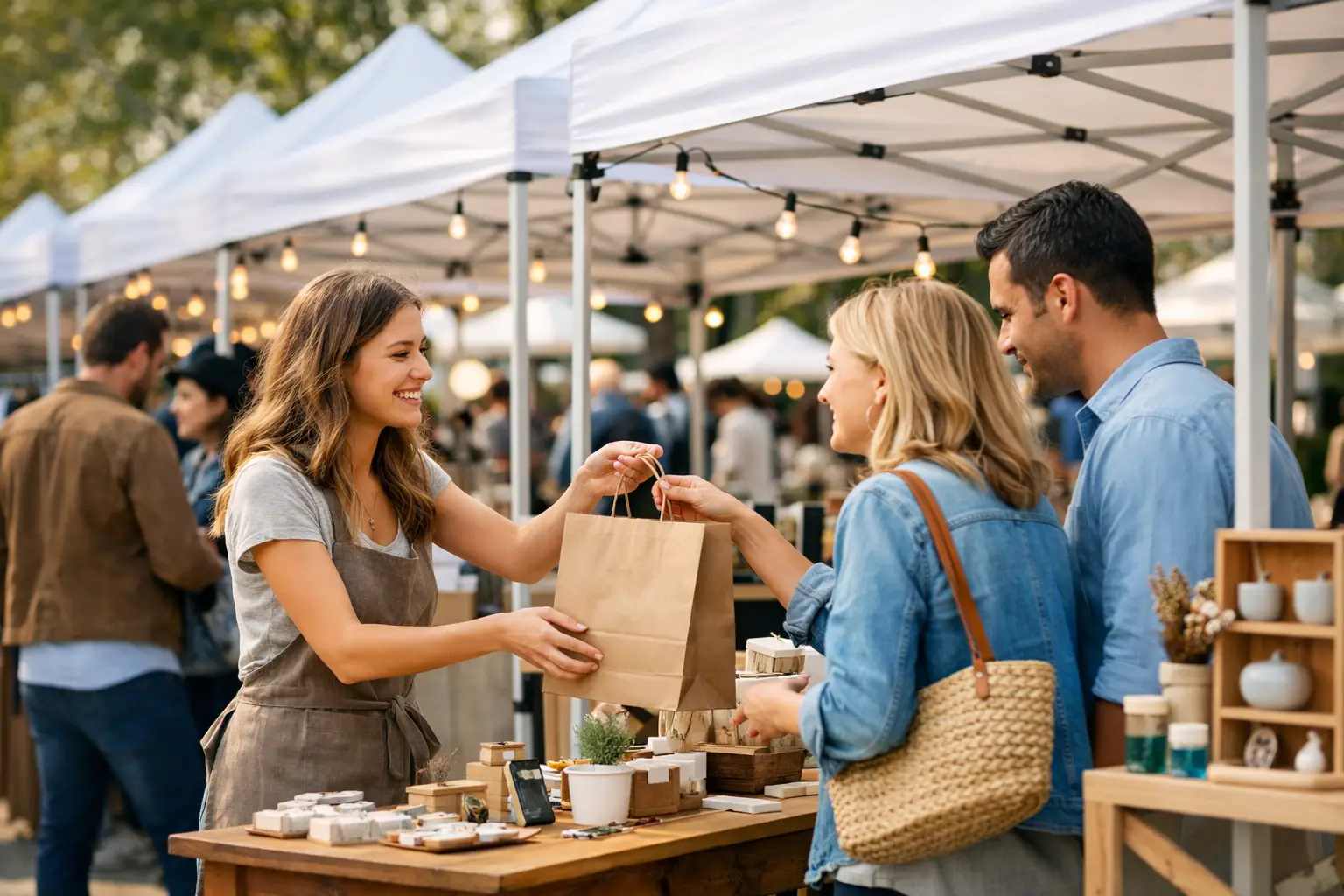
A pop-up market is not just a row of trestle tables in a car park. It is a temporary retail precinct with a short window to create sales, connection and a reason to come back. Learning how to run pop up markets means designing that whole experience: the vendor mix, the customer flow, the operational plan and the follow-up after pack-down.
The strongest markets make it easy for people to arrive, browse, buy and share what they found. They also make it easier for vendors to trade well. That balance is what turns a one-off event into a fixture on the local calendar.
Start with a market people can explain
Before booking a venue, get specific about the market's promise. “A local market” is broad. “A Sunday vintage and street-food market for the inner west” gives vendors and attendees a clearer reason to participate. Your concept should guide every decision, from stall fees and music to trading hours and the products you accept.
Choose an audience before you choose a format. A family-focused community market may need shaded seating, accessible paths, kids’ activities and a lower-noise atmosphere. A late-night makers market can support DJs, food traders and a more curated retail line-up. A farmers market needs a different rhythm again, with early set-up, practical parking and repeat produce shoppers.
Recurring markets usually build loyalty faster because vendors can plan stock and customers can form habits. One-off pop-ups can work brilliantly when there is a strong hook, such as a seasonal shopping event, local festival or specialist collector community. The trade-off is that one-off events need more concentrated promotion and may have less room to recover from a slow first day.
Build the numbers before you open applications
A full vendor list is not the same as a viable market. Calculate your break-even point before you announce stall prices. Include venue hire, permits, public liability requirements, power, toilets, security, cleaning, staff, signage, marketing, payment fees and a contingency for weather or last-minute equipment needs.
Then work backwards from your realistic capacity. If 40 stalls fit comfortably but you need the income of 60 stalls to break even, the site or cost base needs to change. Overcrowding stalls might increase fee revenue on paper, but it damages vendor sales, customer movement and the overall look of the event.
Set fees that reflect the opportunity and the infrastructure provided. A powered food site, for example, should not be priced like an unpowered three-metre craft stall. Be clear about what is included: site dimensions, vehicle access, power limits, bump-in times, tables, lighting and marketing support. Surprises create disputes at the exact moment your team needs to focus on event delivery.
Keep a reserve fund. Outdoor events are exposed to rain, wind, heat and site changes. A practical buffer lets you hire extra shade, replace damaged signage, bring in more bins or respond properly when conditions shift.
Curate vendors for variety, not just volume
Vendor selection determines whether attendees browse for ten minutes or stay for two hours. Aim for a useful mix of categories, price points and reasons to purchase. Too many sellers offering near-identical candles, jewellery or dessert boxes makes every stall work harder for the same customer.
A structured application process helps you assess more than product quality. Ask about trading history, food approvals where relevant, insurance, equipment, power needs, social channels and preferred site type. Photos matter, but so does reliability. A polished brand that regularly arrives late or ignores event instructions can create more operational pressure than it brings value.
For markets with limited space, curate with intention. Give customers anchors such as excellent coffee, compelling food and a few recognisable local brands, then add discovery through emerging makers, speciality retailers and rotating vendors. Regulars appreciate familiar favourites, but they also need something new to find.
Communicate decisions quickly and professionally. Accepted vendors need a clear next step. Waitlisted vendors need realistic expectations. Unsuccessful applicants should leave with enough clarity to consider applying again, especially if the issue is category saturation rather than product quality.
How to run pop up markets with a site plan that sells
A good site plan protects safety and improves spending. Start with the non-negotiables: emergency access, exits, accessible routes, toilets, waste points, loading areas, power sources and any venue restrictions. Only then place stalls.
Put high-demand and high-traffic vendors where they help draw people through the site, rather than creating a bottleneck at the entrance. Food zones need space for queues, seating and rubbish management. Keep hot equipment and generators safely managed, and avoid placing food queues across primary walkways.
Think about sightlines. Attendees should be able to see that there is more market beyond the first row. Use signs at decision points, identify amenities clearly and create simple zones where useful. A customer who cannot find the toilets, ATM alternative, information point or exit is less likely to feel relaxed enough to keep browsing.
Your bump-in plan deserves the same care as your public layout. Allocate arrival windows, explain vehicle routes and make clear when vehicles must be off-site. If 30 vendors turn up at once with utes, trailers and stock, a calm morning can become a safety issue quickly. Give every vendor a site number, map and contact process before event day.
Make event-day operations visible and calm
Customers rarely notice strong operations, which is exactly the point. They should see a lively, well-run market rather than staff chasing answers. Create a run sheet covering bump-in, safety checks, opening, programmed moments, vendor check-ins, cleaning rounds, weather reviews, bump-out and incident escalation.
Assign clear owners for each job. One person should not be trying to manage vendor arrivals, answer attendee questions, resolve power problems and post social content at once. Even a small market benefits from a designated operations lead, vendor contact and customer-facing point of contact.
Prepare for the moments that test the plan: a vendor no-show, a card terminal outage, a damaged marquee, a first-aid issue or a sudden downpour. Keep emergency contacts, incident procedures and essential supplies available to the team. Document incidents while details are fresh, then review them after the market to improve the next one.
Digital tools reduce the manual chase. A platform such as Evntle can bring vendor applications, site allocation, event listings and operational information into one connected workflow, rather than leaving organisers to reconcile forms, spreadsheets and group messages during bump-in.
Promote the experience, not an empty date
Promotion starts when vendors are confirmed, not a few days before gates open. Your market’s event page and social posts should answer the practical questions first: where it is, when it runs, how to get there, entry details, accessibility, pets, parking and whether it is weather dependent.
Then make the line-up the story. Feature vendors with specific products and personalities: the ceramicist releasing a new collection, the food truck serving regional flavours, the vintage seller bringing a rare denim edit. Ask vendors for high-quality images and give them ready-to-share event details. They have their own audiences, and they are often your most credible promoters.
Use short, repeatable messages as the date approaches. Early promotion builds awareness; the final week creates urgency with vendor reveals, product previews and transport reminders. On the day, share real scenes from the market. The aim is not only to drive late arrivals but to show potential future attendees what the event feels like.
Measure what will make the next market better
Attendance matters, but it is only one measure. Track vendor applications, acceptance rates, no-shows, stall renewal interest, attendee acquisition sources, social engagement, common questions and operational incidents. After each event, ask vendors what affected their day: foot traffic, customer quality, site location, facilities, communication or timing.
Look for patterns rather than reacting to one loud complaint. If food vendors sell out early while retail traders report low dwell time, the market may need more seating, better flow or a stronger reason for customers to browse beyond lunch. If attendees repeatedly ask whether dogs are allowed, your event information may be hard to find.
The useful question is not whether the market felt busy. It is whether the right people came, vendors had a fair opportunity to trade, and the operation can improve without adding unnecessary complexity.
A market earns its reputation one well-managed trading day at a time. Give vendors a fair, organised place to sell, give attendees an experience worth sharing, and make every event a little easier to return to than the last.
📖 Related
See the KDS and POS in action — try the live demo or create a free account.