
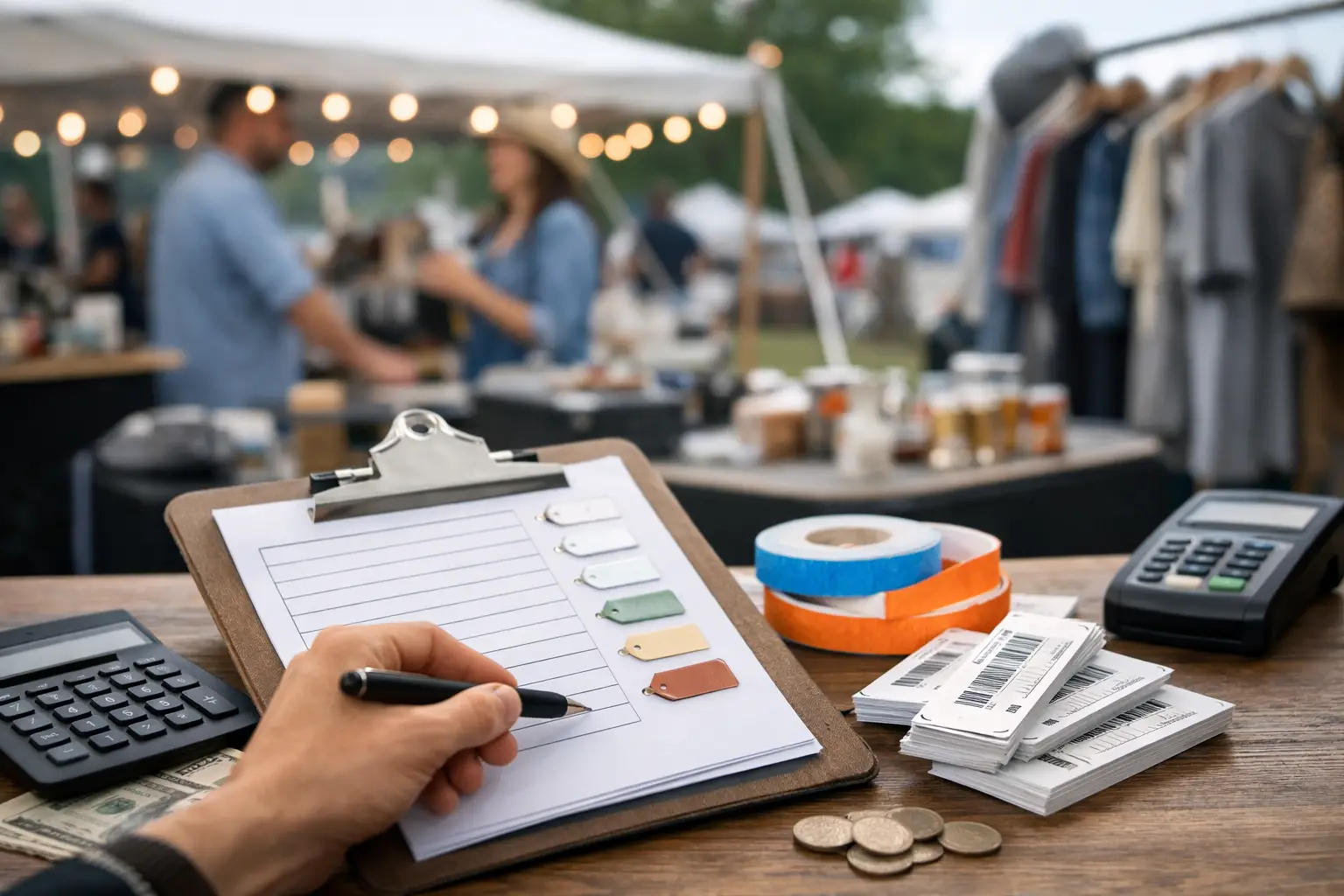
A $5 price difference can decide whether a customer buys now, walks to the next stall, or comes back after a lap of the market. Market product pricing is not about finding one magic number. It is about setting prices that cover your real costs, suit the crowd in front of you and make buying feel simple during a busy event day.
For a candle maker at a Saturday craft market, a food truck at a night festival and a vintage seller at a fair, the maths looks different. But the commercial goal is the same: every sale needs to contribute to profit, not just turnover.
Start market product pricing with your true cost
The first number on a price tag should not come from a competitor’s chalkboard. It should begin with what it actually costs to get that product ready to sell.
For physical products, calculate the direct cost of materials or wholesale stock, packaging, labels and any labour required to make or prepare each item. Food operators should include ingredients, containers, napkins, sauces and wastage. If you sell apparel, factor in stock cost, alterations, tags and bagging.
Then account for event-specific costs. Your stall fee, travel, fuel, parking, card processing fees, insurance, staff wages and equipment all need to be recovered across your expected sales. A $30 handmade item may have a $9 materials cost, but it is not a $21 profit if the day also includes a $180 site fee, two hours of travel and a card payment fee on every transaction.
A useful starting formula is:
Selling price = product cost + share of event costs + desired profit
The share of event costs depends on realistic volume. If you expect to sell 60 items, divide your recoverable event costs across 60, not across the 200 items you wish you could sell. Being conservative here protects your margin when weather, foot traffic or competing events affect turnout.
Price for the event, not just the product
Your customer is buying in a particular setting. That setting changes what feels fair, convenient and worthwhile.
At a local farmers market, shoppers may be happy to pay for freshness, traceability and products made nearby. At a large music event, speed and portability can matter more than detailed product comparisons. At a collectible or gaming convention, buyers may accept premium pricing for rarity, condition and specialist knowledge.
This does not mean raising prices simply because you are at an event. It means matching the price to the value customers can see and the experience you are delivering. A coffee served quickly, a gift boxed on the spot, or a vintage item with clear provenance has value beyond its base cost.
Consider the audience before you pack the ute. Is the event family-focused, design-led, budget-conscious or premium? Are customers likely to make a quick impulse purchase, browse for gifts or plan a larger purchase? A $12 entry-level item may create more first-time sales at a community market, while a carefully presented $85 limited-run piece may be exactly right for a curated makers fair.
Build a price ladder customers can understand
A stall with only expensive products can lose customers who want to try something small. A stall with only low-priced products can create a lot of work without enough return. A price ladder gives shoppers a clear way in while creating room for higher-value purchases.
Most vendors benefit from three levels: an accessible item for an easy first purchase, a core range where most sales and margin sit, and premium products for customers ready to spend more. For example, a ceramicist might offer $15 trinket dishes, $45 mugs and $120 serving platters. A food vendor might have a simple snack, a standard meal and a shareable bundle.
The entry product is not there to be a loss leader forever. It should still be profitable. Its role is to reduce hesitation, introduce customers to your brand and make it easier to add a second item.
Bundles can work well when they make a decision easier rather than merely discounting your range. Three soaps for $30, a meal plus drink deal, or a print with a ready-to-frame option can raise average order value. Check the margin first. A bundle should reward customers for buying more while still paying for the extra stock, packaging and transaction costs involved.
Make prices easy to see and easier to pay
At a busy market, unclear pricing creates friction. Shoppers do not always want to ask, especially if they are comparing stalls or managing kids, bags and a queue. Clear price signs help customers decide faster and reduce repetitive questions for your team.
Use readable signage at eye level and place prices beside the relevant product. If products vary by size, flavour or condition, show the difference clearly. Avoid a sign that says “from $10” when most items are actually $35. That may get attention, but it can also damage trust.
For Australian vendors, displayed prices should be transparent about GST where it applies. If a compulsory surcharge applies to a payment method, make it clear before payment. In practice, the cleanest event experience is usually to build ordinary card costs into your pricing rather than surprise someone at the terminal.
Your point of sale should match the signs. When a customer sees $25 on the shelf but hears $27 at checkout, the issue is not only the extra $2. It is the loss of confidence. Keep product names, variants, prices and stock counts accurate across your POS, vendor storefront and event listing so staff can serve quickly from any device.
Test price points without confusing regulars
Pricing improves through observation, not guesswork. The right question is not simply, “Did it sell?” Ask what sold, at what time, in what combination and with what margin.
Try one controlled change at a time. You might test a $28 price against $30 for a core product across similar events, or introduce a bundle at one market before rolling it out. Changing every price at once makes it hard to learn what influenced the result.
Track units sold, revenue, average transaction value and gross profit by product. Also note practical context: rain, event attendance, stall position, nearby competitors and whether you ran out of a popular line early. A sell-out is not automatically a win if you priced too low and left demand unmet. Equally, a slow-selling premium item may be worth keeping if it lifts perceived quality and attracts customers into your range.
For recurring events, your data becomes a commercial advantage. Over time, you can plan stock levels, set better price points and know which products deserve prime display space. Evntle gives vendors and organisers a shared operating view of event commerce, helping sales data become a useful decision rather than a pile of end-of-day receipts.
Know when to hold your price
When sales are slow, discounting is tempting. Sometimes it is sensible, particularly for perishable stock near the end of a food event or seasonal inventory you will not carry forward. But an automatic discount can train customers to wait and can erode the value of carefully made products.
Before reducing a price, identify the real issue. Perhaps people are not noticing the product, the sign does not explain its value, the range lacks an entry option, or the queue makes checkout feel too slow. A better display, a product demonstration or a bundle may solve the problem without cutting margin.
There are also times when a price increase is necessary. Supplier costs rise, labour takes longer than expected, or event fees change. Explain value through quality, portions, ingredients, craftsmanship or service, then make the change cleanly. Small, frequent increases are often easier to manage than absorbing costs for a year and making one dramatic jump.
Give organisers a role in better pricing
Organisers influence vendor pricing more than they may realise. Clear stall fees, accurate attendance expectations, practical loading access and reliable event operations help vendors price with confidence. Late changes, unclear site plans and hidden costs make it harder for small businesses to forecast their day.
A well-balanced vendor mix matters too. Ten stalls selling the same product can trigger a race to the bottom, while thoughtful category planning gives each business a fair chance to trade. Organisers do not need to dictate what vendors charge, but they can create the conditions for sustainable commerce.
Good market product pricing leaves room for the vendor to grow, the organiser to run a viable event and the customer to feel good about what they bought. Put that balance on every price tag, then let the results guide your next event.
📖 Related
See the KDS and POS in action — try the live demo or create a free account.