
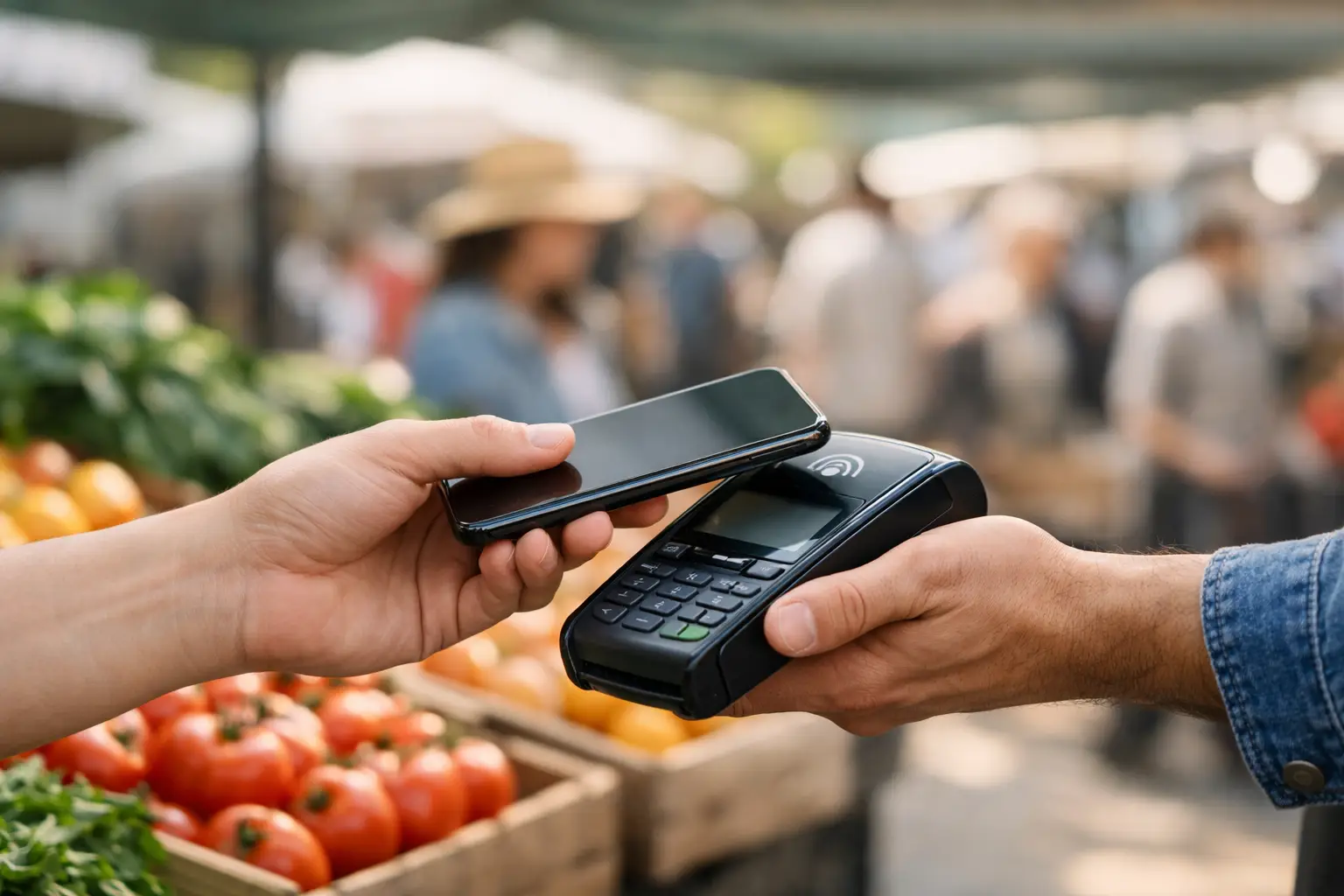
A customer has chosen a candle, a coffee, or a fresh produce box. They have their mobile or card in hand, the queue is growing, and they ask the question that decides whether the sale stays quick: can markets accept contactless payments? Yes - and for many Australian markets, tap-to-pay is now a basic part of a good stallholder and attendee experience.
The better question is whether your market can support contactless payments reliably across every stall, even when mobile reception is patchy, queues build after the morning rush, or multiple vendors need help at once. That comes down to the right payment setup, clear organiser rules, and practical event-day operations.
Can markets accept contactless payments at every stall?
Markets can accept contactless payments when individual vendors have a compatible point-of-sale system and merchant account, or when an organiser provides a centralised payment setup. Contactless generally includes tap-enabled debit and credit cards, mobile wallets such as Apple Pay and Google Pay, and EFTPOS transactions through a card reader.
For most community markets, craft fairs, food events and pop-up retail events, vendors run their own terminals. They process their own sales, issue their own receipts, manage refunds, and handle any applicable card fees. This gives each business control, which matters when a market includes a mix of sole traders, food vans, retailers, and charities.
A central payment model can work too, particularly for ticket sales, a shared merchandise counter, or an organiser-operated bar. It is less practical for a general market with dozens of independent stalls. The organiser would need accurate vendor reporting, payout processes, refund controls, and clear agreement on who pays fees and handles customer disputes.
Why tap-to-pay has become a market essential
Cash still has a place at markets. Some customers budget with it, some regional sites have unreliable reception, and a float helps when a payment device fails. But cash-only sales create friction when attendees arrive expecting to tap their phone.
Contactless payments help vendors move queues faster, especially at food stalls where a delay affects the next customer before it affects the current one. It also reduces the need to count change during peak trade, lowers the amount of cash carried home, and provides a clearer record of sales.
For organisers, widespread card acceptance can improve the event experience beyond the checkout. Attendees who know they can pay easily are more likely to browse longer, try an extra food stall, or make an impulse purchase from a new maker. That supports vendor retention and gives a recurring market a stronger reputation.
There is a trade-off. Card processing costs money, and small-value transactions can feel expensive when margins are tight. Vendors should factor payment costs into their pricing rather than making a rushed decision at the counter. If a surcharge is used, it must be transparent and comply with Australian payment rules. Many sellers instead choose to absorb the cost as part of operating a convenient stall.
What vendors need to take contactless payments
The setup does not need to be complicated, but it does need to be tested before market day. A vendor needs a contactless-capable card reader or tap-to-pay app, a compatible mobile or tablet, a connected bank account, and sufficient battery power for a full trading day.
A phone-based tap-to-pay option can be a smart starting point for a small stall. It reduces hardware to carry and lets a seller take card payments directly on an eligible mobile. A dedicated terminal may be the better choice for busy food vendors and high-volume retailers, particularly where staff need to serve customers while the owner handles stock or customer questions.
Receipts matter too. Email and SMS receipts are efficient, but a customer should not be forced to share personal details just to complete a purchase. Make sure staff know how to skip a receipt, resend one if needed, and locate a transaction when a customer returns with a question.
Prepare for weak signal, not perfect conditions
An event held in a showground, underground hall, regional oval, warehouse, or crowded convention space can have inconsistent mobile coverage. A payment terminal may work perfectly at setup and struggle once thousands of mobiles are competing for the same network.
Before committing to a site, organisers should check reception across the trading area, not just at the entrance. Vendors should know which networks perform best and bring a backup option where possible, such as a second SIM-enabled device, mobile hotspot, or terminal that can store approved offline transactions.
Offline functionality is useful, but it is not a guarantee of payment. The transaction may be accepted later or declined once the terminal reconnects. Vendors need to understand their provider’s rules, transaction limits, and risk settings before relying on it. Never promise attendees that every tap will work without an internet connection.
Battery planning is equally important. A fully charged reader can still run flat during a long Saturday market if it is paired to a mobile, printing receipts, or processing constant transactions. Bring charged power banks, cables, and a protected charging area behind the stall. For food vans and larger setups, reliable power access should be part of the site plan.
What organisers should set before vendor bump-in
Contactless acceptance works best when it is treated as an event operation, not as an optional last-minute vendor detail. Include your payment expectations in vendor applications and pre-event information. You do not need to mandate one provider, but you can set a clear standard: vendors must be able to accept card or mobile payments, or must clearly advertise if they are cash only.
Give stallholders practical site information early. Let them know the expected attendance, mobile coverage findings, available power, bump-in times, and where they can seek help if their device fails. A vendor selling jewellery from a trestle table needs different support from a food operator running multiple terminals during lunch service.
Organisers should also decide how attendees will find cash access if it is needed. An ATM nearby can help, but it should not be treated as a substitute for modern payment options. If your market regularly attracts families, tourists, or visitors discovering the event through social channels, clear payment information removes uncertainty before they arrive.
A connected event platform can make this easier by combining vendor onboarding, event listings, stall operations, and sales tools in one workflow. With Evntle, organisers and vendors can reduce the back-and-forth that often leaves key details like payment readiness buried in an email thread.
Build a payment plan that protects the customer experience
A single failed terminal should not stop a stall from trading. Vendors should have a simple fallback plan and make sure every staff member understands it. That could mean switching to a backup device, accepting cash temporarily, moving to a better signal point within the stall, or taking an item aside while the customer retries.
Avoid asking customers to tap repeatedly without checking the terminal response. Duplicate charges can happen when communication drops at the wrong time. If there is uncertainty, review the transaction history before trying again. A calm explanation at the counter is far better than sorting out a disputed payment after the market has closed.
For larger events, create an escalation contact for payment and connectivity issues. This is not about becoming every vendor’s technical support desk. It is about having someone who can direct a stallholder to power, identify a site-wide outage, communicate with vendors quickly, and prevent a small issue becoming a line of frustrated attendees.
Choosing the right approach for your market
There is no single best contactless setup. A fortnightly farmers market may prioritise simple terminals, battery packs, and strong network coverage. A large convention may need multi-device sales, staff permissions, inventory tracking, and a clear refund process. A craft market with first-time sellers may need payment guidance included in its vendor welcome pack.
The common requirement is consistency. Attendees should not have to guess which stalls accept a card, whether a food vendor can take a mobile wallet, or why a queue has stopped moving. Make payment readiness part of your market standard, test the practical details before gates open, and give vendors a workable backup. When checkout feels easy, people spend less time searching for cash and more time discovering the businesses they came to support.
📖 Related
See the KDS and POS in action — try the live demo or create a free account.