
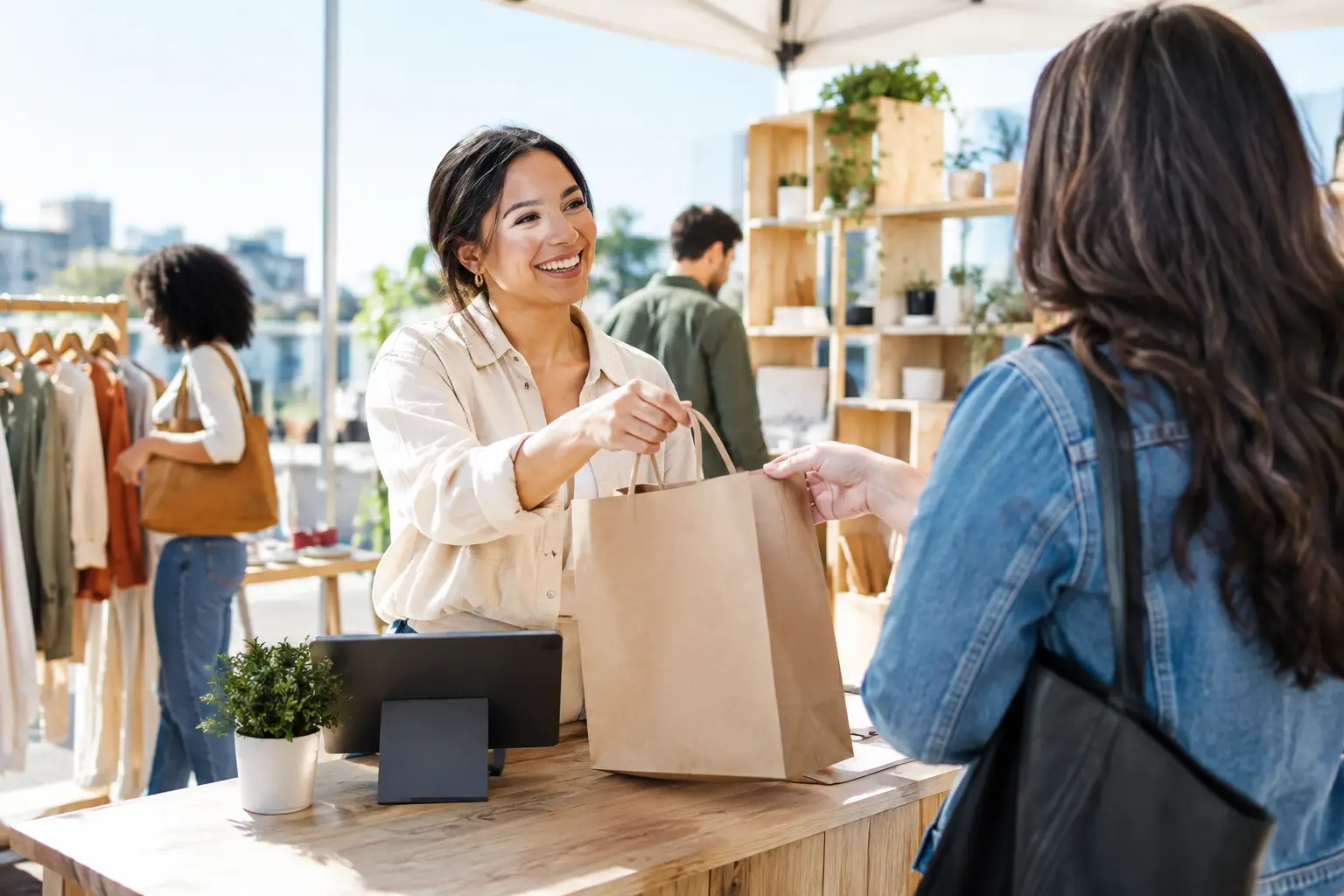
A busy market aisle gives a vendor only a few seconds to earn attention. A sharp display helps, but pop-up retail works best when the stall is treated as more than a temporary counter. It is a live shopfront, a customer research point, a marketing channel and a reason for people to return to the next event.
For vendors, that means arriving with a clear sales plan rather than simply unpacking stock. For organisers, it means designing an event where great stalls are easy to discover, easy to buy from and worth revisiting. The strongest pop-ups create value before the gates open, while customers are browsing on their mobiles, and after the marquees come down.
What pop-up retail really means for live events
Pop-up retail is a temporary in-person selling experience. It can be a Saturday farmers market stall, a food vendor at a music festival, a collector table at a gaming convention, a vintage rack at a laneway market or a branded activation at a car show.
The temporary format is part of the appeal. Customers expect something timely, local or limited. They may find products they cannot get at a major chain, meet the maker, taste a new menu item or buy from a seller they have followed online. That sense of discovery is valuable, but it is not enough on its own. A stall still needs to be easy to find, understand and buy from.
Unlike a permanent shop, a pop-up has a short window to recover setup costs, labour, travel and site fees. It also has limited room, often variable weather and a changing crowd. Every decision matters: the event you choose, the stock you take, the payment process, the layout of your table and how you collect customer details.
The trade-off is clear. A pop-up cannot offer the full range or predictable foot traffic of a fixed retail location. In return, it gives independent businesses a lower-commitment way to test demand, meet buyers face to face and build visibility in the communities where they want to grow.
Build a pop-up retail plan before event day
A good event fit is more useful than a big crowd. A handmade jewellery seller may do better at a curated design market than at a general food festival with huge attendance. A mobile food operator needs to consider dwell time, competing cuisine, power access and whether people can comfortably eat on site. A gaming merchant needs an audience that comes ready to browse, trade and talk product.
Before applying, look at the event’s customer profile, trading hours, vendor mix, site fee, bump-in requirements and promotion plan. Ask practical questions: Is power included? What happens in rain? Can vehicles access the site? Are there restrictions on packaging, signage or food service? What does the organiser do to help attendees discover vendors before they arrive?
Set one primary goal for the event. It might be revenue, product testing, clearing seasonal stock, building a local following or generating catering enquiries. You can have secondary goals, but one priority makes stock and staffing decisions easier.
Choose stock for speed and conversation
At a pop-up, too much choice can slow customers down. Bring your proven sellers, a few high-margin add-ons and one or two attention-grabbing products that make people stop. If your products need explanation, display a simple sign that answers the first question customers ask: what it is, who it is for and why it is different.
Price points should support quick decisions. A low-cost entry product gives new customers an easy first purchase, while bundles can lift average order value. For food stalls, a compact menu keeps queues moving. For makers and specialty retailers, clearly labelled pricing prevents awkward pauses and lets staff focus on the story behind the product.
Stock depth depends on the event and your supply capacity. Running out early can create excitement, but it can also mean lost sales. If you expect limited quantities, tell people when restocks are likely or give them a way to order later.
Design the stall around customer flow
Your stall needs to work from the footpath, not just from behind the counter. A passer-by should quickly see your category, your hero products and where to pay. Keep the front open where possible, put bestsellers at hand height and avoid filling every surface with signs, tubs and boxes.
Think through the queue before it forms. Food operators need a clear order point and collection point. Retail vendors need enough space for customers to browse without blocking payment. If an item requires personalisation, sizing or a longer consultation, decide whether one team member will handle it while another keeps transactions moving.
Bring backup essentials: charged payment devices, mobile data options, extension leads where approved, tape, bags, weather protection, change if you accept cash and a simple incident plan. Event-day problems are rarely dramatic, but small interruptions become expensive when a line is waiting.
Make buying easy, even when the crowd is not
The moment a customer decides to buy is not the time to introduce friction. Contactless payment should be ready, prices should be visible and staff should know how to handle refunds, exchanges and out-of-stock items. If your internet connection is unreliable, test your point-of-sale setup before opening and have a fallback process.
Fast payment does not mean impersonal payment. A friendly question such as “Is this your first time at the market?” can start a useful conversation without holding up the queue. Vendors often learn more in one trading day than from weeks of online comments: which colours people pick up, what objections come up, what customers think the product costs and what they wish you made.
Capture those signals. Record popular lines, common requests and the hours when sales peak. Separate genuine demand from curiosity. Plenty of people may photograph a product, but repeat questions about a size, flavour or delivery option are often stronger evidence for your next range decision.
Turn event visitors into returning customers
A sale is valuable. Permission to stay in touch is often more valuable.
Give customers a reason to join your list, follow your storefront or save your business. That could be early access to the next drop, an event-only offer, restock updates or notice of where you will trade next. A QR code can work well, but it needs a clear benefit and should lead to a mobile-friendly page, not a confusing maze of links.
For many small businesses, the best follow-up is simple: thank customers, share upcoming event dates and show the products they saw in person. Do not treat every contact as a reason for daily promotion. Useful updates build trust; constant sales messages train people to ignore you.
This is where an integrated event platform can help. With Evntle, vendors can combine event presence, storefront visibility, point-of-sale activity and customer discovery instead of trying to reconcile separate tools after each market. Organisers can also make vendor line-ups easier to browse before the event, helping attendees arrive with a plan and vendors start the day with warmer interest.
How organisers make pop-ups worth returning to
Organisers shape the commercial outcome of every stall. Vendor quality matters, but so do clear applications, thoughtful site planning, practical load-in instructions and a layout that encourages people to circulate rather than bottleneck around one attraction.
A useful vendor mix avoids direct duplication while giving customers enough variety to explore. That does not mean limiting every category to one seller. It means considering how products, price points and audiences work together. Three excellent food vendors with distinct offers may create a stronger destination than ten near-identical stalls competing for the same lunch order.
Promotion should feature vendors as part of the event, not as an afterthought. Attendees want to know what they can buy, eat, discover and do. Vendor previews, searchable listings and favourites help people decide to attend and make it easier for them to find a stall once they are on site.
On the day, communication needs to be fast and specific. Vendors need one reliable place for weather notices, access changes, safety updates and operational instructions. After the event, reporting should go beyond attendance. Organisers can review vendor performance signals, application trends, customer feedback and operational issues to improve the next edition.
Measure what matters after pack-down
Gross sales are the obvious number, but they are not the full story. Compare revenue with event costs, including travel, staff time, stock, merchant fees and the opportunity cost of being away from your usual business. A high-sales day can still be a poor result if margins were thin or the event demanded too much labour.
Also measure new customer contacts, repeat purchases, product feedback, online visits after the event and invitations to future markets. A slower first event can be worthwhile if it places your business in front of the right local community. Conversely, a packed event may not be worth repeating if customers are not your customers.
Keep notes while details are fresh: where your stall sat, what the weather did, which displays worked, when the queue formed and what you would pack differently. Over several events, those notes become a practical operating playbook rather than a collection of guesses.
The next great stall rarely comes from a bigger banner alone. It comes from making every encounter easier to discover, easier to buy from and easier to continue after the event.
📖 Related
See the KDS and POS in action — try the live demo or create a free account.