
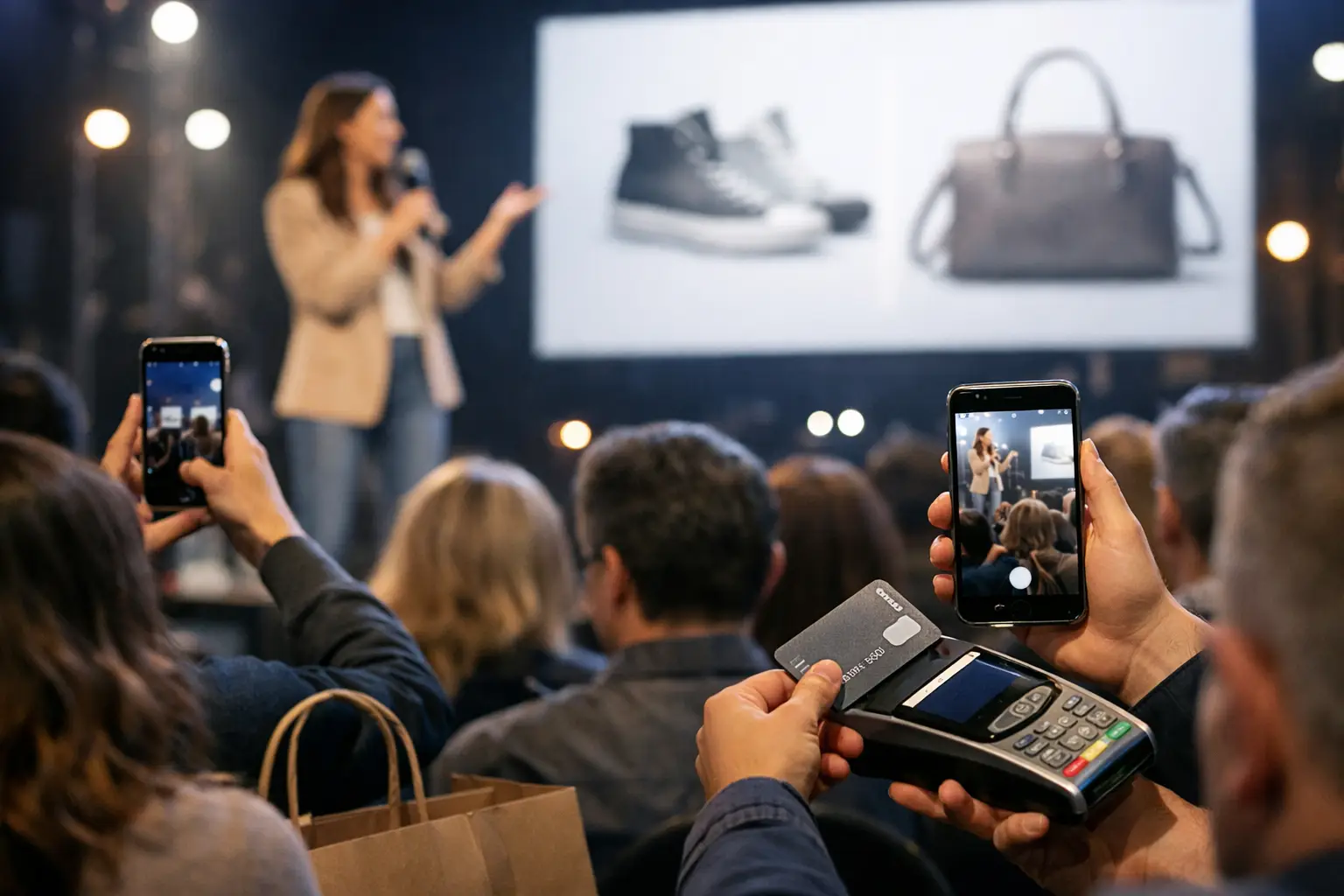
A Saturday market can look full and still leave money on the table. The queue is slow, shoppers cannot find the stalls they came for, vendors run out of bestsellers without knowing it, and organisers spend the day answering the same questions. The most useful live event commerce trends address those practical friction points. They make it easier to discover, buy, return and run a better event.
For market organisers, stallholders and mobile operators, the shift is not about turning a local event into a giant online retailer. It is about connecting the physical buzz of a fair, food festival, convention or car show with the information and tools people expect before, during and after they attend.
Live event commerce trends are becoming operational priorities
The line between event operations and commerce is getting thinner. A vendor application affects the quality of the attendee experience. A site plan influences foot traffic and sales. A product page can persuade someone to attend before the gates open. Payment data can help a stallholder decide what to bring next weekend.
That means organisers and vendors are moving away from a stack of disconnected forms, spreadsheets, payment terminals and social posts. The goal is not to add technology for its own sake. It is to create one workable flow from event discovery through to event-day sales and follow-up.
Event discovery starts before event day
People increasingly decide whether an event is worth the trip before they leave home. They want to know where it is, what is happening, which vendors are appearing and whether there is something that suits their interests. For a vintage market, that could mean previewing clothing sellers and record dealers. At a food event, it could mean checking dietary options before joining the queue.
This creates a clear opportunity for organisers. An event listing should do more than publish a date and suburb. It should give attendees a reason to show up, with a useful overview of vendors, categories, activities and practical details. The better the preview, the more likely visitors are to arrive with intent rather than simply browse for five minutes and leave.
Vendors benefit too. A dedicated storefront or profile gives a regular customer somewhere to find them between events, while helping a new customer recognise their stall on the day. Social media still plays a role, but a post disappears quickly. A structured profile keeps event, product and brand information easy to find.
Cashless is standard, but flexible checkout wins
Tap-to-pay is now expected at most live events, from community markets to specialist conventions. Yet the more meaningful trend is flexible checkout. Customers may want to pay by card, mobile wallet, cash, split payment or a digital invoice for a larger order. Vendors need a setup that keeps the queue moving while still recording what sold.
Fast payment is particularly valuable in high-volume moments: the morning coffee rush, a limited product drop, or the final hour of a fair. Every extra step at the till can cost a sale when shoppers have a pram, a dog, a parking deadline or another stall to visit.
There is a trade-off. A complicated POS setup with features no one understands can slow a team down more than it helps. Vendors should prioritise a clear product catalogue, simple payment options, reliable device support and sales reporting they will actually use. If a casual team member cannot process a sale confidently after a short briefing, the system needs work.
The strongest events treat vendors as commercial partners
Vendor experience is becoming a central part of event quality. Good sellers have choices about where to trade, especially in popular regions and busy seasonal periods. They notice whether applications are clear, site information arrives on time, bump-in is organised and organisers communicate changes early.
A polished vendor application workflow is therefore more than admin. It helps organisers collect the details needed to curate the event, manage compliance and avoid last-minute confusion. Categories, power needs, vehicle access, stall dimensions, insurance details and product mix all affect how the event works on the ground.
Better site planning creates better sales conditions
Site planning is often treated as a map problem. It is really a customer-flow and vendor-success problem. Put all similar stalls together and shoppers can compare easily, but the area may become crowded while other zones stay quiet. Spread popular vendors around the site and traffic can improve, though visitors may find it harder to navigate.
The right choice depends on the event. A farmers market may benefit from clear zones for produce, prepared food and artisan goods. A gaming convention may need high-demand merchants near wide aisles, demo tables near power, and quieter spaces for community activities. At a car show, safety, vehicle access and sightlines may matter more than conventional retail flow.
Organisers should use sales patterns, attendee feedback and incident notes to improve the next layout. If a food queue blocked neighbouring stalls, that is useful commercial data. If attendees repeatedly asked where a category was located, signage and map design need attention. Small operational changes can lift the experience for every business on site.
Real-time communication is replacing event-day guesswork
Event days change quickly. Weather moves in, an access gate closes, a vendor is delayed, or a first-aid issue requires a response. Group chats can be useful, but they become unreliable when key information is buried among messages.
The trend is towards centralised event communications where organisers can provide the right update to the right group. Vendors need bump-in instructions, site allocations and operational notices. Attendees need accurate timing, entry details and alerts that affect their visit. Event teams need an incident record that supports calm decisions in the moment and better planning afterwards.
This is not about making every event feel corporate. It is about reducing avoidable stress. A relaxed, community-led market still needs clear information when rain starts or traffic backs up around the venue.
Data is becoming useful at the stall, not just in a monthly report
For many independent sellers, the most valuable data is simple. Which items sold first? What was the average transaction value? Did sales peak before lunch or near closing? Which event formats produce repeat customers? Those answers help vendors plan stock, staffing and pricing without guesswork.
Organisers can use broader patterns to make stronger decisions about vendor mix, event timing and marketing. If attendees favour a particular category, that does not automatically mean the next event needs twice as many stalls in that category. More competition can dilute individual vendor sales. The better question is whether demand, dwell time and site capacity support a balanced mix.
Data also needs context. Wet weather, public holidays, parking changes and competing local events can all affect turnout. Treat one event as a signal, not a verdict. Over several events, clear patterns become far more useful.
Loyalty is shifting from generic discounts to reasons to return
Repeat attendance is valuable because familiar visitors spend with more confidence and bring friends. But loyalty at live events should not be limited to a basic discount. It can include saving favourite vendors, receiving relevant event reminders, collecting points, early access to limited sessions or being recognised as part of a local community.
The best approach depends on the event category. A weekly market can build habits through regular updates and favourite stall alerts. A yearly convention may focus on pre-event previews and post-event engagement. Food operators may get more value from a simple returning-customer offer than from a complex points scheme.
For vendors, loyalty works best when it feels connected to the real relationship. A customer who follows a ceramic maker, knows their next market date and can find their stall easily is more likely to return than someone handed a generic voucher they forget in a drawer.
What to prioritise next
Do not try to adopt every trend at once. Start with the point of friction that affects revenue or trust most. For a vendor, that may be a faster checkout and a visible online profile. For an organiser, it may be structured applications and a site plan everyone can access from their mobile.
Then connect the next step. Bring vendor profiles into event discovery. Use sales and attendance signals to improve layout. Give customers an easy way to favourite businesses and hear about the next event. A platform such as Evntle is built around this connected model, helping organisers, vendors and attendees work from the same event ecosystem rather than a patchwork of tools.
The event businesses that gain ground will not be the ones with the most software. They will be the ones that make a Saturday at the market easier to join, easier to run and worth coming back for.
📖 Related
See the KDS and POS in action — try the live demo or create a free account.