
Outdoor Event Weather Planning in Australia: A Contingency Guide for Organisers
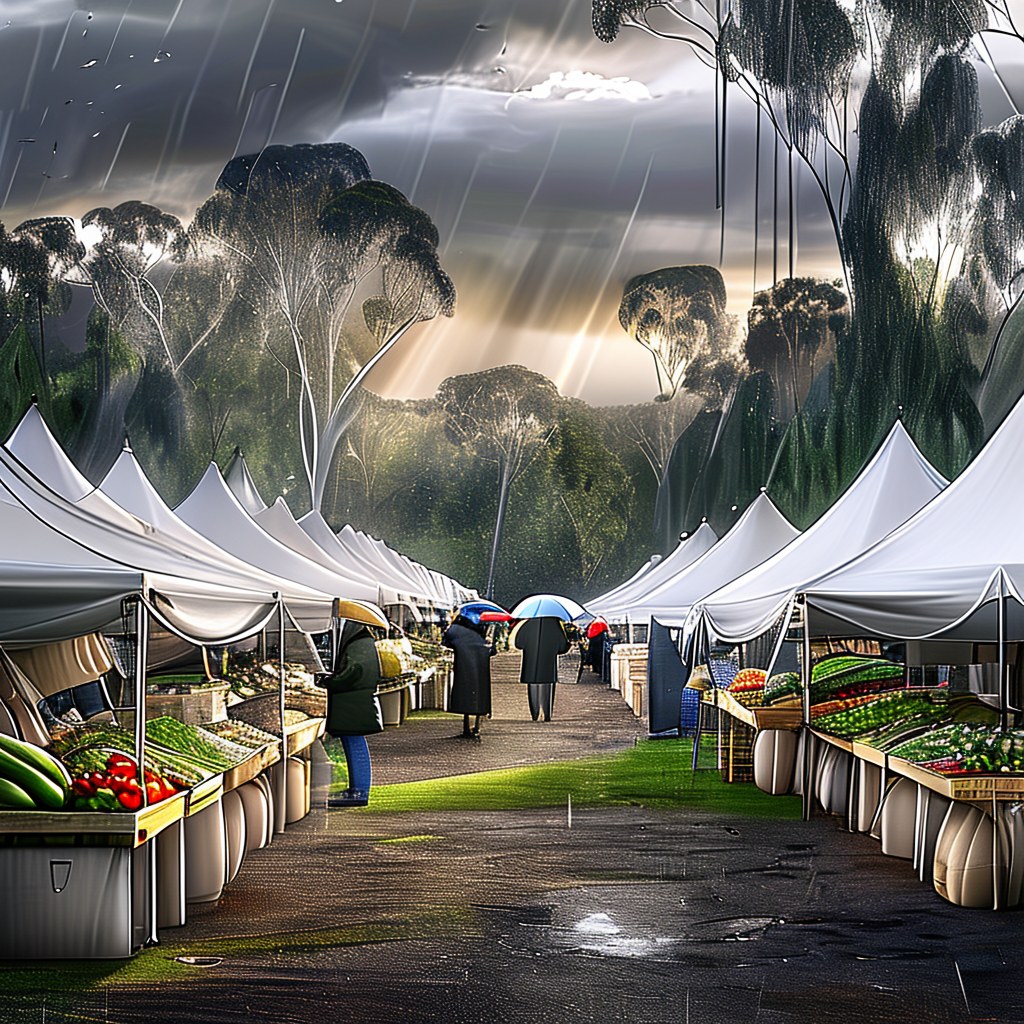
Every Australian outdoor event organiser has a weather story. The spring market that turned grey by 9am. The festival that hit 38 degrees before lunch. The Christmas fair where a sudden storm cell lifted a marquee while stallholders scrambled. The events that ride out the weather are rarely the lucky ones. They are the ones that made their decisions weeks earlier, on a clear day, when nobody was panicking.
Weather is the one variable you cannot negotiate with, but you can plan around it. A practical weather contingency plan turns "hope it stays nice" into a set of decisions made in advance: what conditions trigger a change, who makes the call, how vendors and visitors are told, and what happens to everyone's money if the event cannot proceed. This guide walks through building that plan for Australian markets, festivals and outdoor events.
Why outdoor events need a weather contingency plan
Australian conditions are not just rain or shine. Event organisers plan across summer heatwaves, severe thunderstorms with damaging wind and hail, extreme fire danger days, and the sudden cool changes that are a feature of spring in the southern states. Each risk needs a different response, which is why a single "it will probably be fine" attitude is the most expensive risk management strategy there is.
There are also practical reasons to write the plan down. Council event permits commonly ask how you will handle adverse weather, and a documented response is part of a defensible safety case. Insurers expect to see reasonable contingency planning when you claim. And vendors who know exactly what happens when the forecast turns will trust you with their stock, their fees and their next event.
A good weather plan protects four things:
- People — visitors, vendors, staff and volunteers, especially in heat, lightning and damaging wind.
- Property — marquees, stalls, stock, power equipment and the site itself.
- Reputation — how fairly you treat ticket holders and vendors when things go wrong.
- The next event — a handled weather day keeps vendors booking and visitors returning.
Set your weather policy before you need it
The first decision has nothing to do with the sky. It is deciding whether your event is genuinely "rain or shine" or whether it has cancellation and postponement thresholds. Rain or shine is a legitimate model for small, low-risk markets where stallholders are equipped for wet weather and the audience is local. It is a dangerous default for events with expensive infrastructure, food safety exposure or visitors travelling long distances.
If you run with thresholds, define them in writing. Base them on official Bureau of Meteorology warnings and forecasts rather than a feeling. Common thresholds used by Australian events include:
- A total fire ban day in the council area, which can restrict gas cooking and force closure.
- A severe thunderstorm or severe weather warning covering the site for the event window.
- Sustained wind speeds that exceed your marquee and stall equipment specifications.
- Extreme heat where the forecast maximum makes it unsafe for stallholders or visitors (many events set a ceiling around 38–40°C).
- Heavy rain forecasts that would turn the site into mud and make access unsafe.
Name the person with authority to make the call, and a back-up for when that person is on site and busy. Write the policy into your vendor terms and ticket terms at booking time, not on the morning of the event. State plainly what happens to stall fees and tickets if the event is cancelled or postponed. A vendor who agreed to a credit policy in February is far easier to talk to in November than one hearing about it for the first time in the rain.
Design the site for Australian weather
Weather plans fail on the ground when the site itself is fragile. Site selection and setup should assume the worst case you are willing to run in, not the average case. Choose ground that drains rather than a low point that turns to bog, and avoid positioning the event under large, decaying trees where branch drop is a real risk in wind.
Marquees are the backbone of most outdoor events, and wind is what kills them. Every tent should be weighted or pegged to its manufacturer's specification, with no exceptions for "it felt solid". Sandbags, water weights or proper pegging on soft ground are not optional extras; a suddenly lifted marquee is one of the most common serious injuries at Australian outdoor events. Walk the site before opening and remove or secure anything loose that wind could turn into a projectile.
Power in wet weather deserves its own checklist. All electrical equipment should run through residual current devices, leads should be raised off wet ground where possible, and anything that looks damaged should be isolated immediately. On total fire ban days, check whether gas cooking and other flame-based equipment is permitted in your council area, and be ready to suspend it.
For heat, plan shade and water as infrastructure, not goodwill. Drinking water points, shaded rest areas and a cool-down space for vendors and visitors should be on the site plan before the day. Food vendors also need heat guidance around display times and temperature control — see our guide to food safety compliance for market vendors for the details that matter on a hot day.
Give vendors a weather pack, not a weather guess
Vendors are the people most exposed to the weather and the people you can most easily support before the day starts. Send every confirmed vendor a weather expectations pack with the event: whether the event is rain or shine, what your cancellation thresholds are, and a physical checklist for their stall.
The checklist should cover the basics for Australian conditions: a gazebo or marquee that meets your wind specification, weights for every leg, tarps or side walls for driving rain, covers for stock, and a way to secure loose stock and signage. Food vendors should know their obligations for keeping product safe in heat, and all vendors should know how to protect electronic equipment from rain and power from water.
Tell vendors how you will communicate on the day. A single channel — SMS, a vendor WhatsApp group, email or your vendor portal — is better than five channels where messages get missed. Our guide to vendor communication tools covers how to keep a whole stallholder list informed without chaos. Confirm the channel at bump-in, and make clear that the event team will use it for any weather updates, not just emergencies.
Watch the forecast like an operator
From about 48 hours out, the forecast stops being background noise and becomes part of your operating rhythm. Use the Bureau of Meteorology as your source of truth — the public forecast, the radar, and the warnings page for severe thunderstorm, severe weather, flood and fire danger ratings. A phone weather app is convenient, but it is not the reference your decisions should cite.
Build three checkpoints into your schedule:
- Two days out: review the outlook and alert the event team if thresholds look possible.
- The afternoon before: confirm the forecast for the event window, check warnings, and brief key staff and vendors if conditions are marginal.
- The morning of: make the final call early enough that vendors have not loaded the truck and driven an hour for nothing.
Watch for the conditions that change fast: spring cool changes that arrive with damaging wind, afternoon storm cells that build over summer, and fire danger ratings that climb with heat and wind. If your event runs into the afternoon in summer, have a plan for the 2pm–6pm storm window that is common across much of the country.
Make the call and communicate it clearly
When conditions are marginal, use a simple trigger matrix rather than debating the sky on the day. List each risk, the warning or forecast that triggers action, and the action itself. For example: severe thunderstorm warning current for the site at 6am means postpone and notify by 8am; a total fire ban day declared after bump-in means gas cooking stops and the site plan changes; lightning within 10km means visitors move to shelter and stalls pause until the cell passes.
If you decide to postpone or cancel, communicate in a fixed order: event team first, then vendors, then ticket holders and the public. Give vendors the full picture — what happens to their fees, whether the event is rescheduled, and what they need to do about stock and insurance — before they read it on social media. Coordinate the ground response with your site planning and crowd flow so people can leave safely and quickly; our guide to event logistics that keep markets moving covers the day-of operations that matter in an early close.
If the event proceeds in warm or showery conditions, communicate that too. Tell visitors what to bring, where the shelter is, and what is still on. An event that openly handles a grey day keeps far more goodwill than one that pretends the weather is perfect.
If you cancel, protect the next event
Cancellation is not the end of the event, but how you handle it decides whether there is a next one. Apply your published policy consistently. If you promised credits to ticket holders, issue them quickly and make the process obvious. For vendors, the fairest models credit stall fees to the rescheduled date or the next event, with a clear statement about what happens if the vendor cannot make the new date.
Document everything for insurance. Keep the Bureau warnings, the forecast you relied on, photographs of the site and any damage, and records of your decisions and communications. A claim is far easier to make when the paper trail shows a reasonable plan, properly executed. Our event insurance guide for Australian organisers walks through the cover that matters and the evidence insurers expect.
Finally, review. A month after the weather event, pull together the team and ask what worked and what did not. Update the thresholds, the site plan and the vendor pack. Every weather event, whether handled or not, makes the next plan better — which is the real return on writing it down in the first place.
The best weather contingency plan is the one you can execute at 6am in the rain without a meeting. Evntle helps organisers run that side of events — vendor applications and communication, site planning and day-of operations — in one place. Try the live demo to see how it works before your next event day.
Weather planning questions organisers ask
Should my market be rain or shine or should I cancel in bad weather?
Rain or shine suits small, low-risk markets with experienced vendors and a local audience. If you have expensive infrastructure, food vendors with safety exposure, or visitors travelling far, run with defined cancellation thresholds based on Bureau of Meteorology warnings, wind speed, heat and fire danger, and publish them in advance.
What weather conditions should trigger a cancellation?
Common triggers are a total fire ban day in your council area, a severe thunderstorm or severe weather warning covering the site during the event window, sustained wind above your marquee specifications, extreme heat above your safety ceiling, and heavy rain that makes the site unsafe. Write your own thresholds into a trigger matrix before the season starts.
Do I have to refund vendors if the event is cancelled for weather?
Only what your terms say, which is why the policy must be written into vendor agreements at booking. Most organisers credit stall fees to the rescheduled date or next event rather than refunding, and state clearly what happens if a vendor cannot attend the new date. Consistency matters more than the exact model.
How do I keep vendors informed when weather looks risky?
Agree on one communication channel before the event, confirm it at bump-in, and use it for every weather update. Send the first advisory 24 to 48 hours out when thresholds look possible, then a final decision early on event morning so vendors have not already loaded up and driven to site.
📖 Related
See the KDS and POS in action — try the live demo or create a free account.