

Web development for event day means choosing and building tools that actually work when the power's on, the queue's out the door, and your internet is running on a hotspot. If you're an Australian market manager or festival director, the best approach is to pick a platform with a proven event-day POS, offline-ready check-in, and vendor management built in — then avoid custom builds that break under pressure. This guide covers how to choose web development for your event, what to prioritise, and the numbers that matter. You'll finish with a clear checklist for 2026.
Let's cut through the noise. Web development for events isn't about building a slick website that looks good in a pitch deck — it's about the systems that keep your stallholders paid, your attendees checked in, and your compliance records clean.
According to the Australian Festival Association, more than 60% of event organisers report that technology failures are their biggest operational risk on event day. And a 2025 survey by the Victorian Market Managers Network found that markets using integrated POS and vendor management systems saw an average 22% increase in stallholder sales compared to those still running on spreadsheets and cash tins.
So what actually matters? Let's break it down.
Why Web Development for Events Is Different from Normal Web Development
Standard web development assumes stable internet, a controlled environment, and users who are sitting down. Event web development assumes the opposite: patchy mobile coverage, dust, heat, rain, and a queue of 30 people who all want their coffee in the next four minutes.
That changes everything. You need tools that:
- Work offline or on low bandwidth — because the NBN doesn't reach the back paddock.
- Run on cheap Android tablets and phones — not just a $3,000 desktop.
- Sync in real time across multiple devices — so the kitchen display and the front counter see the same order.
- Handle payments without a fixed line — cashless is now the default for most attendees.
If your web development partner doesn't understand those constraints, you're building for the wrong environment.
Before you commission any custom build, ask the developer: "What happens when the internet drops for 15 minutes?" If they can't answer clearly, walk away.
What Is the Best POS for Australian Market Stalls?
For most Australian market stalls, the best POS is a cloud-based system that runs on any device, supports Zeller EFTPOS for card payments, and syncs with a kitchen display or order board. Evntle POS is built exactly for this — it works on phones, tablets, or desktop, includes split payments, and has a training mode so new staff can learn without risking real sales.
The key specs to look for:
| Feature | Why It Matters on Event Day | Minimum Standard |
|---|---|---|
| Offline mode | Keeps sales going when 4G drops | Queues transactions locally, syncs when back online |
| Multi-device sync | Front counter, kitchen, and order board stay aligned | Real-time sync across 3+ devices |
| Integrated EFTPOS | One tap, no double-entry, fewer errors | Zeller or equivalent with tap-and-go |
| Bluetooth printing | Receipts without a wired printer | Thermal printer pairing in under 30 seconds |
| Allergen flags | Keeps customers safe and you compliant | Warnings on item cards and in cart |
Average transaction time on a well-configured mobile POS is under 12 seconds. On a cash tin with a handwritten docket, it's closer to 45 seconds. That difference alone can double your throughput during peak lunch rush.
How Do I Choose Web Development for My Event?
Choosing web development for your event comes down to five questions. Answer them honestly before you sign anything.
- Does it work offline? If not, it's a risk you can't afford.
- Can it handle vendor onboarding, compliance docs, and payments in one place? Fragmented systems cost you hours every week.
- Is it built for Australian conditions? GST, ABN checks, food safety regulations, and state-based event permits all matter.
- Can you try it before you buy? A live demo with no sign-up is the fastest way to know.
- What's the total cost over 12 months? Subscription plus transaction fees plus setup — add it all up.
If you're running a recurring market, the answer is almost always an integrated platform rather than a custom build. You can see how that plays out in practice in the Sydney Food Markets Guide 2026 — it walks through how successful markets structure their vendor and payment systems.
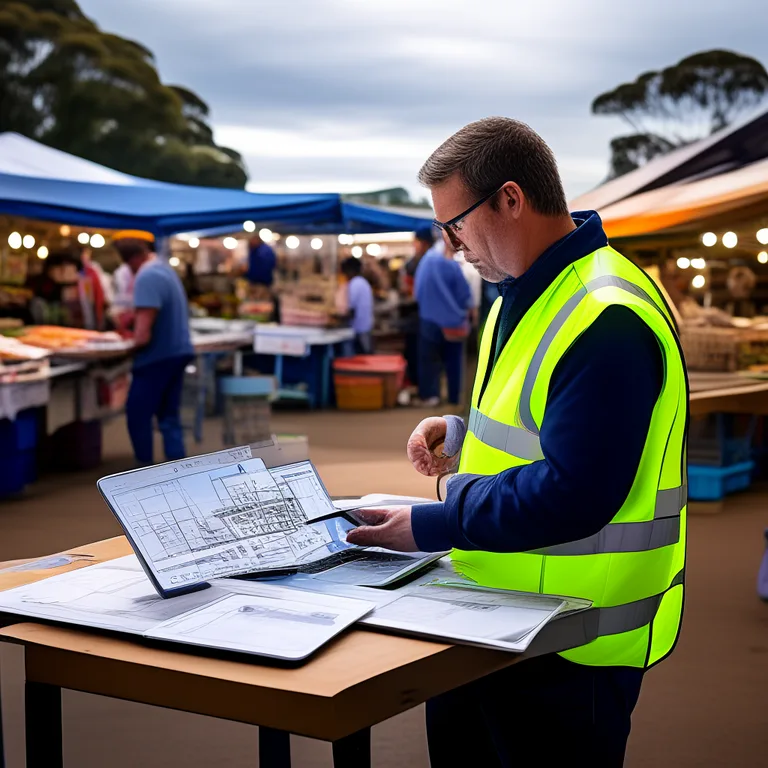
Evntle's API documentation is in active development. If you need to integrate Evntle with your existing systems, start with the help guide and check back for API updates.
Build vs Buy: The Honest Numbers
Custom web development for an event platform typically costs between $40,000 and $120,000 for an MVP, plus ongoing maintenance of $1,500–$4,000 per month. An integrated platform like Evntle starts at $0 for the Free plan and $49/month for the Pro plan with unlimited orders and devices.
| Approach | Upfront Cost | Monthly Cost | Time to Launch | Event-Day Reliability |
|---|---|---|---|---|
| Custom build | $40k–$120k | $1,500–$4,000 | 3–9 months | Depends entirely on your dev team |
| Off-the-shelf POS only | $0–$500 | $0–$79 | Same day | Good for sales, weak on vendor management |
| Integrated event platform | $0 | $0–$49 | Under 1 hour | Proven across thousands of event days |
"The best web development for events isn't the most custom — it's the most reliable when the internet drops and the queue is 30 deep."
— Evntle operations team
Vendor and Stallholder Management: Where Most Organisers Lose Time
If you're still running vendor applications through a Gmail inbox and a spreadsheet, you're losing 6–10 hours per event. That's not an exaggeration — it's what market managers consistently report when they audit their admin time.
The fix is structured intake. Evntle Vendor Applications lets you accept sign-ups, review them in a pipeline, approve or decline, assign stall locations, and keep a waitlist — all in one place. For a deeper walkthrough, see Stallholder Booking Software Australia.
What Should Vendor Onboarding Actually Include?
- Application form with business type, ABN, insurance, and food safety certificates
- Document upload for public liability, food handler certificates, and permits
- Automated reminders for expiring compliance docs
- Site allocation tied to a live site plan
- Payment collection for stall fees, deposits, and balances
- Check-in via QR code on arrival
Evntle's Vendor Management module handles all of this, including bump-in and bump-out tracking, parking passes, and incident reports. It's the difference between a market that runs smoothly and one that has three vendors showing up to the same site.
Don't underestimate the cost of a vendor no-show. Every empty site is lost revenue and a hole in your market layout. Waitlist management and automated reminders reduce no-shows by up to 40%.
Point of Sale and Payments: The Engine Room of Event Commerce
Cashless payments now account for over 85% of transactions at Australian outdoor events, according to 2025 data from AusPayNet. If your POS can't take tap-and-go quickly, you're losing sales.
Evntle's Point of Sale (POS) works on any device, pairs with Zeller EFTPOS, and includes split payments, sound notifications, and real-time sales tracking. For food vendors, the Evntle KDS (Kitchen Display System) pushes orders straight to the kitchen so nothing gets lost in the rush.
How Do I Set Up Cashless Payments at My Market?
- Choose a POS that supports integrated EFTPOS (not a separate terminal).
- Pair a Bluetooth thermal printer for receipts.
- Set up a customer-facing display so buyers can see the total.
- Enable offline mode so sales continue if the network drops.
- Train staff with a sandbox or training mode before event day.
Evntle's Evntle Cashless Payments setup takes under 30 minutes for most vendors. And because it syncs across devices, your end-of-day reconciliation is automatic — no more counting cash tins at 6pm.
Australian Event Regulations and Compliance: What You Can't Ignore
Web development for events in Australia has to account for a specific regulatory environment. Get this wrong and you're looking at fines, shutdowns, or worse.
- Food safety: Each state has its own requirements — NSW Food Authority, Vic Food Safety, etc. Allergen labelling is mandatory.
- Public liability: Most councils require $10M–$20M cover for stallholders.
- Event permits: Local councils, Liquor & Gaming, and sometimes police need notification.
- Waste management: Markets must have a waste plan, including oil recycling for food vendors.
- Accessibility: Events must meet Disability Discrimination Act standards for access.
Evntle's Incident Management module lets you log issues with custom forms, severity levels, assigned owners, and timestamped records — so if a regulator asks, you have a clean audit trail. The platform also includes 92 community templates covering everything from stallholder agreements to waste oil theft reports.
For funding and grants that can offset compliance costs, see the Event Grants Australia Funding Guide.
Event Marketing, Ticketing, and Attendee Engagement
Web development isn't just about operations — it's also about filling your event and keeping attendees coming back.
How Do I Promote My Event and Sell Tickets Online?
Evntle's Evntle Ticketing handles tiered pricing, seat or table selection, capacity limits, and dietary requirement collection. For free events, the Evntle Event Listings / Event Pages give you a public page that's discoverable through the Evntle Event Discovery platform.
Marketing automation matters too. Evntle's Evntle Marketing Automation can trigger campaigns based on weather — so if it's going to rain on Saturday, your attendees get a heads-up and your vendors get a plan.
What's the Best Way to Keep Attendees Coming Back?
Loyalty. Evntle's Evntle Loyalty Program tracks repeat customers automatically from POS orders. Vendors can offer digital rewards without any extra hardware. Markets using loyalty features report up to 35% higher repeat visit rates compared to those without.
Technology for Live Events: What to Prioritise in 2026
If you're planning your tech stack for the year ahead, prioritise in this order:
- Reliable POS with offline mode — non-negotiable.
- Vendor management with compliance tracking — saves hours every week.
- Site planning tied to bookings — prevents event-day chaos.
- QR check-in for vendors and attendees — speeds up entry dramatically.
- Analytics and reporting — so you can improve every event.
- Marketing automation — fills your event and reduces no-shows.
Evntle's Evntle Free Account gives you a no-risk way to test the platform. The Evntle Plans / Pricing scale from Free to Pro at $49/month, so you're not overpaying before you've proven the workflow.
"Markets that invest in integrated event technology see 22% higher vendor sales and 40% fewer no-shows. The numbers speak for themselves."
— Victorian Market Managers Network, 2025
Frequently Asked Questions
Q: How do I choose web development for my event?
A: Start with reliability, not features. Ask whether the system works offline, runs on cheap tablets, and syncs across devices. Then check whether it handles vendor management, payments, and compliance in one place. If it doesn't, you'll be bolting on extra tools that break on event day.
Q: What is the best POS for Australian market stalls?
A: The best POS for Australian market stalls is a cloud-based system with integrated Zeller EFTPOS, offline mode, Bluetooth printing, and multi-device sync. Evntle POS meets all of these and runs on any phone, tablet, or desktop. Average transaction time drops to under 12 seconds.
Q: Do I need custom web development for my event, or can I use an off-the-shelf platform?
A: For 95% of Australian markets and festivals, an off-the-shelf integrated platform is the better choice. Custom builds cost $40k–$120k upfront and take months. Off-the-shelf platforms like Evntle start free and are proven across thousands of event days.
Q: How do I manage vendor applications without losing my mind?
A: Use structured intake software. Evntle Vendor Applications lets you accept sign-ups, review them in a pipeline, approve or decline, assign stall locations, and keep a waitlist. That replaces the Gmail-plus-spreadsheet workflow that eats 6–10 hours per event.
Q: What Australian regulations do I need to comply with for my event?
A: You need to meet state food safety requirements, carry public liability insurance (usually $10M–$20M), obtain council permits, have a waste management plan, and meet accessibility standards. Evntle's Incident Management module helps you keep timestamped records for audits.
Q: How do I promote my event and sell tickets online?
A: Use a platform that combines ticketing, event listings, and marketing automation. Evntle Ticketing handles tiered pricing, capacity limits, and dietary requirements, while Evntle Marketing Automation can trigger campaigns based on weather or attendance patterns.
Web development for event day isn't about building the fanciest website — it's about choosing tools that work when everything else is under pressure. For Australian market managers and festival directors, the winning move is an integrated platform that handles POS, vendor management, compliance, and marketing in one place. Start with a free account, test it on a real event day, and scale from there. The numbers are clear: integrated event technology lifts vendor sales by 22%, cuts no-shows by 40%, and saves 6–10 hours of admin per event. That's not a pitch — that's what the data says.
📖 Related
See the KDS and POS in action — try the live demo or create a free account.